Part II of my blog post on Judith Crosland is about her first and subsequent travels to India, her work with non profits supporting rural women and livelihoods, the books she has written and other experiences that highlight her authenticity, empathy and the ability to motivate and inspire others. I first met her in 2009 when I started working with Jeevika Trust, a UK based intermediary. Our travels took us to remote corners of the South and East India and In the evenings, after we were done with work, we would connect over a drink together either in the comfort of our hotel room or in a nearby restaurant. We were women from two different worlds separated by age, culture and social conditioning, yet we felt a kinship and a sense of ease and comfort with each other, that allowed us to easily discuss our lives, our families and share confidences. It has been a few years since we last met in person (we keep in touch via Whatsapp calls and messages), but we still carry within each other the deep bonds that cannot be severed by time and distance. Read on …
Tell us about your travels to India. You spent a considerable amount of time in India and you returned many times.
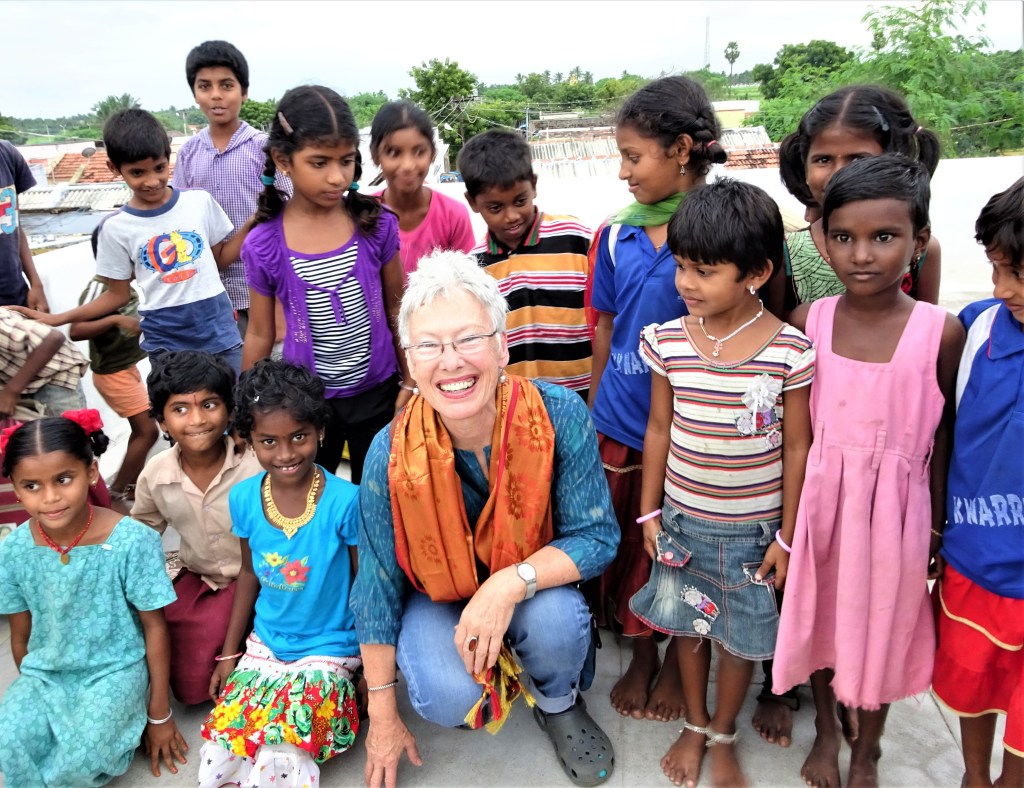
I had never been to India before then: all I knew was that people in villages lived a hard life there. The first time I went to India to evaluate the mint-farming project, I found India overwhelming: its beauty and poverty, its customs and its people; it was a way of life I found fascinating. Most of all, I was aghast at the poverty but this made me more determined and passionate about making a positive contribution to the lives poor rural women in particular. I was amazed at how bereft they were and how they survived the tough life they led.
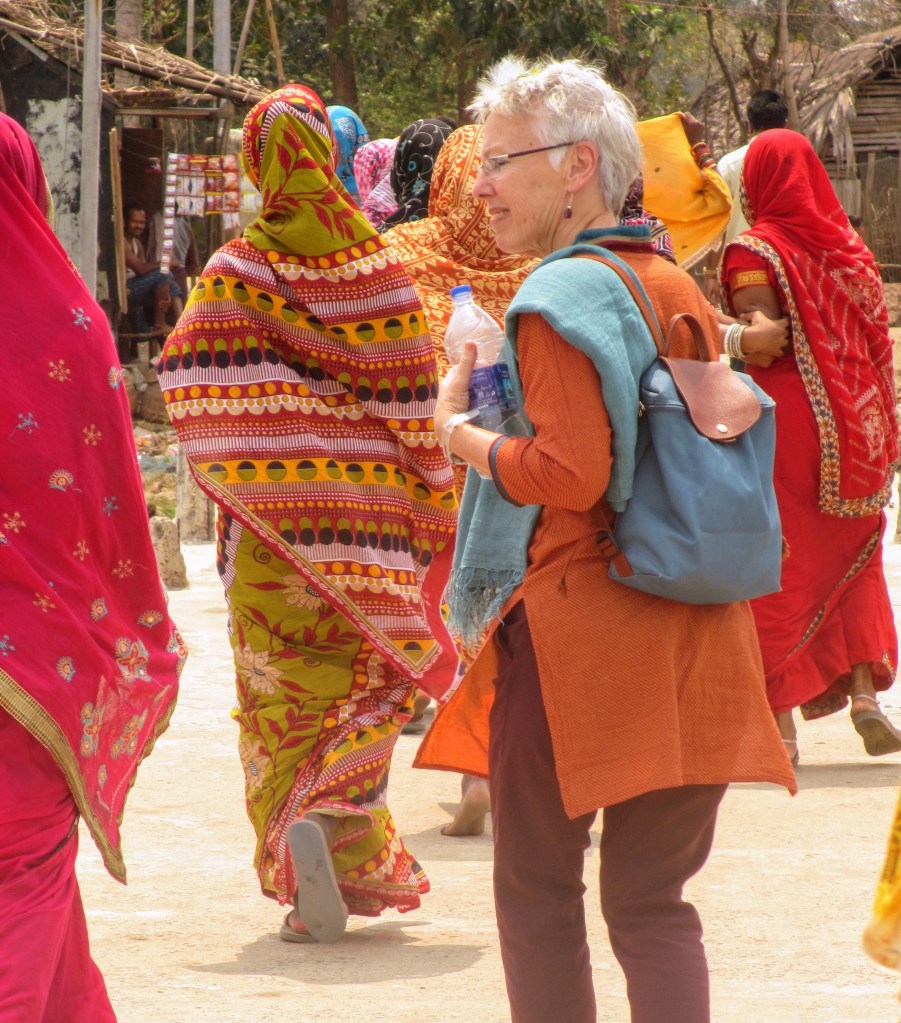
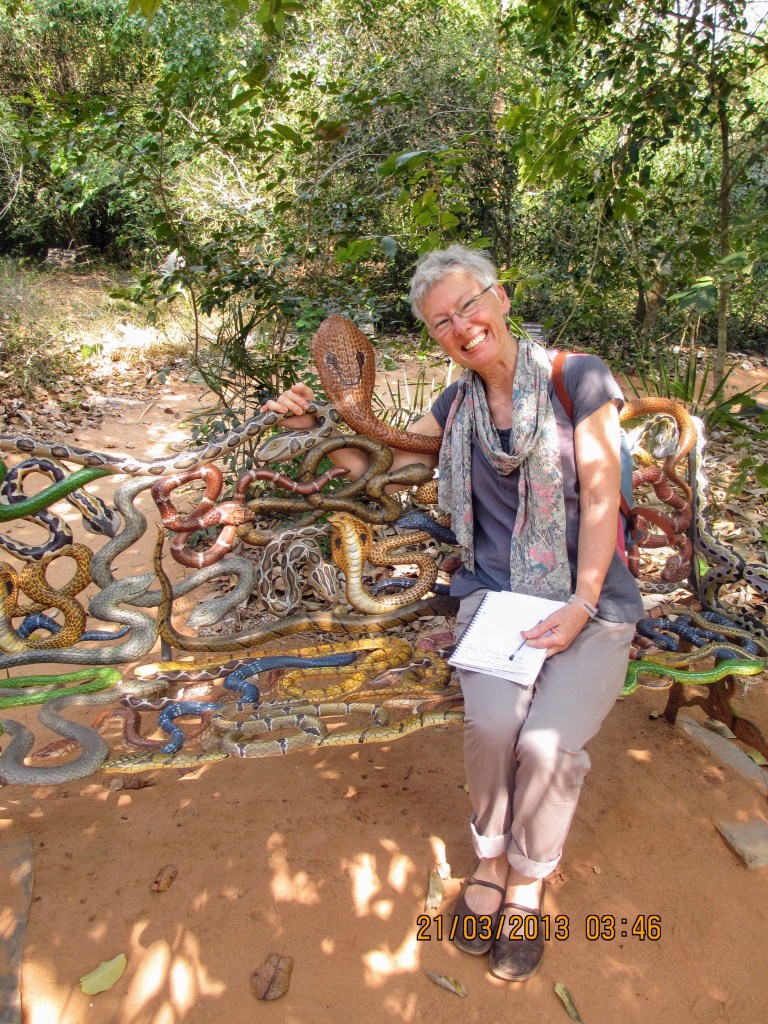
I became involved with various livelihood projects: beekeeping in Uttarkhand, goat farming south of Agra, water development, crab cultivation, health and hygiene (sanitary napkins) and other projects where women could improve their quality of life for themselves and families. I visited India every year, from the early 2000s to 2018 during which India Development Group (IDG) renamed itself as Jeevika Trust. I would visit for weeks at a time to devise and design projects along with the local Indian representatives and consultants. Together we would visit the villages to assess and evaluate project implementation. I visited twice as a tourist, travelling through Kerala and then again through UP to Varanasi and Sarnath. On one occasion, my son travelled with me. He was so shocked by the extent of poverty that he couldn’t stop giving money to beggars and to others in the villages. I needed to explain to him giving money in that way simply entrenched dependency; it did not help individuals escape their poverty. If we want to help poor rural villagers, especially women, we need to ensure that we are able to involve them in projects that provide the skills and support required for them to be able to help themselves become independent.
Apart from the work I did in India, I had the opportunity of working, collaborating and developing close friendships with my Indian colleague and the people associated with the non-profits I worked with. They left a huge impression on me in terms of their compassion for the villagers they worked with and what they had achieved for them. Their sense of affection and caring and the deep bonds that I formed with them will always be with me. Even though they are at a distance, they still feel very much a part of my life.
You also started your own non-profit?
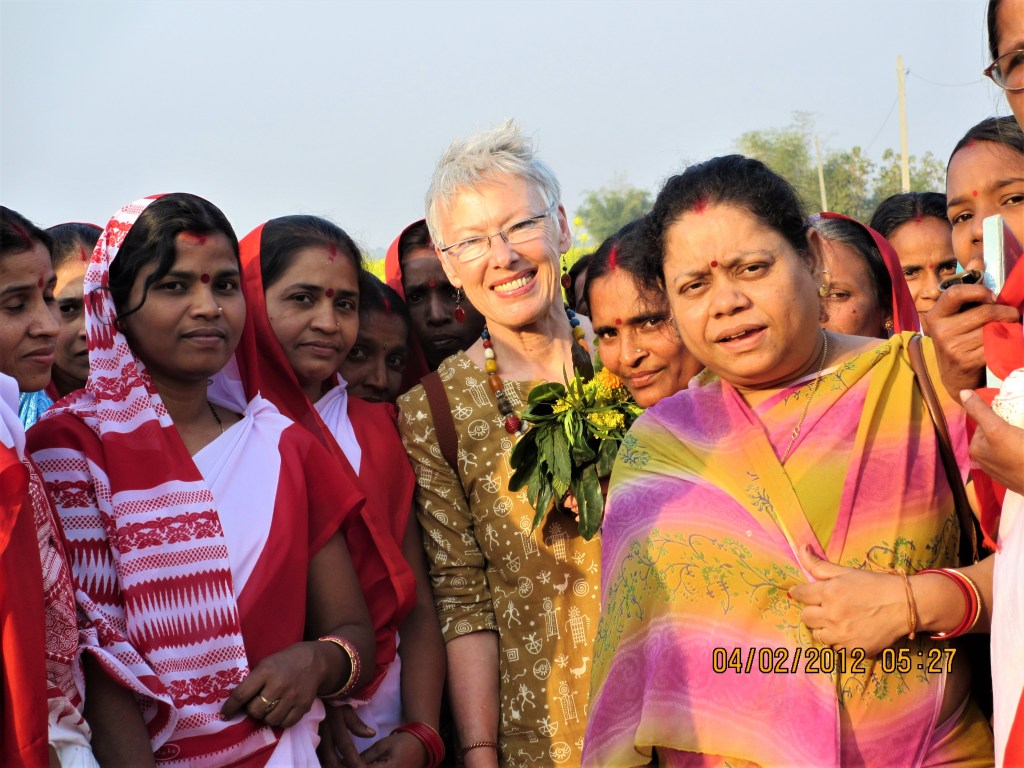
I was with IDG for three years when there were difficulties raising funds and the money was running out. I was asked to leave because they couldn’t pay me. At that stage I started a non-profit called The GEN Initiative which worked in Haryana. GEN focused on literacy, income generation for women, and support for farmers for agricultural and horticultural improvements, including upgrading their dairying practices and a wide range of rural and village development activities. I administered it for ten years and it only worked in Haryana. After ten years, I was back working in IDG, now rebranded as Jeevika Trust.
You are also a cancer survivor, but very few people know about it.
I was diagnosed with breast cancer in 2010. I was living on my own and decided not to tell anyone except my closest friends and my yoga teacher. I didn’t want people sympathizing with me as if I was going to die. I just went through the treatment and recovery process in my own way. After I was done with surgery and radio therapy I went about my daily business. When I came home it didn’t stop me from doing my work. I was able to use the computer and phone as usual. I continued my yoga and meditation and kept positive through this process and I continue to use alternative and natural therapies to heal myself.
You are a prolific writer and have self-published three books. Tell us about them.
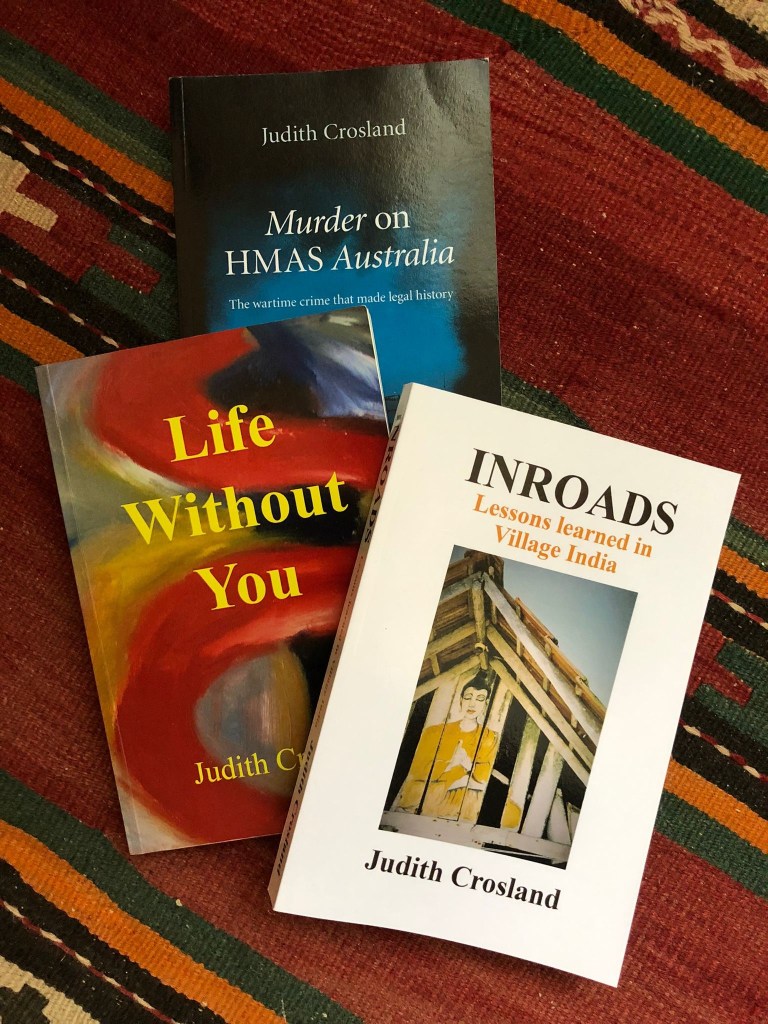
When I travelled to India, I would travel on to Australia every other year to see my son. On one of those visits, I met with a relative of mine. He and I were curious about a mutual friend who had always hinted of a mysterious past. After his death, our research uncovered the story of how he had allegedly murdered a man aboard HMAS Australia while at sea during the Pacific War in 1942. My relative suggested I should write a book about it. Back in London, I was having coffee in a cafe where pinned on the wall was notice about a writer’s workshop. That workshop, research and a Writer’s Circle – where my fellow writers helped critique my writing – gave me support over the two years of writing the book. The book was self-published in 2016 titled Murder on HMAS Australia. My second book, called Life Without You, is a memoir about the romantic relationships I had and what I learned from them. My most recent book, titled Inroads: Lessons learned in Village India, was published in 2020. Currently I am writing about my present life in France. In years past, life drawing and abstract painting kept me busy and, for a period, I found the writing and painting fed off each other. Now it is the writing alone with which I am most interested – with a computer it is possible anywhere, especially if I’m travelling.
The pandemic has resulted in you moving to France. How do you spend your days and keep busy?
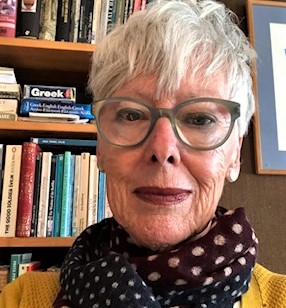
In a strange way, I have come full circle because of the Pandemic. Earlier on in my life when I left Australia to come to France, I wanted to buy a house and live there, but didn’t get the opportunity. Twenty years later, my partner Chris and I bought a house in the South of France, as a holiday home. Since then, we have spent short periods here. In 2020, we came here to spend a couple of weeks, then found that because of Covid we could not travel. Since it was difficult to return to England, we were obliged to become French residents. This has now become our permanent home.
I resigned from Jeevika Trust in 2019. Since then, in between writing, I have taken on various small voluntary assignments. I am currently working as a volunteer advisor for the Otterman’s Institute which educates children and young adults through online AI (artificial intelligence) tutoring. Apart from writing about my life in France, I am also care of my partner, who is not currently in good health. The development sector remains dear to my heart and there is much that can be done to contribute online. Right now, it is difficulty to think much beyond the moment: I’m learning to go with the flow.
Do read Part I of my blog post with Judith Crosland to know more about her early life, and how travel broadened her horizons and changed her perspectives on career and personal growth.
 women uninterrupted