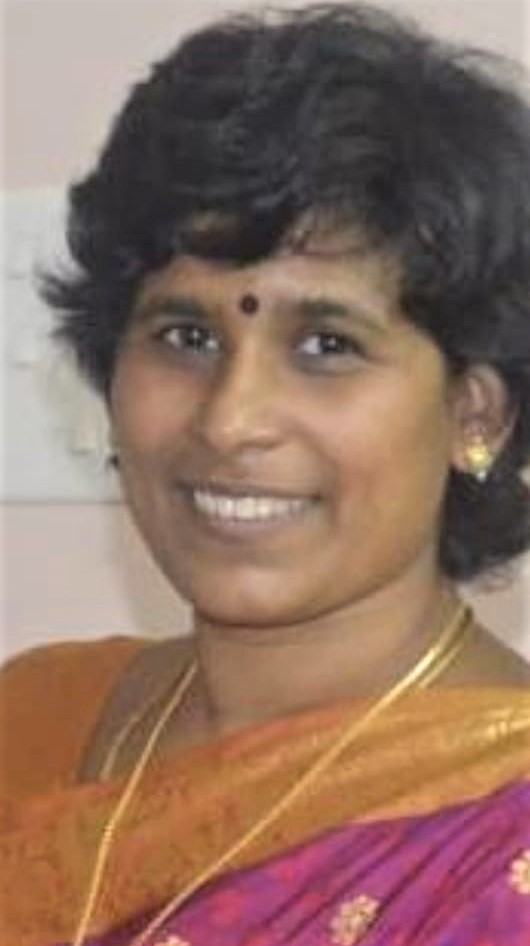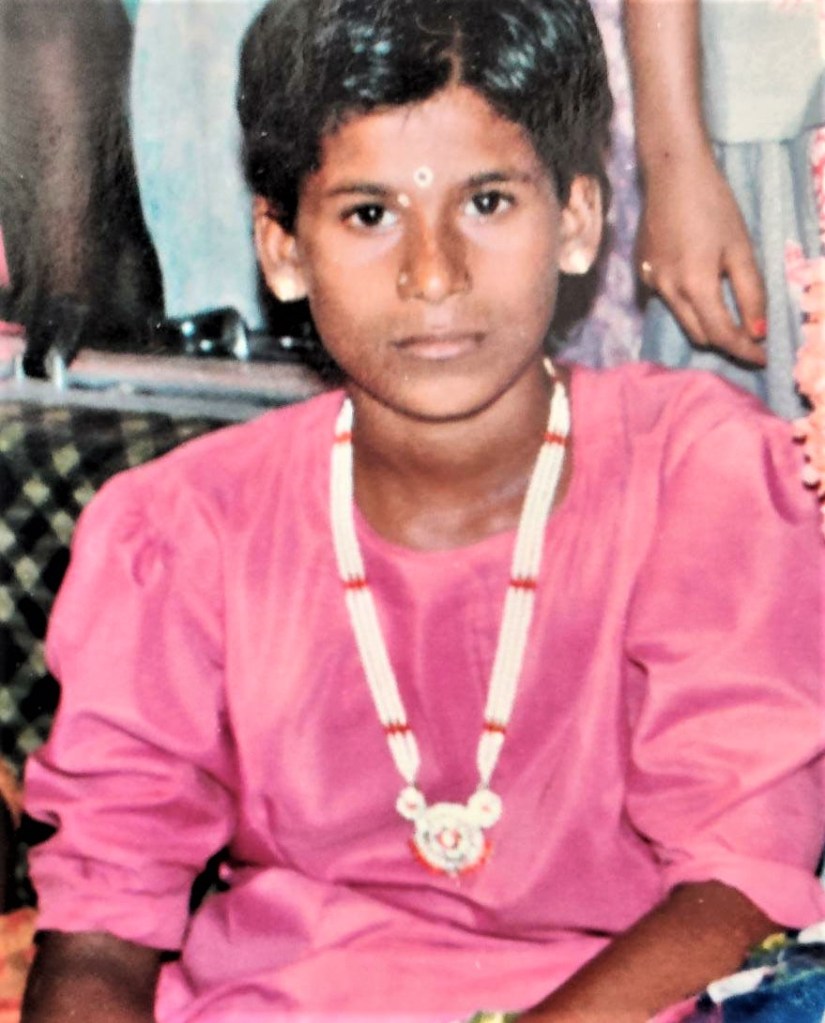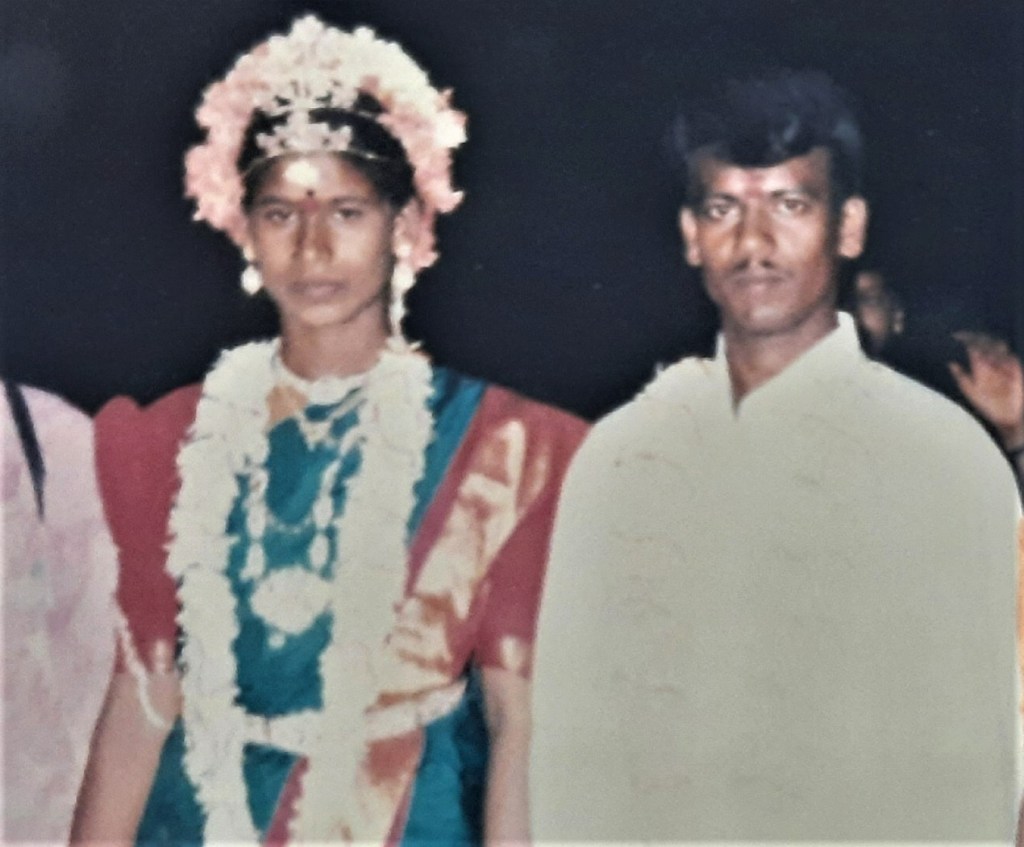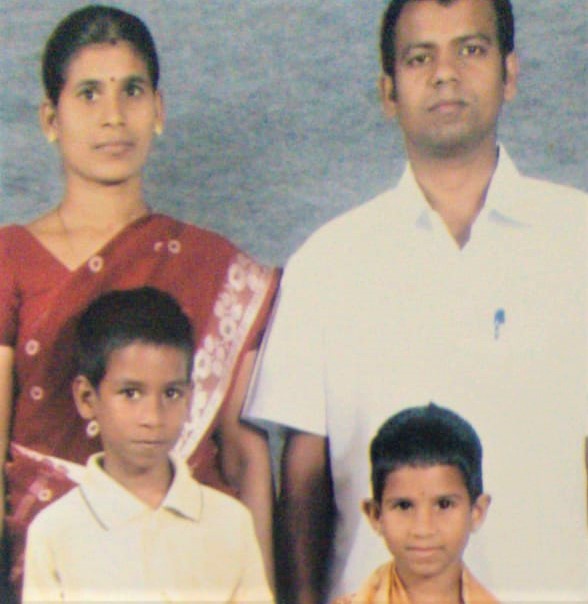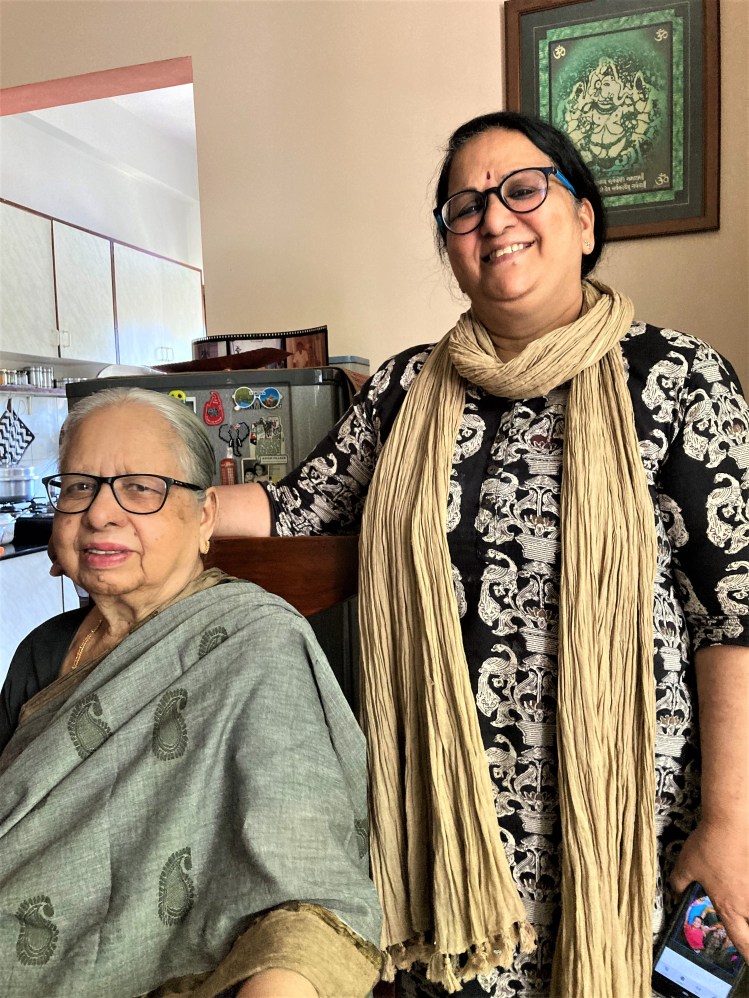
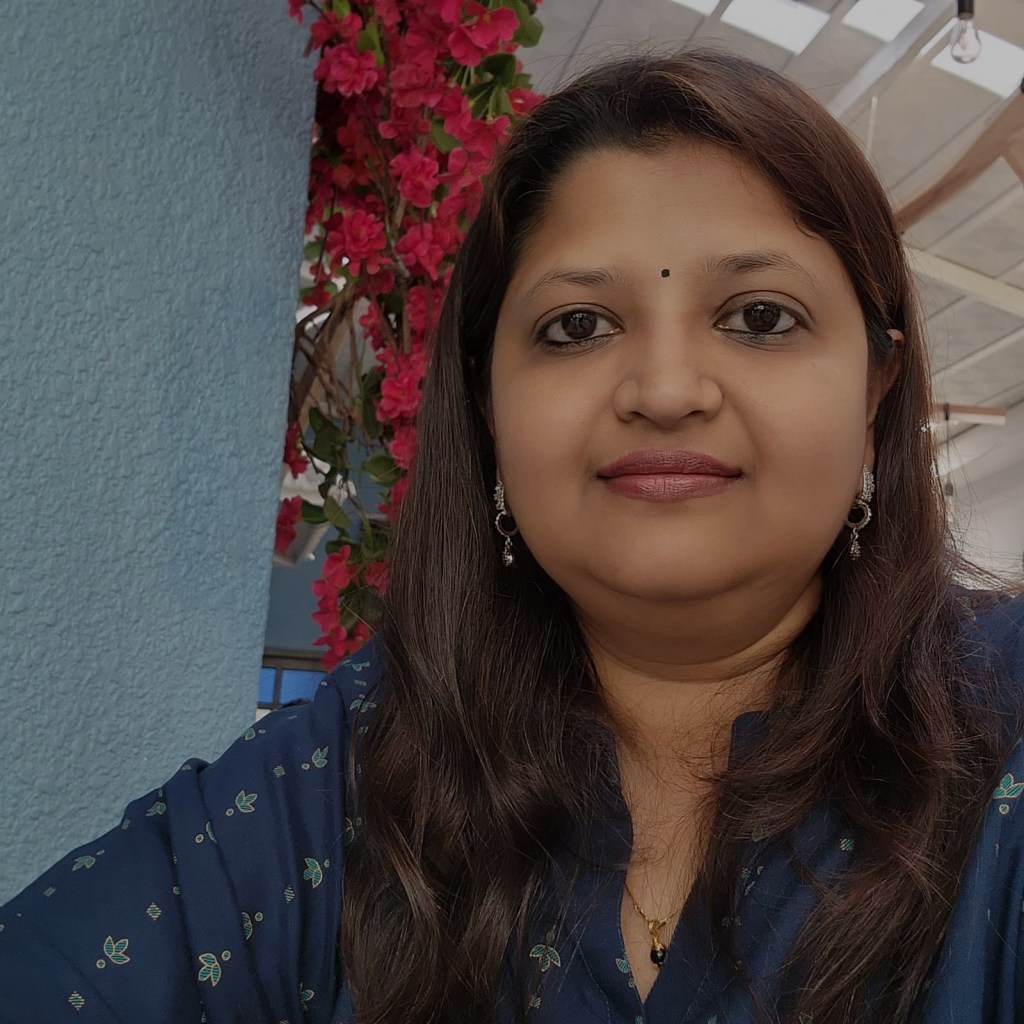
“There is a superhero in all of us. We just need the courage to put on the cape” – a conversation with Prakruthi Subramanya

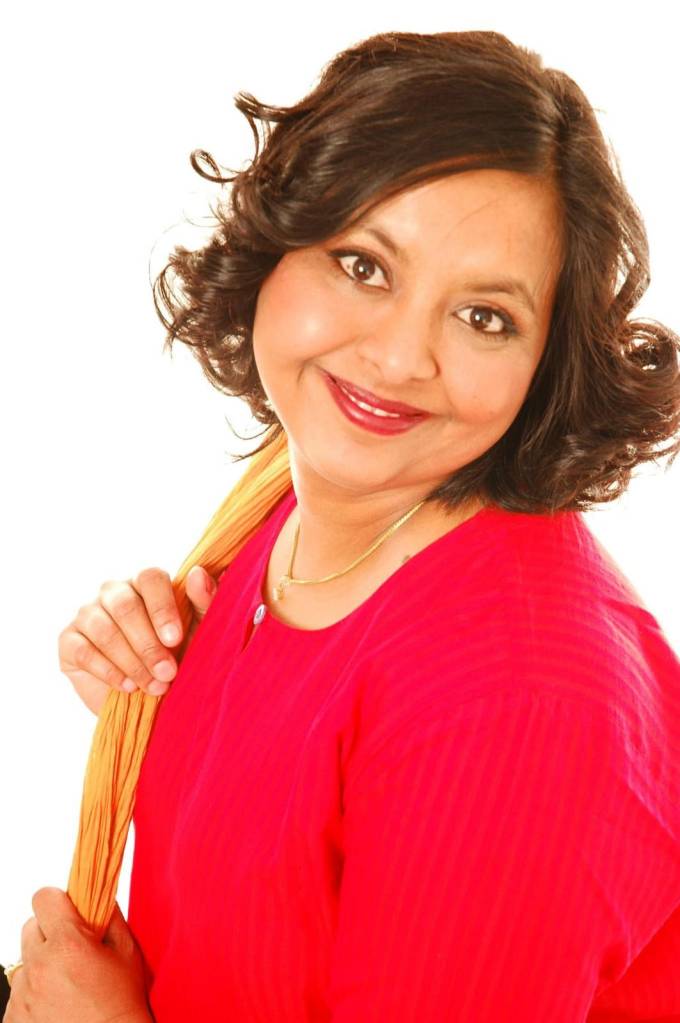
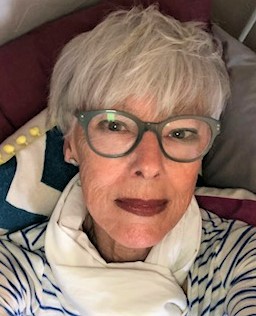
Nature reminds us that the simplest things are often the most beautiful. When Prakruthi Subramanya, a finance professional succumbed to the pull of nature and forests, she went through a gradual shift that enable her to slow down, and repurpose her life.   In the process, she engaged in extraordinary experiences that empowered her and helped her become a happier and more accepting person.  Do join me in this delightful conversation with Prakruthi where she talks about how she engages with nature on a daily basis to protect her surroundings and the beings that coexist with us.

Thank you, Prakruthi, for talking to us. Let’s start as I always do, by asking about your childhood and its impact on your choices in life.

My childhood was quite the opposite of what I now am as a person. I was very shy, I was a frontbencher, studious, and very reserved. I mostly kept to myself. We lived in different parts of Bangalore as my dad was a veterinarian who got transferred to various veterinary hospitals. What I remember most is our stay in Hesarghata, where he was working with the State Government Animal Farm. My father loved animals and was the outdoorsy type. My mom on the other hand was a homebody. I was happiest indoors spending time with my mom.  

I lived on a cattle farm but was scared of the buffaloes and bulls that roamed around freely. Though we lived amidst nature, I had absolutely no interest in wildlife. I was scared of all animals and would either run away or shoo them when I saw them. We had a dog at home for twelve years, but I never petted him.

That is a very contrary image to how I see you now. The assumption is that children who live amidst nature love to experience the sights, scents, sounds, and textures of the outdoors and become better people because of it.

I would say that we were never taught to either love nature or fear it. My indifference to nature could be linked to my hatred of science and biology and the way we were taught those subjects in school. It was shoved down our throats and we were forced to rote learn it without actual exposure to nature and critical questioning and analysis. I never looked at my dog for example as a member of the family. It was there to ensure our security and that was it.

But there came a time when you began to see life around you differently. When did that happen?

I did my BCom in Bangalore and got into a conventional career like many other professionals. I joined a multinational and worked on data analysis and taxation. I became a workaholic who worked long hours. I loved my job, as I was into numbers. I met my husband Vinay at work and we got married.
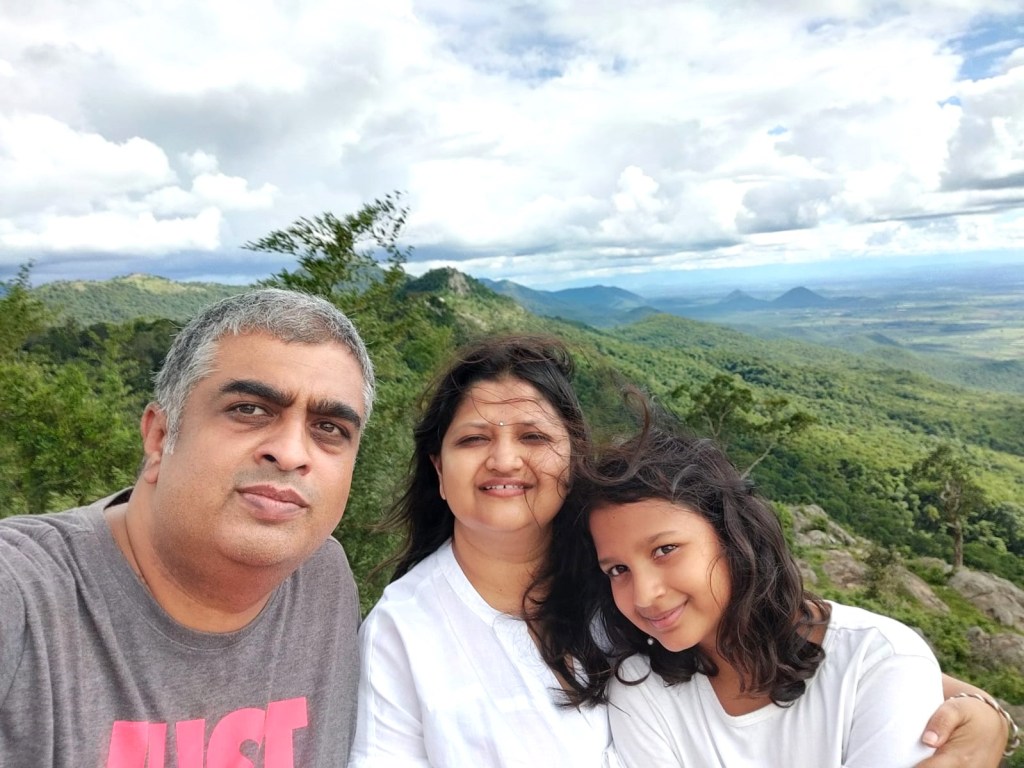
But a few years later, things changed. We were planning to relocate to the US. A few days before we left, my husband had a fall and fractured his leg. We had to shelve our plans to move to the US. He needed surgery and a mandatory six weeks of bed rest and another six weeks of physiotherapy. Three months of immobility was very difficult for Vinay. I wasn’t driving at that point and he would beg our friends to take him out for a drive. I think it was at that point that we began to see things differently.
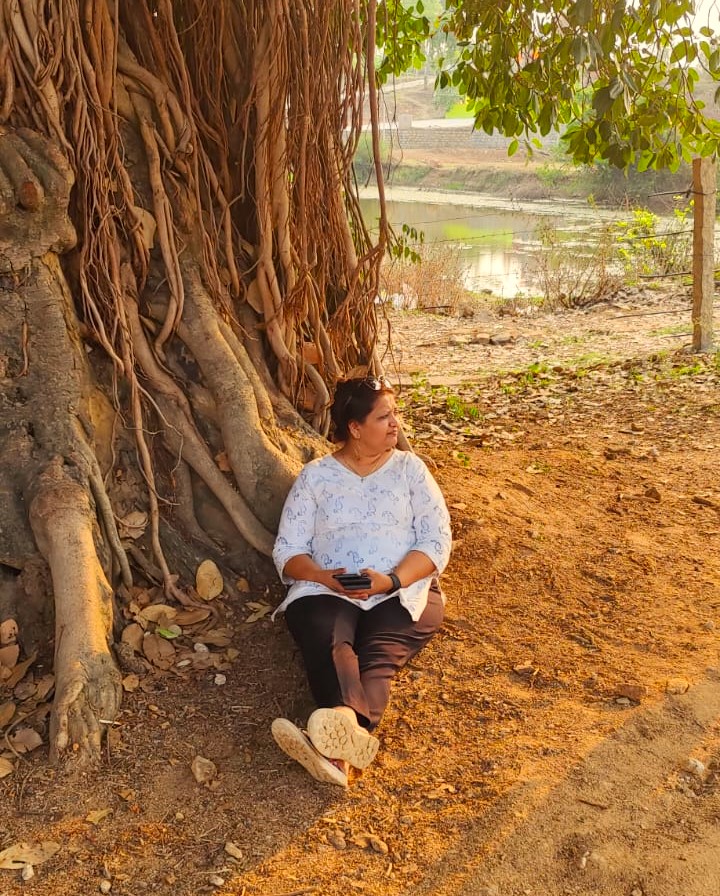
 After that,  we started travelling and went to places where we could enjoy nature. It became a regular weekend activity. We went to Ooty. Vinay bought a camera and got into photography. At that point, for me, it was just a need to go out and experience the outdoors. It didn’t matter where I went. After our daughter was born, we moved to a community on the outskirts of Bangalore. We wanted to live amidst nature and greenery and not within the city.  Vinay got interested in birding and I would tag along with him on his outings.  We were members of a Bangalore birding group and went birding twice a month with a group. We also did the Jungle Lodges and Resorts, Naturalist training Program (JLR – NTP) training. It was an eye-opener for both of us. We were able to get a lot of practical knowledge about forests and wildlife and a broad understanding of ecosystems and how they are connected.

out travel plans were spontaneous and we did several short trips in Karnataka, our home State. With a young child, it was difficult to plan ahead. We did regular trips to Bandipur, Kabini, Dandeli, Sakleshpur, Coorg, Chikmagalur, etc. Not just forests, we also visited Hampi, Badami, and Pattadakal to visit ancient temples and monuments.

It was at this stage that you developed a new, rather unique interest. Tell us about it.
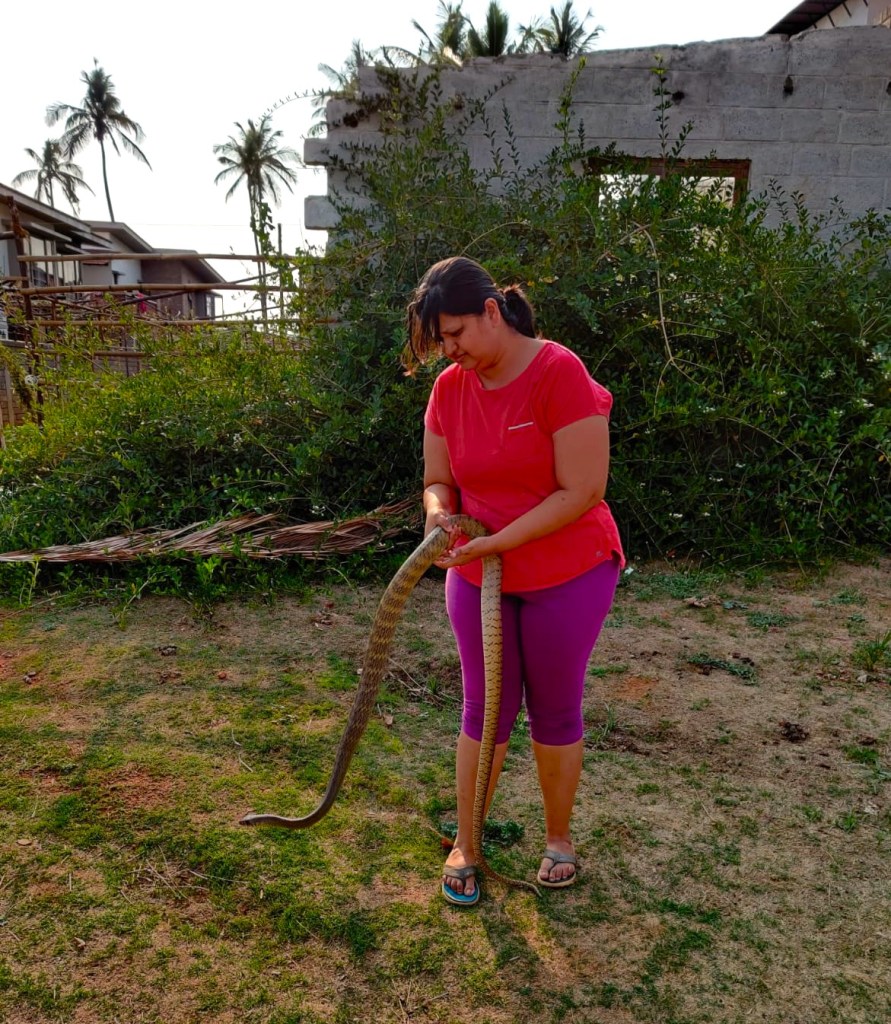
As I mentioned earlier, we moved to a community called Good Earth Malhar, on the outskirts of the city. This was in 2015. The community was still in its infancy. My neighbour, a wildlife enthusiast, called out to me one morning.  He was holding something small. It was a baby snake. I was quite nervous. He did something extraordinary. He put the baby snake in my hand. I don’t know how I held it.  Surprisingly I wasn’t scared. He told me it was a non-venomous snake. A few weeks later we had an awareness program on snakes and I learned so many new facts about them and the myths and misnomers related to them. It opened my eyes. It was also decided that a snake group will be formed and training will be provided on how to handle a snake. I was quite fascinated and volunteered to be part of the group and expressed an interest in wanting to get trained to handle snakes.

If you ask me, why I made that decision, I can’t give you an answer. I later discovered that it was a baby keelback, that was put in my hand. I am the type of person who can’t remember a botanical name easily. I kept asking my neighbour the name of the snake and luckily for me, he was a very patient man, who put up with my questions.  This changed me as a person and made me feel good about myself. My daughter’s friends were in awe of me. To them, I was a woman who could catch snakes. A superhero with superpowers! (laughs…). It made me feel very good about myself.

I did a one-day course with People for Animals (PFA) on catching snakes. They teach you how to handle snakes and feel comfortable around them.  I got a chance to handle a big rat snake.  We have so many misconceptions about snakes. You see snakes and think slimy. But when you hold a snake, it is firm and all muscle. It is like touching a human hand. But the real experience was on the ground with other members of the community.
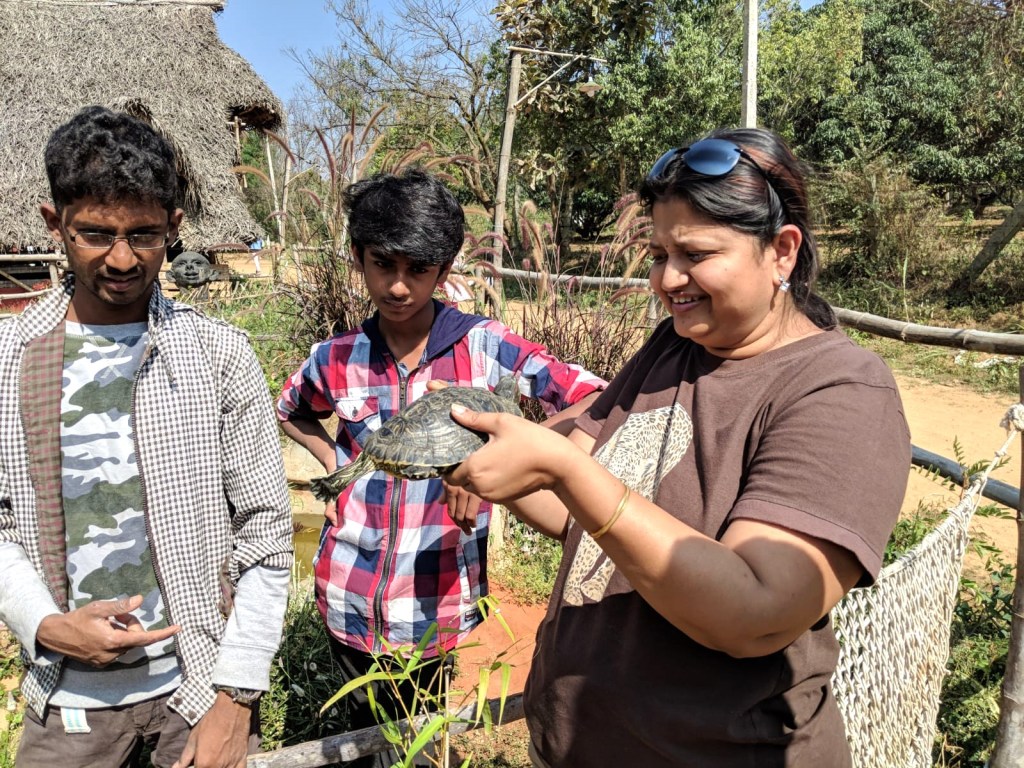
I was the only woman in the group, but I never felt or was made to feel that I couldn’t handle snakes because I was a woman.  We would get a call from time to time from residents who had seen snakes in the vicinity of their houses and I would accompany my neighbour who was an experienced snake handler.  Our motto was to catch the snake only if it was a venomous one and then release it in the undergrowth which surrounded the community. If it was a non-venomous snake we left it alone unless it was inside someone’s house. Injuring or killing snakes was an absolute no-no. Within a few months, I was able to catch most snakes on my own. I have caught about ten snakes on my own and about 30 to 40 snakes with support from other snake catchers in the community. I am now able to identify most snakes.  I would love to go to Agumbe to visit the King Cobra Research Centre and go herping. (Herping is the act of searching for amphibians or reptiles). I am much more comfortable around animals now and love wildlife.

Have you ever questioned yourself or had regrets about taking on this risky activity?

I don’t think I have ever had regrets about getting into this.  I have felt nervous several times especially when I handle venomous snakes. I remember this incident which happened during my initial days of handling snakes. There was a snake outside my house. I handled it and then bagged the snake very confidently. I thought it was a rat snake but it turned out to be a cobra. That made me feel a bit jittery as many things could have gone wrong.

It is very important that one not feel overconfident around a snake. It is a wild animal and it is important to handle it with respect and care. One needs to be careful and ensure that there is support when one is handling a venomous snake. I have been bitten a couple of times by non-venomous snakes and the bites can range from bad to something very minor.

Very often, people panic or have a phobia when it comes to snakes. I often spend more time calming the person down than catching the snake. We conduct snake awareness sessions on the various types of snakes commonly seen in the community and in Bangalore, how to identify them, and what steps to take if one sees a snake. We take care to educate children especially as they often encounter snakes when they are out playing.
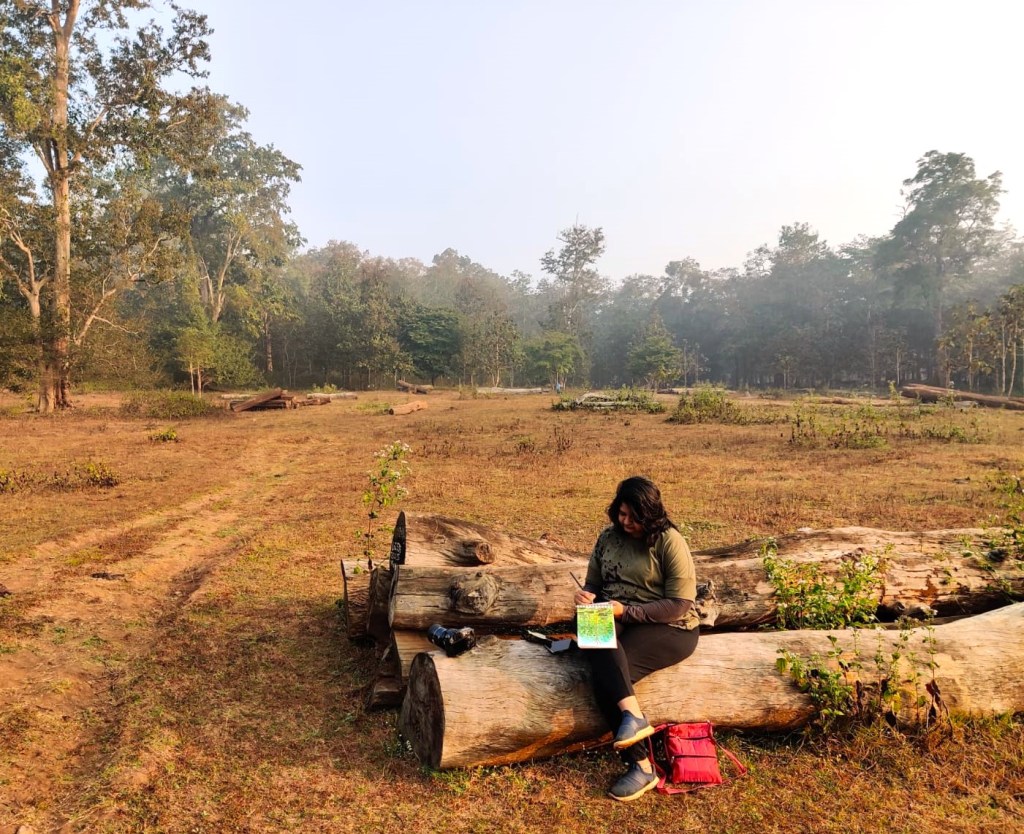
You also have recently gotten into nature journaling. What does it involve?

I follow a lot of nature enthusiasts and wildlife experts on social media. I recently took a nature journaling workshop with a well-known wildlife artist and enjoyed the process.  I love to scribble and doodle, and her classes were an eye-opener.  It was about documenting nature and wildlife.

As a part of international journalling week, I posted my work online and received a lot of appreciation. The neat aspect of journalling is that you don’t need to be an expert at drawing. The focus is on documentation.  I got a lot of appreciation for my journalling work. It felt very good.  
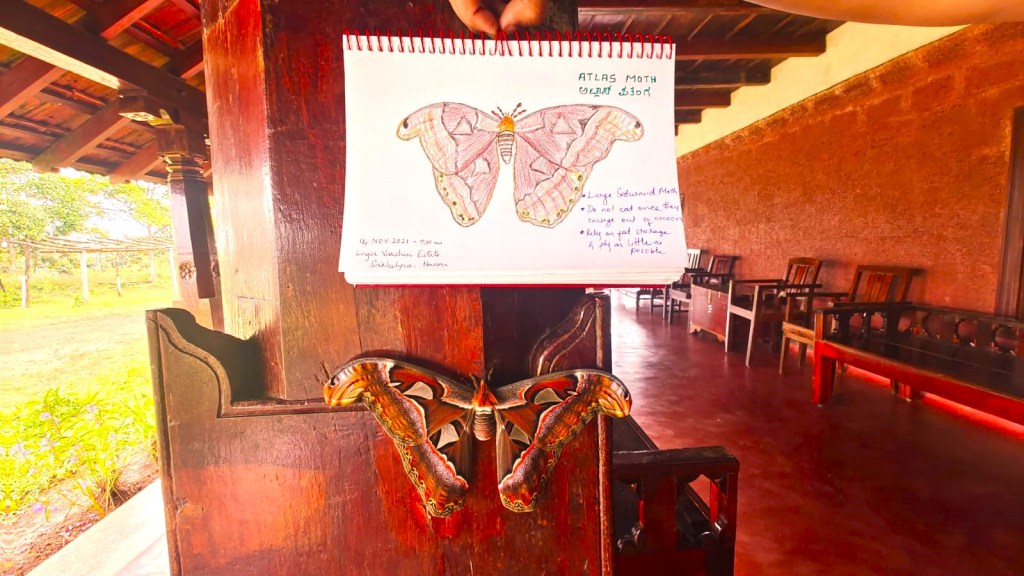
Your exposure to forests and wildlife made you a different person.

As a child, I was told that one needed to be perfect at the art one practised. If you wanted to sing, you had to be a good singer. But with time, I realized that one doesn’t have to be perfect at everything one does. It’s the passion and interest that matters. When I got into handling snakes, it was on a whim, but soon it changed into a passion. I felt so good about myself and what I was doing.  And most importantly I was never judged or told that I couldn’t handle snakes because I was a woman. There were no expectations or pressure. 
I work part-time for an independent contractor but spend the rest of my time volunteering with a small non-profit that is engaged in training local communities as naturalists. I help them with their financing and accounts.

Don’t worry, close your eyes and jump in. (laughs…) For a long time, I was caught in this loop of what would others say. I was worried that people would stare and comment if I sang or danced. But once you find what you’re looking for and someone gives you that small glimmer of hope, then there is no stopping you.  

What would you say to someone who wants to be cool and alternative like you?
Four little-known facts when it comes to snakes

  1. Snakes are NOT aggressive. Snakes do not bite out of malice and they certainly do not go looking for enemies. They will defend their lives if/when needed. Snakes DO like to be left alone.
  2. Intense fear of snakes is called ophidiophobia, but perhaps ophidiophobes have it all wrong
  3. Reptiles sometimes get labelled ‘cold-blooded’ but this is incorrect as their blood isn’t cold. Unlike mammals and birds that can internally regulate their body temperature, reptiles are “solar-powered” and rely fully on external heat or light sources like the sun, to warm up.
  4. Snakes don’t have eyelids! This means they don’t blink and have to sleep with their eyes wide open. Instead, they have a thin membrane attached to each eye to protect them. The membrane is called the ‘brille,’ which in German means glasses.
Reduce, reuse and recycle: A conversation with Priti Rao

Priti Rao lives by the adage “Waste not want not.”.  Shen believes that “waste” must become a resource — to be reworked, reused, and upcycled. Priti’s efforts in producing bio enzymes have now made her one of the foremost experts in the world. she believes that all of us as world citizens have a responsibility to make the world a safe and healthy place for ourselves and future generations. Read my conversation with her on womenuninterrupted.in

Priti,  it is a privilege to feature you on this blog. Much of what you are now, your determination and grit have been shaped by your childhood. Tell us about yourself.

I feel very privileged and proud that I am from a defence background. As a child, we lived in so many different locations. I was exposed to various communities and their cultures and practices. I changed schools every three years.  That was not easy but it made me very flexible and adaptable. We celebrated all festivals and were open to eating various cuisines. Our family would go through a transfer every few years and it was a monumental task to pack and move to another city.  With each transfer, I had to go to a new school and make friends yet again. But it made me very resilient and accepting of change. It also allowed me to see places as a child – Rajasthan, Jammu, Meghalaya, etc and experience the wonder and beauty of new environments. We also learned the art of co-dependence and connecting with people in the services. Our neighbours and friends were always available for us as were we. There was also a certain sense of discipline and structure that was inculcated, which has been of great help to me later in life.

As a young adult, you lived your life to the fullest. Besides the conventional path of academics and then a career, you engaged in several other activities.

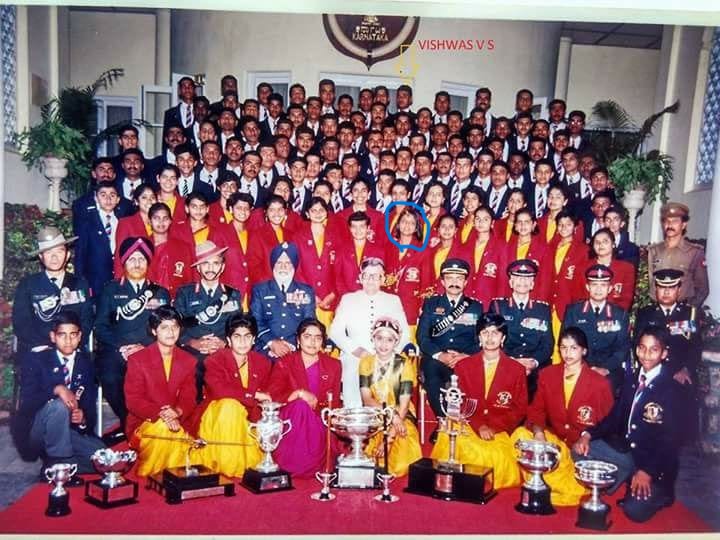
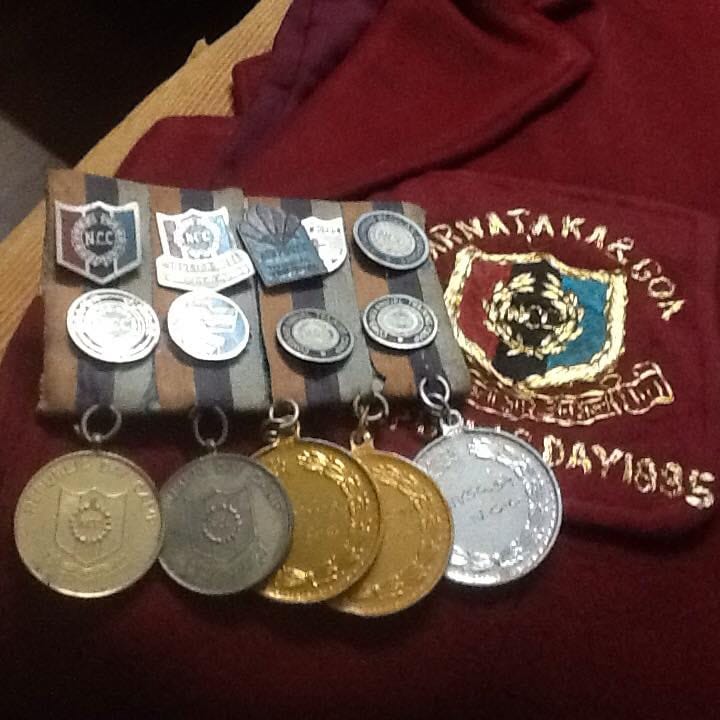
I engaged in several activities during my years in college in Bangalore . I enrolled myself in the NCC (National Cadet Corps) Air Wing. They usually don’t enroll girls in the Airwing.  Only 10 percent of those enrolled were girls. In Bangalore, we were about 20 girls and 200 boys. They trained us in paragliding, parasailing, marching in parades, aircraft flying sorties, etc. It developed character, discipline, leadership,  and a spirit of adventure in me. I also think it planted the seeds of engaging in social service. My cadet friends and I used to go to the airfield at Jakkur almost every day. We had to be there very early and I don’t remember ever getting irritated about that. I loved spending my time with my NCC friends, it was like a second home to me.  Though we got attendance, I also had to juggle my studies. I went to the Republic Day Parade in 1995 and got a gold medal from the then Prime Minister, Narasimha Rao.

When I started a new job, my friend and I would pack up and travel over the weekend. I was able to explore Karnataka in detail. I connected with local people and my native state. I would also just take a bus or a train and get off at a station or a bus stop at random and explore the area.  I joined a  horse-riding club close to my office. I would leave early in the morning at around 5 am. for the practice ( cantering, galloping, etc.) and then go to work. It was a wonderful experience. It kept me very active and made me use muscles I had never used before.

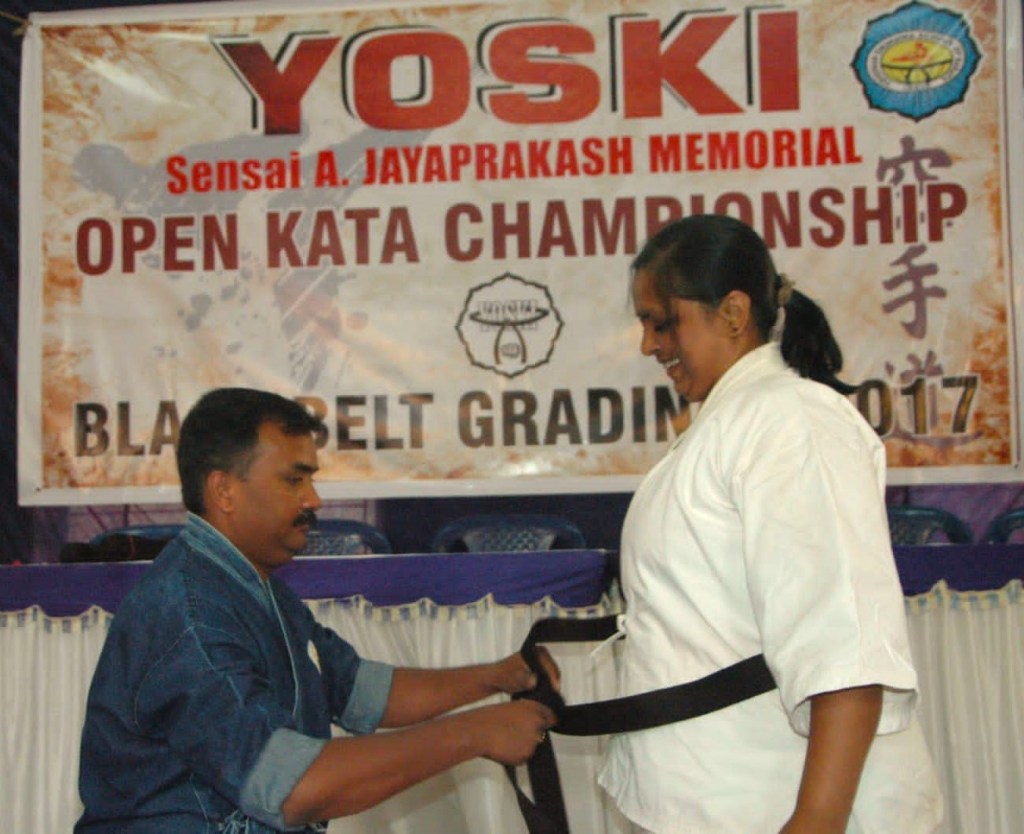
This continued even after I got married and had a job.  I lived in the UK for a brief period. I would along with my infant son,  board a bus or train and visit various places in the UK. I did not wait around for my husband to accompany me. Even later, when I took my son to karate classes, I decided to do something different. Instead of sitting with the other mothers who accompanied their children, I decided that I would also take up Karate. My son and I were classmates. I continued for eight years and got my black belt. I also began to do yoga and did yoga teacher training at the Bihar school of yoga.

How did your journey as an earth warrior start?

When I came back from the  UK, I wasn’t sure that I could get back into a 9-to-5 job. I did not want to work in a corporate. I had worked in one for over a decade, but it gave me no satisfaction. The mindless consumption and the pressure and tension and the need to adhere to impossible deadlines did not appeal to me, but I did not want to stay at home.  It took me five years to figure out what I wanted to do with my life. During this period, I observed many things. I found that we as humans are wasteful and consume so many things. We blame the poor for the garbage and unsanitary conditions, but the rich and the educated are equally responsible for the mindless generation of waste. I wanted to save the environment, but did not know what I wanted to focus on and the form it would take.

It all started with the garbage bin.  Like everybody else, I would place the bin outside my door. A lady pushing a heavy cart would come every day to pick up the wet waste. Every day the lady would get annoyed and complain about the waste not being segregated properly and about the amount that was generated. I couldn’t blame her because she had the unenviable task of pushing a  heavy cart. I decided that I couldn’t be a part of this and needed to understand what was happening.

I studied the entire process- how garbage was generated and by whom, what were the types of garbage and where did it go. I got into composting to reduce and recycle the waste I was generating.

But you wanted to invest in more than just composting and recycling your wet waste. What were your next steps?

I began to explore the concept of Sustainable living. (Sustainable living describes a lifestyle that attempts to reduce the use of Earth’s natural resources by an individual or society).   As a society, we are wasteful and consume so much. We go to the supermarket every day and buy packaged and processed food products. And the wastage is huge. That was a trigger point for me. I researched the dangers of processed food readily available off the shelves and discovered that they had high salt and sugar content, which could affect our health.  So not only do we consume chemicals and harmful substances, but we also play a key role in poisoning the surrounding ecosystem. I stopped buying store-made products such as biscuits, chocolates, etc. In addition, I decided that I would also start growing my own food. There was a time when I was growing forty varieties of vegetables and 25 varieties of herbs on my terrace. When you are growing your food, you are in control of every step of the growing process — from seed selection and soil and pest management to responsible consumption, harvesting, low wastage, and composting.  I installed a bio-gas plant that converted wet waste into cooking gas and installed Solar panels to generate electricity. I began to harvest rainwater. With these simple practices, I not only reduced my consumption and overall carbon footprint.

I analysed my dry waste and found that most of it was plastic from the packaging of processed foods, and bottles used in shampoos and liquid soaps. If we take a look at our shopping bag, most of it is packaged foods and personal care items. I wanted to reverse this ratio. How do we change this? I tried my best to eliminate packaging and non-biodegradable waste by choosing food with no plastic packaging, always carrying a reusable bag, buying local products, and refilling containers to reduce plastic waste. I then discovered the use of bio-enzymes & stopped using chemical-based cleaners at home.  I began experimenting with bio enzymes and that was a turning point in my life.

Bio enzymes is a term that has gained a lot of popularity in recent years. But you have been working and producing bio enzymes for more than a decade now. Tell us a little about bio enzymes and what they mean to you.

Bio-enzymes are organic solutions produced through fermentation of organic waste including various fruits, vegetable peels, and flowers, by mixing in sugar, jaggery/molasses, and water. So essentially, bio enzymes come from our kitchen waste. It takes 60-100 days to ferment organic waste. To fasten the fermentation, yeast can be used as a culture to prepare it in 45-50 days.  . It is so simple to make that everyone can make their own in their homes. It is best made with citrus peels, but many people make use of peels of carrot, cucumber, and lettuce too which criminally end up in the trash. The idea was first introduced by Dr. Rosukon Poompanvong, the founder of the Organic Agriculture Association of Thailand. from Thailand.

I saw a video of  Dr. Joean Oon, an environmentalist from Malaysia on bio enzymes and was inspired to try making it.  I found that it was a simple process. I made it in the kitchen. Initially, there was some scepticism from the family. They were afraid that there would be some odour.  But I proved them wrong. I started making bio enzyme in larger quantities and sharing it with my friends. I also taught them to make it.  We started doing it from lemon peels as the smell of lemons connoted freshness and appealed to lots of people. I was amazed at the versatility of this product and was amazed at its many uses.

It can clean and disinfect all surfaces in the house., it is very effective in removing limescale on taps and other steel appliances, breaks down grease and grime effectively from utensils, and de-clogs drains very effectively. It is also a natural pesticide and herbicide and naturally purifies groundwater. It is also very effective in cleaning polluted lakes.

So eventually you decide that your interest needs to move from a personal sphere to a public domain. You decided to start your foundation.

Producing bio enzymes became a priority for me and I wanted to share this information with others.  Soil and Soul Foundation was conceived around this time. . We started with basic workshops for children and adults. The focus was on sustainable living and the need to preserve the environment.  We also talked about bio enzymes and the benefits it provides. We curated an experiential learning program for a leading school in Bangalore. The idea was to create awareness and ownership among students, staff, management, parents & local administration about managing the waste generated in the school and at home. We developed a holistic curriculum with an emphasis on fun-filled, hands-on learning to bring about behavioural changes.

We also provided training internationally. The Frankfurt University of Applied Science invited Soil and Soul to deliver a workshop on Sustainable Alternatives at their campus in Frankfurt, Germany. Mechanical Engineering students attended the session to understand the issues concerning Waste and Sustainable choices. Knowledge Transfer sessions were conducted on how to prepare bio enzymes and their application.

I intended to educate people and train them to make bio enzymes. But the conversion rate was low. So, we also decided to produce bio enzyme in large quantities and market it. This required me to get a certification for the product.

Tell us about your latest venture,  the Bio enzyme Entrepreneur Academy

The Bio-Enzyme Entrepreneurs Academy provides a space for producers and researchers to promote research and promote bio enzymes and educate and train entrepreneurs who are interested in working in this area. We hope to encourage communities and civic bodies to accept and adopt practices such as  Bio-Enzymes, Bio-Compost, and Bio-Gas to enable a cleaner environment and sustainable living.  We work at the grass root level – focused on waste management, and regenerating soil and water ecosystems. At the Bio enzyme entrepreneur academy, we have researchers and scholars who engage in studying bio enzymes and their benefits.  At present, we are collaborating with researchers from Holkar College in Indore. We also have bio enzyme banks in different parts of the country to clean up lakes and rivers.  We are also conducting field trials to determine the effectiveness of the application of bio-enzymes on various crops. Data concerning the health of the soil, plant growth  & immunity are being collected and analysed.

As a part of your work, you also focus on River bank Stabilization. You have a project on the banks of the River Ganga, don’t you?

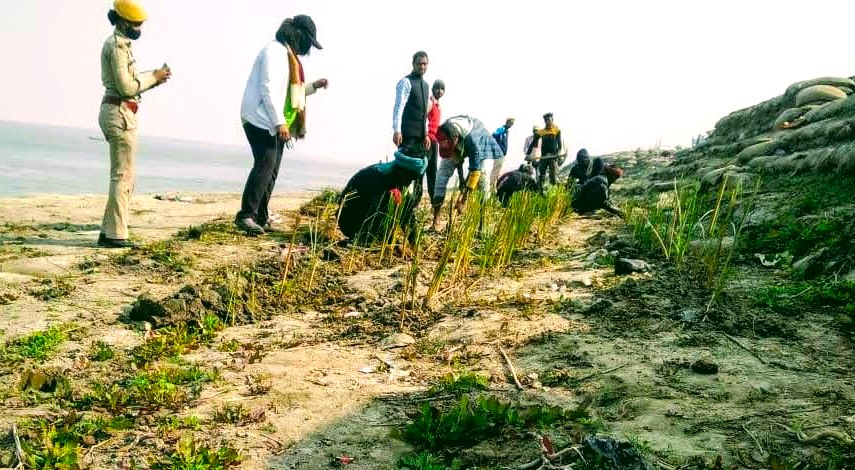
As a part of our Mission 10 Lac Project, we are now engaged in an ongoing effort to stabilize riverbanks in Munger, Bihar since Dec 2020. The objective is to limit the damages caused during floods, mainly – water contamination & soil erosion. The project is completely crowdfunded.

So far, we have planted one lakh tree saplings of native varieties along the river Ganga. In addition, five lakh Vetiver grass slips have also been planted. Vetiver grass plantation is a natural and economically viable alternative to brick-and-mortar engineering solutions for soil retention. It reduces erosion and carbon sequestration four times more than the tree. This is an immediate remedy as the top soil is not eroded. It also filters the water and takes away the heavy metals.

The project has a direct impact on the livelihood of the local communities. Our inclusive approach encourages the active participation of local communities, women, children, welfare groups & administration. We propose to do a similar project on the banks of the river Brahmaputra. We have also used Vetiver in Bangalore on seven lakes including the one in Lalbagh.

And my last question to you would be,  what would you say to a woman who wants to follow her dreams?

I would say go for it. We have one life and we should never be afraid of taking chances. I have been very lucky in that I got a lot of support from my husband and my family. My mother-in-law took care of the family and I got the opportunity to go out and do what I wanted to. The most important thing is not to wait, but to make a beginning and the rest will follow.

If you want to be a conscious earth warrior and give bio enzymes a try, check out the YouTube given below

Become the best version of yourself: A conversation with Chikky Sirish

Chikky Sirish was a dreamer and believed in a magical world, as a child. But reality soon set in and Chikky was struggling to make sense of her life and the path she was meant to take.  Plato, the Greek philosopher once said “Reality is created by the mind, we can change our reality by changing our mind.” Chikky took ownership of her reality, sought help, and never looked back. Now, in her role as an empowerment coach and alternative healer, she offers support to others who are struggling to cope and helps them gain a fresh, informed perspective on problems and achieve long-lasting change. 

I once read somewhere, that “In the best conversations, you don’t even remember what you talked about, only how it felt.” Join me as I talk to Chikky about what it takes to become the best version of yourself. 

Thank you, Chikky for agreeing to feature on my blog. I would like you to tell me a little bit about yourself as a person and what got you started on this journey of self-discovery and helping others find themselves?

 I was always a dreamer even as a child. I remember staying in this house which had a long driveway from the gate to the house. It was a long walk, at least in those days with those tiny legs. As I walked, I would feel like I was in a magical land, like Alice in Wonderland. I would stop and give my attention to everything on the path. I also used that time, very effectively to, finish off the items in my Tiffin box, and feed them to the birds and squirrels I would encounter during that walk. That walk was meaningful in more ways than one. I grew up in the company of so many loving people, both family, and extended family members. I remember the elders in the family telling the entire clan so many stories. Though I can’t remember them now, (for the longest time in my life I could), those stories carried so much meaning and memories and meant so much to me. Both nature and the culture that were such an inherent part of my childhood stayed with me, even though I was young.

 Another chapter in my life was growing up in Dubai. I was very disconnected from nature there, but even then, I remember, going out and digging in the sand with my brother, looking for secrets and magic. We found an iron rod once and I convinced him that t it was the way to another realm (laughs…). So, even as a child, I was always a dreamer and a seeker. 

 Oh, that’s such a lovely way of defining yourself. Your formative years were in Dubai and Chennai and later you moved to Kuwait. How did the shift impact you?

 My schooling was mostly in Dubai. I moved back to India when I was in high school. It was a huge readjustment because as a teenage child, you don’t want to be uprooted from your friends. But one moves, not out of choice mostly, but because of necessity. So, at every point, there is a readjustment that needs to be made. I retreated into myself, which is still my favourite thing to do. I would sit by the window and stare out of the classroom. I went to Stella Maris in Chennai for my Undergrad and and also did an MBA in marketing. That was a real, real big surprise to everybody who viewed me as being the dreamer that I am. But I guess, like everyone else, I just wanted to conform and these degrees also ensured that I got a good job. I worked in Chennai for a very short time, and then got married and moved to Kuwait. 

I continued to work in Kuwait in merchandising. Before long I had my children. It was after my second son was born that I stopped working because I wanted to spend more time with the children. My mother was a working woman and I always wished she had been at home when I came back from school. So that made me want to be there for my kids.  But very soon, doubts started to settle in. I wanted to be seen as an individual and not just as a wife and a mother. Even now, I see a lot of young mothers going through this. 

On your website, it says that you began your quest by becoming the best version of yourself. How did that process begin? 

To become the best or to rise to a particular level, you first have to fall. You have to break yourself up into a lot of pieces to build yourself up again. And that’s exactly what happened to me. For no particular or no obvious reason, I started going through this little spiral. After my first child was born, I went into postpartum depression. Especially at that time in the 90s, nobody knew the term, especially the Indian community. Why would one be depressed when they have just given birth to a child? It should be just the opposite. I was confused. I was feeling very unsure and unloved. I couldn’t figure out what a mother is supposed to feel. 

Almost 10 years later when I was about 38 years old, I started feeling this downward spiral again. I had no reason to complain, everything was going well for me and my family. But I started feeling less and less worthy After six months of fatigue and reluctance to get out of bed in the morning, I looked at myself in the mirror and asked, who is this person and what happened to you? I was like an empty shell, imploding inwards. I wanted to blame everyone else except myself. But I realized that I had to take ownership of the problem. I began to do some research on alternative healing techniques.

When you make a decision, the universe conspires to make it happen. So, around the same time, when I was looking at various options, a friend of mine in Dubai had just finished her training in empowerment coaching. She was very excited about it and messaged me saying “It’s fantastic. I think you should do it.” Initially, I was reluctant but finally decided to seek her help. She spent about four hours coaching me, but I came back home a changed person. Something had shifted in me and it was a beginning. She supported me through the whole healing and self-discovery process. For the first time, I had some clarity about who I was. There were many moments of doubt and uncertainty, but I had support and I began to feel better. I began to take on some work and started an interior design project.

But you still didn’t feel complete, did you? 

 I was a much happier person, but something didn’t feel complete. What more did I need to do, was my question to myself? And the answer came to me “Aha, I need to learn this technique and be able to offer this to others in need. Look how far I’ve come in such a short time. “ So, I went from Kuwait to Dubai and did a course on empowerment coaching and that’s where my journey began.

As women, we tend to give a lot. It is in our human nature, in our DNA to, constantly give and nurture and care for. At some point, we give so much away that there’s nothing left for ourselves. I think that we hinge a lot of our self-worth on the people around us, especially our partner. My training as a coach made me realize that nobody can make me feel good or better or feel worthy or feel loved, except myself. 

In your journey as an alternative healer, Chikky, you started with a course on empowerment coaching, but you also specialized in other forms of therapy. Tell us a little more about the various modalities you use to heal people and how do these processes help people or benefit them? 

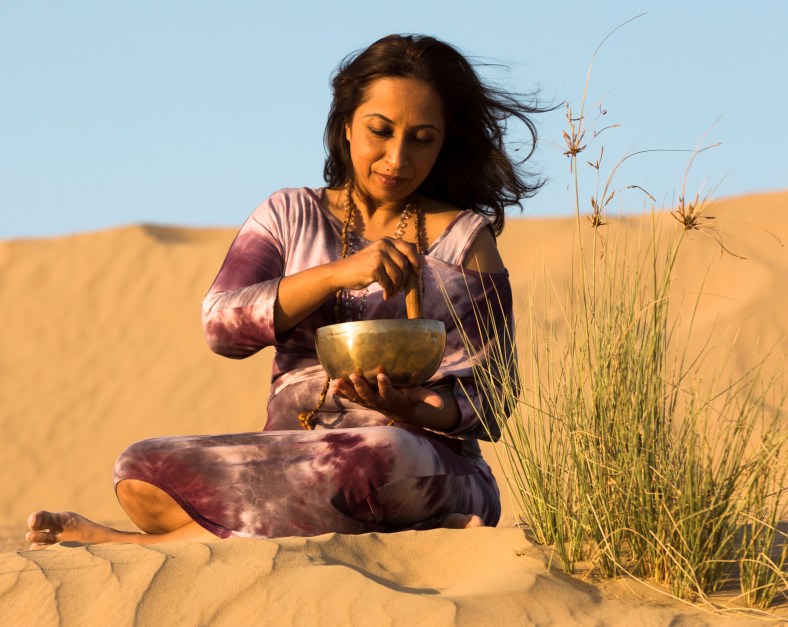
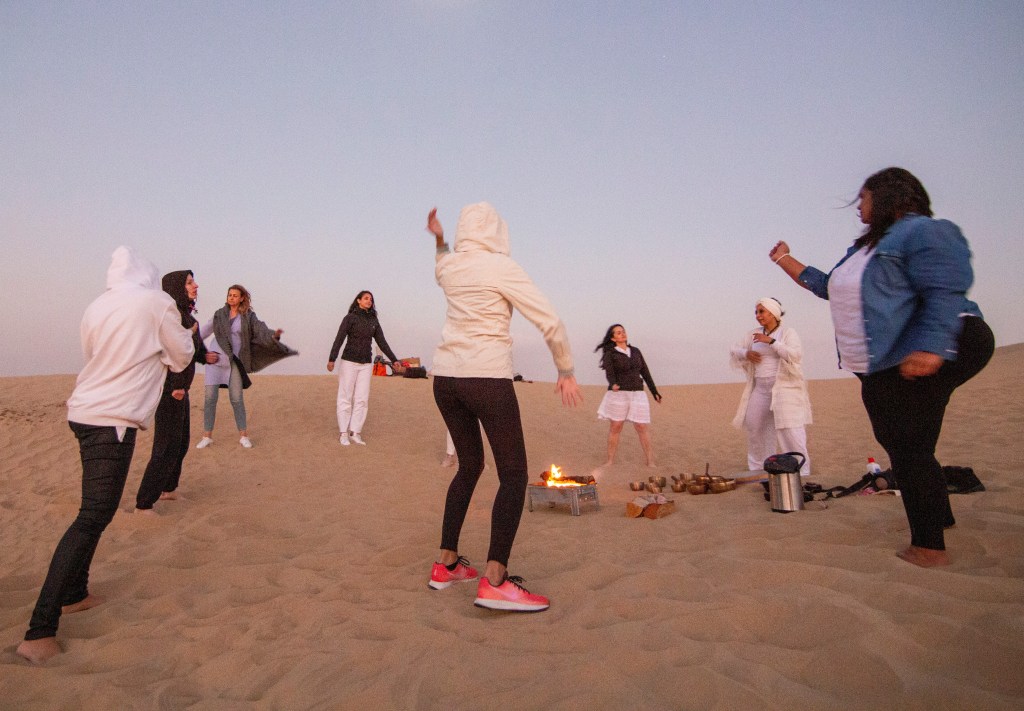
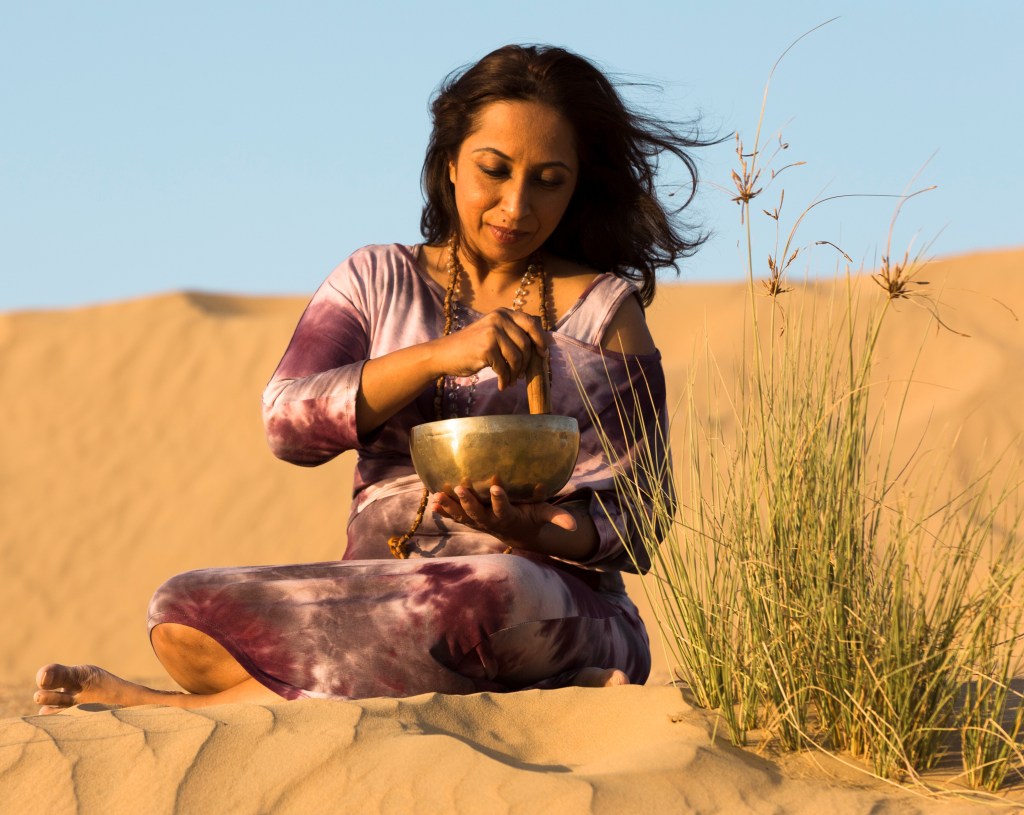
 We all have to start somewhere and my journey started with coaching, simply because I experienced it myself. Healing is a combination of many things and so my training combined spirituality, hypnotherapy, and Neuro-Linguistic programming. (NLP is a psychological approach that involves analysing strategies used by successful individuals and applying them to reach a personal goal.). When I started coaching, I loved it, but very quickly, I was hungry for more. In 2017, I ventured into sound healing. Sound is related to energy which is all around us but unseen. As I told you earlier, even as a young child, I was intrigued by the idea of magic. I think the magic that intrigued me so much as a child translates into healing energy. The idea that someone could be healed without words was intriguing to me. Sound vibrations can do wonders for individuals who need healing. For example, it helps people with anxiety and insomnia. I went to Nepal to do a course under Master Shree, a 3rd Generation Tibetan Bowl Healer. And since I love music and dancing, it was a natural progression that I bring movement into it. Movement Flow Therapy (both on land and in water) helps release inhibitions and endorphins are released. I have also trained in art therapy which is a form of release and expression without words. 

I like to integrate all of these things or offer them in isolation depending on the needs and requirements of people and offer a unique tailor-made package for an individual when they come in. I sometimes do group sessions to create awareness about the different modalities and how they can help individuals with unique needs. It is an introduction to therapies that they’ve never tried before without having to make that big commitment to a one-on-one session. 

 There was a shift in you from being the person who was a receiver of therapy to someone who is now trained in healing and offering this service to others. Could you tell me a little bit about that process? How did you make that transformation successful? 

That’s a lovely question. I think the first thing that helped me go forward is that we are all storytellers and we learn through stories. But nowadays, we no longer are part of extended families or sit with our family members and our peers and share stories. We have become isolated as individuals. We must share our stories and experiences that are so individual and unique to us, with our children and with friends and family. We are all empowerment coaches in a way, giving them some bit of advice from our learning. 

Before my journey as a coach, there were moments of doubt and insecurity about labelling myself as a coach and healer. But then I remembered something that my teacher had said, about me being what that person needs for this moment and in their life journey. I am that little piece of the puzzle, that gives my clients the courage and the confidence to take that first step. That gives me the impetus to help others. My first client was a 17-year-old boy who had severe anxiety about taking his driver’s license test in the UK. I did a two-hour session with him. He wrote me a letter and I remember the words even now. He thanked me for helping him out and said that though he did not pass the test, he could handle the disappointment with much more confidence than before. He also mentioned how it helped him change as a person and his relationship with his family. 

 To me, that encapsulated, the difference that I could make. It was not just about helping him overcome his anxiety, but about being present and holding space for another human being. 

You talked about dancing and music and sound therapy. So, tell me a little bit about your forays into pole and ballroom dancing.

Dancing is mind over matter and getting over our inhibitions and images we have about ourselves. For the longest time, I’ve been in love with dancing and music and I even did a few ads in my youth. But I put it aside as a mother. I started with Bharatnatyam in Dubai and then I got into ballet when I was a teenager and then Jazz. But as a young wife and mother, I had to park Chikky the dancer and ignore the real me. But I started dancing, once I discovered myself, and permitted me to be who I am. The human body, even though it is flawed, is something one owns and it is fascinating what one can do with it, whether it is yoga or dance.

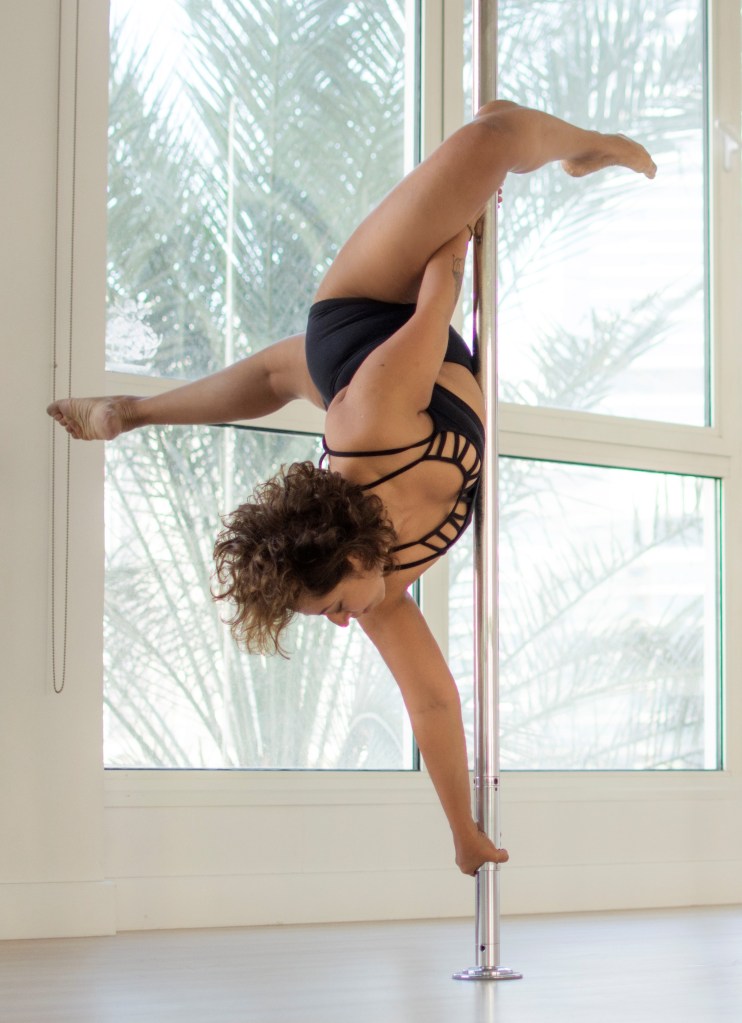
Pole dancing for me, was a bit rebellious, and it was breaking convention. A 48-year-old mother learning pole dancing was unconventional, but I loved doing it. Also, it was a question of mind over body and I had to prove to myself that I could do it. Also, with pole dancing, it was just me. I did not need a partner; it was that simple. It was very challenging. After my first class, I laughed and asked myself, “Are you kidding?’ But I stuck with it. I was very slow and did it at my own pace. But it gave me this learning, that life need not be a competition, and that I am learning pole for myself, not others. I got better at it and even conquered my fear of inversion on the pole. 

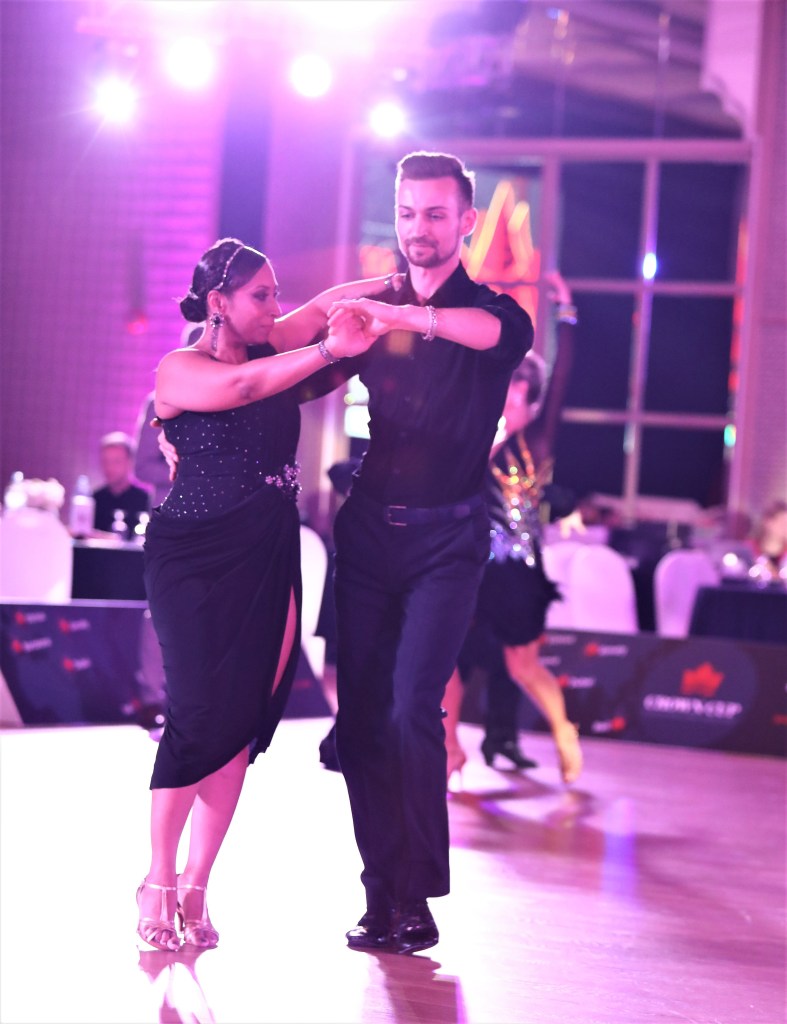
Ballroom dancing is a very expensive hobby. But it gives me a thrill dancing with a partner. My partner and I were on a massive stage during the competition, being judged and competing with other couples. When you get on the stage for the first time, you freeze and you forget your steps, until you regain control of your mind and breathe again. It is a beautiful experience of mind over matter. It was very motivating to dance on the floor and wear those exotic outfits and to let that side of your personality out. There is so much hard work behind it, and anger and frustration as you push yourself.

What are your plans for the future?

I haven’t given it much thought. I want to open a Centre, where people can come and spend time. Since I moved to Dubai, I have had friends and clients come and stay with me. We spent two or three days together, and it made a big difference in their healing journey. If they are going through very painful experiences, I think it is important sometimes to disconnect from everything familiar. When you go to a therapist, a counsellor, or an ayurvedic treatment, it’s very clinical. As a healer, I bring something different to the table. I would like my clients to stay in-house with me and allow me to share the energy that I bring into the process and heal during that time. That is something that I would like to do in the future.

I am very passionate about working with women, especially young mothers who feel unworthy. I want to help them make that shift and point them in the right direction. Also, every time I go to Chennai, I visit my college and have a chat with the young women there. I wish I had some of the tools that I have now, as a young girl. It could have made a lot of difference, if I knew then, what I know now. I don’t have any regrets, but if I did have the opportunities and choices before me, I may have chosen an alternative path. I love to be that conduit to talk to young people to enable them to explore and create awareness about choice and decision making.

What would be your advice to a person, floundering in the dark, not sure about their choices, and hesitant to seek help? What is the first step they need to take?

The first thing they need to understand is that everything happens for a reason. You come to a point, where you are feeling overwhelmed and unhappy, it is time to press on the brakes and ask yourself why this is happening. We upgrade our gadgets and household equipment all the time and yet we are hesitant about upgrading ourselves. What I mean by the upgrade is, asking yourself the right questions about anxiety, confusion, and conflict and getting different answers that help you move forward and get out of a rut. Asking for help is not a vulnerability, but is in fact strength. We want to be the best versions of ourselves and we should not stop ourselves from doing that. It is never too late to change for the better.

Be the Change you want to see in the world: A conversation with Judith Crosland Part II

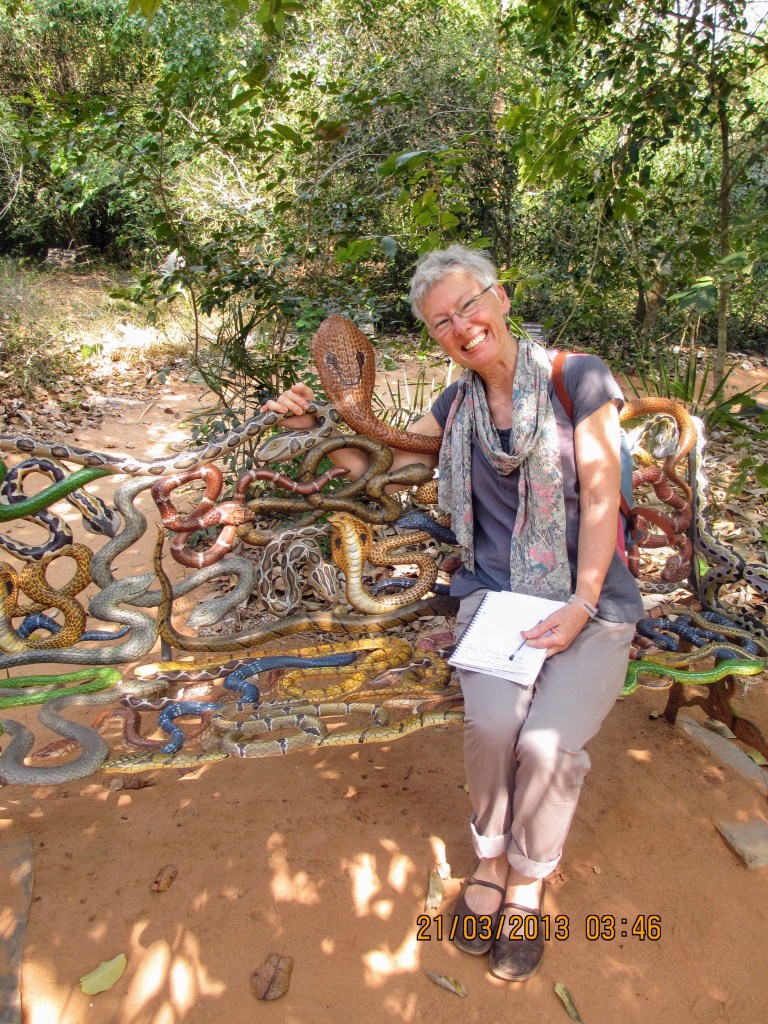
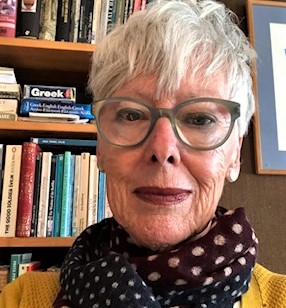
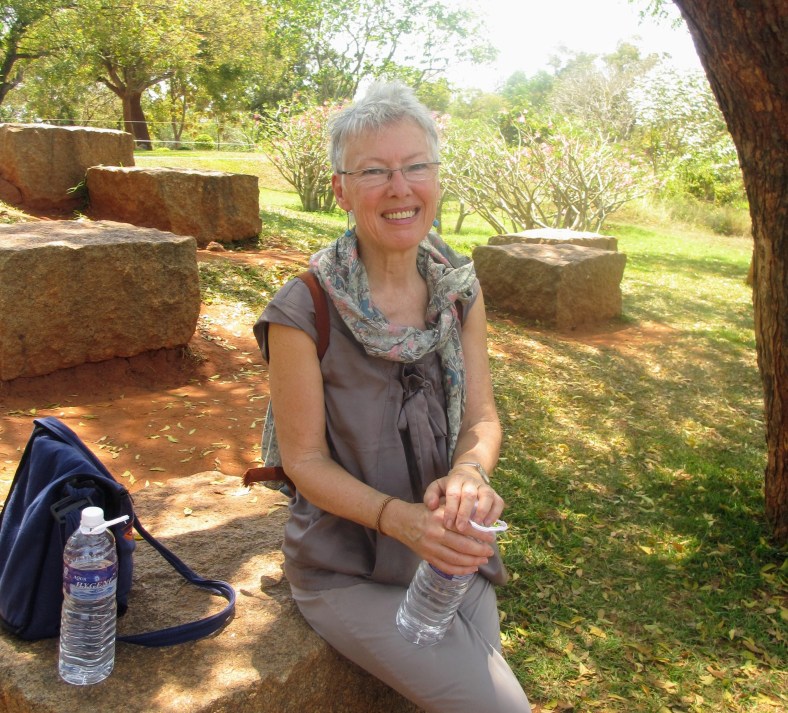
Part II of my blog post on Judith Crosland is about her first and subsequent travels to India, her work with non profits supporting rural women and livelihoods, the books she has written and other experiences that highlight her authenticity, empathy and the ability to motivate and inspire others. I first met her in 2009 when I started working with Jeevika Trust, a UK based intermediary. Our travels took us to remote corners of the South and East India and In the evenings, after we were done with work, we would connect over a drink together either in the comfort of our hotel room or in a nearby restaurant. We were women from two different worlds separated by age, culture and social conditioning, yet we felt a kinship and a sense of ease and comfort with each other, that allowed us to easily discuss our lives, our families and share confidences. It has been a few years since we last met in person (we keep in touch via Whatsapp calls and messages), but we still carry within  each other the deep bonds that cannot be severed by time and distance. Read on …

Tell us about your travels to India. You spent a considerable amount of time in India and you returned many times.

I had never been to India before then: all I knew was that people in villages lived a hard life there. The first time I went to India to evaluate the mint-farming project, I found India overwhelming: its beauty and poverty, its customs and its people; it was a way of life I found fascinating. Most of all, I was aghast at the poverty but this made me more determined and passionate about making a positive contribution to the lives poor rural women in particular. I was amazed at how bereft they were and how they survived the tough life they led.

I became involved with various livelihood projects: beekeeping in Uttarkhand, goat farming south of Agra, water development, crab cultivation, health and hygiene (sanitary napkins) and other projects where women could improve their quality of life for themselves and families. I visited India every year, from the early 2000s to 2018 during which India Development Group (IDG) renamed itself as Jeevika Trust. I would visit for weeks at a time to devise and design projects along with the local Indian representatives and consultants. Together we would visit the villages to assess and evaluate project implementation. I visited twice as a tourist, travelling through Kerala and then again through UP to Varanasi and Sarnath. On one occasion, my son travelled with me. He was so shocked by the extent of poverty that he couldn’t stop giving money to beggars and to others in the villages. I needed to explain to him giving money in that way simply entrenched dependency; it did not help individuals escape their poverty. If we want to help poor rural villagers, especially women, we need to ensure that we are able to involve them in projects that provide the skills and support required for them to be able to help themselves become independent.

Apart from the work I did in India, I had the opportunity of working, collaborating and developing close friendships with my Indian colleague and the people associated with the non-profits I worked with. They left a huge impression on me in terms of their compassion for the villagers they worked with and what they had achieved for them. Their sense of affection and caring and the deep bonds that I formed with them will always be with me. Even though they are at a distance, they still feel very much a part of my life.

You also started your own non-profit?

I was with IDG for three years when there were difficulties raising funds and the money was running out. I was asked to leave because they couldn’t pay me. At that stage I started a non-profit called The GEN Initiative which worked in Haryana. GEN focused on literacy, income generation for women, and support for farmers for agricultural and horticultural improvements, including upgrading their dairying practices and a wide range of rural and village development activities. I administered it for ten years and it only worked in Haryana. After ten years, I was back working in IDG, now rebranded as Jeevika Trust.

You are also a cancer survivor, but very few people know about it.

I was diagnosed with breast cancer in 2010. I was living on my own and decided not to tell anyone except my closest friends and my yoga teacher. I didn’t want people sympathizing with me as if I was going to die. I just went through the treatment and recovery process in my own way. After I was done with surgery and radio therapy I went about my daily business. When I came home it didn’t stop me from doing my work. I was able to use the computer and phone as usual. I continued my yoga and meditation and kept positive through this process and I continue to use alternative and natural therapies to heal myself.

You are a prolific writer and have self-published three books. Tell us about them.

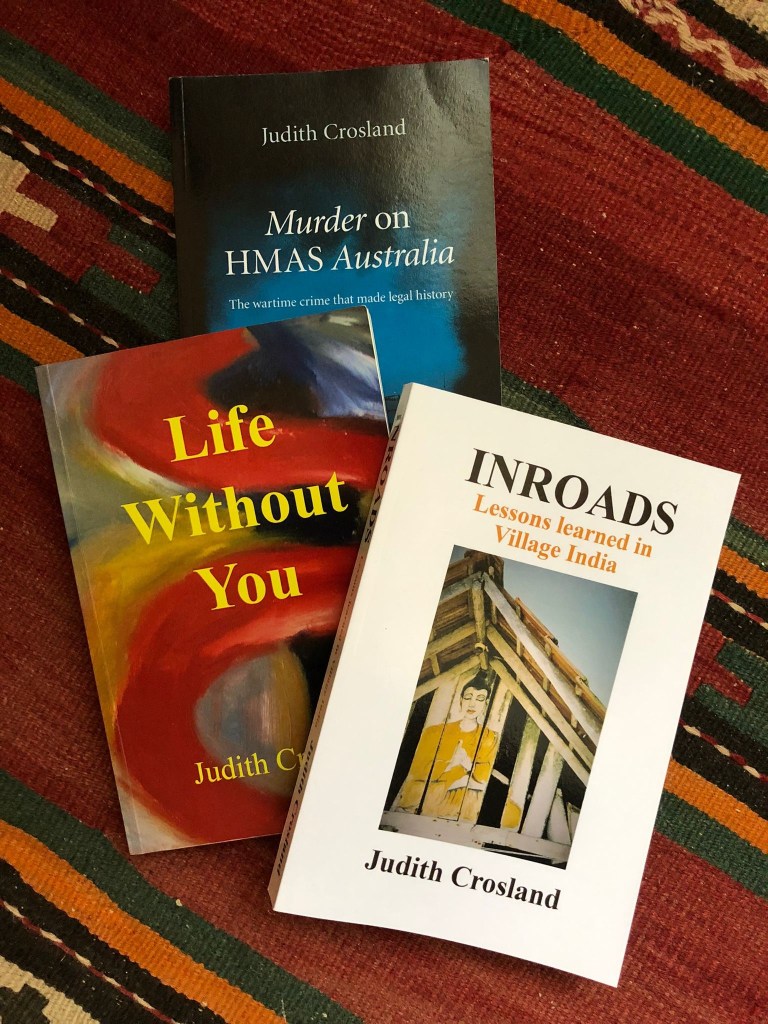
When I travelled to India, I would travel on to Australia every other year to see my son. On one of those visits, I met with a relative of mine. He and I were curious about a mutual friend who had always hinted of a mysterious past. After his death, our research uncovered the story of how he had allegedly murdered a man aboard HMAS Australia while at sea during the Pacific War in 1942. My relative suggested I should write a book about it. Back in London, I was having coffee in a cafe where pinned on the wall was notice about a writer’s workshop. That workshop, research and a Writer’s Circle – where my fellow writers helped critique my writing – gave me support over the two years of writing the book. The book was self-published in 2016 titled Murder on HMAS Australia. My second book, called Life Without You, is a memoir about the romantic relationships I had and what I learned from them. My most recent book, titled Inroads: Lessons learned in Village India, was published in 2020. Currently I am writing about my present life in France. In years past, life drawing and abstract painting kept me busy and, for a period, I found the writing and painting fed off each other. Now it is the writing alone with which I am most interested – with a computer it is possible anywhere, especially if I’m travelling.  

The pandemic has resulted in you moving to France.  How do you spend your days and keep busy?

In a strange way, I have come full circle because of the Pandemic. Earlier on in my life when I left Australia to come to France, I wanted to buy a house and live there, but didn’t get the opportunity. Twenty years later, my partner Chris and I bought a house in the South of France, as a holiday home. Since then, we have spent short periods here. In 2020, we came here to spend a couple of weeks, then found that because of Covid we could not travel. Since it was difficult to return to England, we were obliged to become French residents. This has now become our permanent home.

I resigned from Jeevika Trust in 2019. Since then, in between writing, I have taken on various small voluntary assignments. I am currently working as a volunteer advisor for the Otterman’s Institute which educates children and young adults through online AI (artificial intelligence) tutoring.  Apart from writing about my life in France, I am also care of my partner, who is not currently in good health. The development sector remains dear to my heart and there is much that can be done to contribute online. Right now, it is difficulty to think much beyond the moment: I’m learning to go with the flow.

Do read Part I of my blog post with Judith Crosland to know more about her early life, and how travel broadened her horizons and changed her perspectives on career and personal growth.

Be the Change you want to see in the World: A conversation with Judith Crosland – Part I

My blog wouldn’t be complete, if I didn’t write about Judith Crosland – a friend, ex-colleague and mentor, who has been an inspiration and role model. For close to ten years, we travelled across Tamil Nadu and Odisha, assessing our grantees (small non-profits) and their programs. In the evenings, after we were done with work, we would connect over a drink together either in the comfort of our hotel room or in a nearby restaurant. We were women from two different worlds separated by age, culture and social conditioning, yet we felt a kinship and a sense of ease and comfort with each other, that allowed us to easily discuss our lives, our families and share confidences. It has been a few years since we last met in person (we keep in touch via WhatsApp calls and messages), but still carry within each other deep bonds that cannot be severed by time and distance. Read Part I of Judith’s conversation with me, as we talk about her early days of travel, her decision to go to University as an older student, her transition from working with the government  to working with a non -profit and how her intention to empower poor rural women took root.

Could you start by telling us a little bit about where you are from?

I was born in 1944 in Sydney but grew up in a seaside village on the west coast of Australia. My mother had a business on the waterfront and my father worked in an oil refinery.  It was a seaside village visited by tourists during the summer, mostly pastoralists who owned holiday homes there.  Following high school I went to a business school where I learned typing, shorthand and bookkeeping. I taught in that school for a little time before joining the Commonwealth Public Service in Canberra as a government employee where I worked for a couple of years. Like Delhi, Canberra is the country’s Capital centre for  embassies and government departments.

But you were bitten by the travel bug…

I was young and decided I wanted to see the world. I went by ship to Canada. My original plan was to travel via Europe to a Kibbutz. (A kibbutz is a community settlement in Israel). But I never got there. (Laughs…)  I got a few odd secretarial jobs in Canada and then soon moved to Washington DC where I worked in the Australian Embassy. I was young, in my early twenties and seeking adventure so wasn’t too worried about where I might work: I had some money saved and I was prepared to take a risk.

Your experience in Washington DC impacted you, didn’t it?

Yes, while I was in Washington DC, two major things happened. JFK had been assassinated a few years before. During my time in DC, Bobby Kennedy and Martin Luther King were assassinated: it was a tumultuous time with curfews and military police and riots and looting. These events left a deep impression on me about world affairs. I spent two years there. I decided to return to Australia where I met my future husband. I continued to work and then had my son.  A couple of years into my marriage, I decide that in order to achieve a more fulfilling work life, I needed to go to a university.

I was in my thirties when I attend the University of New South Wales in Sydney.  I went with the intention of studying psychology, but the timings did not suit me as I had two step-daughters (from my husband’s previous marriage) and a son to look after. Instead, I took up sociology, as the timings fitted with school hours. Sociology confirmed my understanding of inequalities and the role of women: as a housewife and mother, I felt certain inequalities in my domestic life. It was also true that gender roles in the workplace were not equitable and were defined very differently in society. What worked for men, didn’t work for women and the issue of gender became personal and a passion.

It took me four years to finish my undergraduate degree, because of my commitments and responsibilities and then another two years for an MA in Gender Studies.

Did your degree in Gender Studies open up interesting avenues for you?

I was again working with the Commonwealth Government and at the time that legislation had just been passed whereby all Govt departments were required to have equal representation of women, men, indigenous communities and non-English speaking employees within their workplaces. I was in the right place at the right time, working in the area of human resources: I applied for the newly created position of Equal Employment Coordinator within each Department. In that position, I had the responsibility for bringing equality into the workplace of some thousands of employees.

And then the travel bug bit you again…

I worked with the Commonwealth in this position for ten years which was challenging and difficult work. Entitled to take six months of leave with full pay at this time, I went to Perugia in Italy to a language school, for three months then travelled through Europe. When I returned to my work, I felt it was time for someone else to take over.

My life had gone through many changes; I divorced mid-way through my Masters. I experienced other relationships; my son went to university and I no longer had the same level of responsibility. I decided I would do something different and planned to find a retreat in France where I might run a workshop on creative arts – writing, photography, painting and spirituality in France.

At the language school in Toulouse I met a friend with similar ideas and we found ourselves a farmhouse deep in the French countryside which provided gites (tiny dwellings that people rent for holidays). It was perfect accommodation for the workshop. I coordinated the six workshops and employed others to facilitate their content.

At the end of the workshops, a friend of mine asked if I would be interested in a position at the Commonwealth Secretariat based in London. To my surprise, I was selected and, in 1995, I began to work with the Director for Gender and Youth Affairs. I was employed to do two things: to turn around inequalities in the Secretariat itself; and to develop a Strategic Plan to ensure that the programs developed by developing countries brought about equality and equitability. It was this plan that the Secretariat took to the UN Conference on Women held in China. By this time, I was in my fifties.

 And then there were a few events that changed your perspective and direction of your career?

Yes, when I was with the Commonwealth Secretariat I attended a Microcredit Conference in Washington, DC. At the conference, I got into the elevator and found myself alone with Dr Muhammed Yunus who set up the Grameen Bank in Bangladesh. We had a very brief exchange: I told him how much I admired him for what he had achieved and that I wanted to do something to help women. He said, “If I can do it, so can you.” That had a real impact on me, as did the conference. I thought microcredit was a brilliant idea: it gave the most impoverished women the opportunity to work for themselves.

Around the same time, I got involved with the Gandhi Foundation in London. I met the Secretary General of the Gandhi Foundation, Mr. Surur Hoda and discussed the concept of microcredit at Foundation meeting. He was impressed with my passion and asked if I would help run his charity, the India Development Group (precursor to Jeevika Trust). I told him I had never worked for a charity and wasn’t sure I could help. He asked me to take his card anyway.

Eventually, my consultancy work dried up and I went to work for Surur Hoda and his charity. The very first funding application I wrote brought in a lot of money – around £240,000 for a microcredit mint-farming project for women near Lucknow in UP. My dreams were on their way!

The True Path of Giving: A Conversation with Sivakamavalli

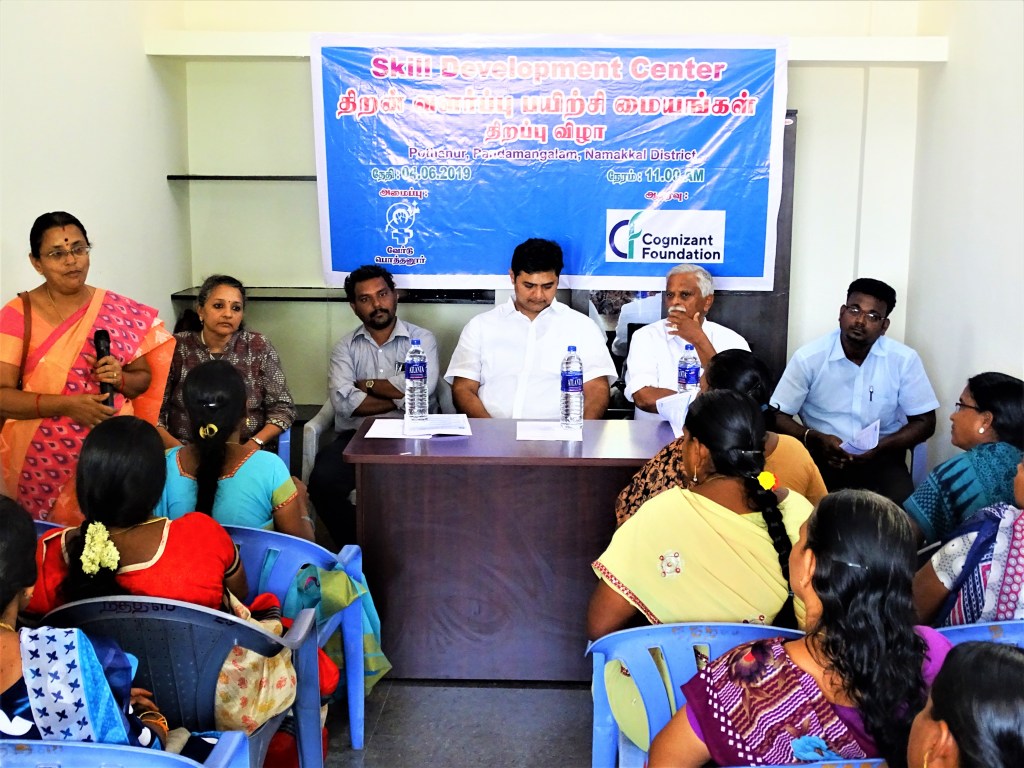
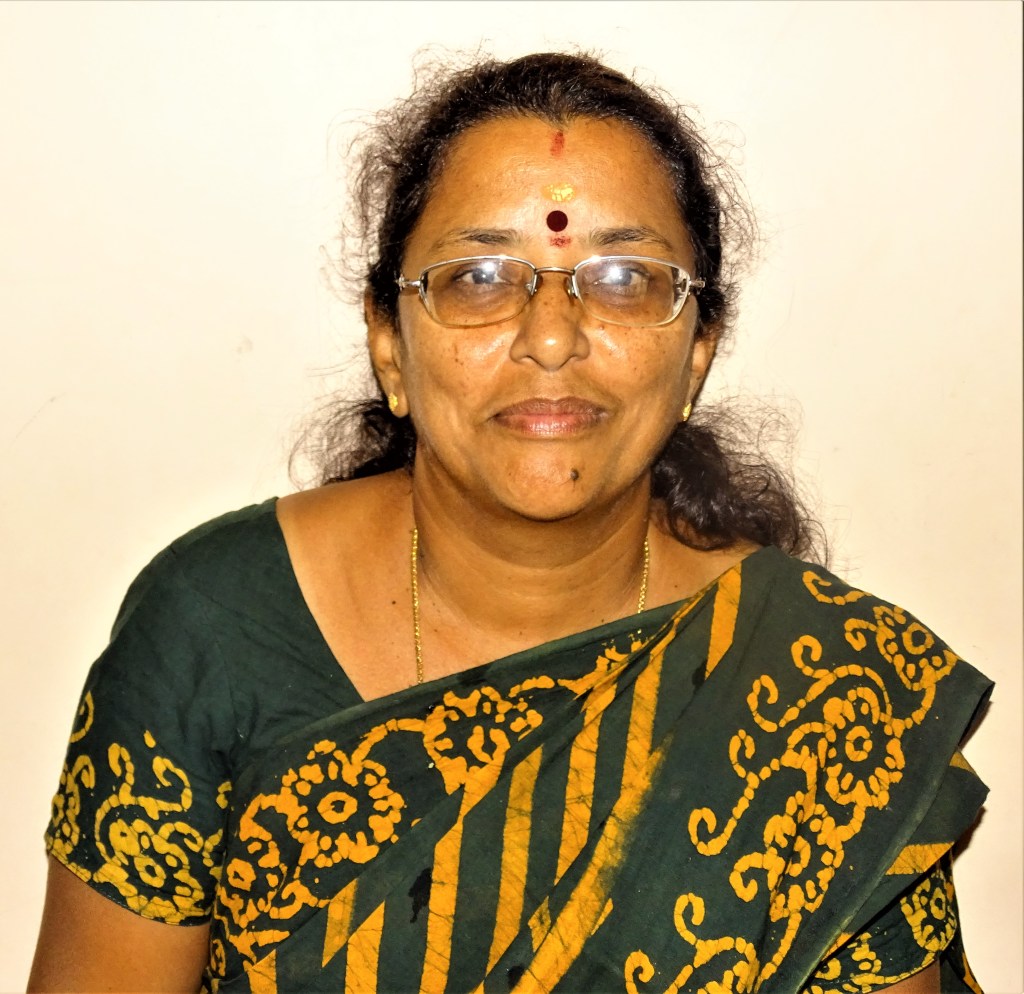
When I asked Sivakamavalli as to how I should address her for this interview, she chose to use her just first name with no initial or surname.  A simple, unassuming woman, who exudes strength, purpose and integrity, she has worked tirelessly for over thirty years to empower and bring about real change in the lives of women and children from underprivileged communities. It is a delight to listen to her address an eager group of poor rural woman and educate them about self-reliance and economic independence.  I am as much awestruck as them, as she in Tamil outlines the various opportunities and schemes that they can avail off to better their lives and that of their families.  Siva believes that in the service of others, we discover our own lives and happiness. Read my interview with her to find out what makes Siva special and a woman who would forge her own path with a little bit of help from her father.

You had a very different childhood compared to other girls, Siva. How was your family different?

I was born in 1968 in a small village in Coimbatore District. I have six siblings, all brothers. My father worked with the Khadi and Village Industries Commission as a Manager and my mother was an elementary school teacher.

I had a very happy childhood. I was the youngest child and the only daughter and was spoilt by my family as a young child. I was never treated differently from my brothers and was treated as an equal. My father believed in giving me the same opportunities as my brothers. I was never asked to do any chores around the house just because I was a girl. I was never made to feel lesser than my brothers.

Your father was a very special man and influenced the path you chose in life. How did he influence you?

My father was no ordinary man, he was a Gandhian and a freedom fighter. As a young man, he moved away from his affluent family, as he got involved with the Freedom Movement. He spent a few years in Vellore jail. He even stayed with Gandhi in Wardha. He even tore up the card which designated him as a freedom fighter as he had no interest in getting a pension.  But I didn’t know much about his involvement in the freedom struggle. I only found out about his contributions after he passed away, from his friends and colleagues.

I finished my Bachelors in Zoology and was keen on becoming a teacher like my mother. But my father had other plans for me. He convinced me to enroll in a masters in Social Work. I had no idea what the course entailed and decided that I would grit my teeth and finish it somehow. After I finished my Masters, I took up a job as a counsellor at a private counselling center in Coimbatore My job was to resolve family disputes, help with career guidance etc.  It was then that I realized that I had lived my life in a bubble shielded from issues and problems that people face. It was the first time I encountered the problem of dowry and its impact on families. I encountered families who thought it was a sin to give birth to a girl child and wouldn’t hesitate to abandon or maybe even kill her. These issues impacted me strongly and I began to realize that this was a journey that I was meant to take. My father had made the right decision for me.

A very special man came into your life when you started your journey in the social sector, didn’t he?

I worked at the counselling center for several months and then got a job with a non-profit in Dharmapuri My job was to identify new born with low birth weight and ensure that their nutritional needs were met. We use to make health mixes with supplements for expectant   mothers and ensure that Antenatal care (ANC) was provided by skilled professionals throughout their pregnancy. (Antenatal care includes risk identification and screening, prevention and management of pregnancy-related or concurrent diseases, and health education and promotion) I used to stay in the office itself and used to go to my relatives houses during the weekend.

I was 22 years old. It was here that I met my future husband, Muniyandi. He was in charge of the women’s health project where I worked as a coordinator. He was from a different community, but in mind there was absolutely no doubt about him. I fell in love with him because he was a simple person who was very committed to social change and wanted to empower disadvantaged communities. He was keen on working with the downtrodden and he became a role model to me like my father.

Though I was young, I was very sure of myself and my feelings. I was very particular that I would not marry anyone else if my family members opposed my marriage. My brothers were not very keen but agreed to the marriage after my father gave us permission to get married. We had a very simple marriage and moved to Pandamangalam in Namakkal District. My husband had registered a non -profit in that area as a friend had told him that that the surrounding area had a high incidence of female infanticide. We started working in the local villages and began doing street plays on female infanticide amongst the general populace. We also began to focus on other issues, such as the plight of women and children from marginalised communities such as Dalits. In 1996, I got a grant from State Social Welfare Board to run creches for working mothers who could leave their children in a safe and secure space when they were engaged in farming or other forms of physical labour. We had no staff, only volunteers and worked from home as we could not afford a separate office space.

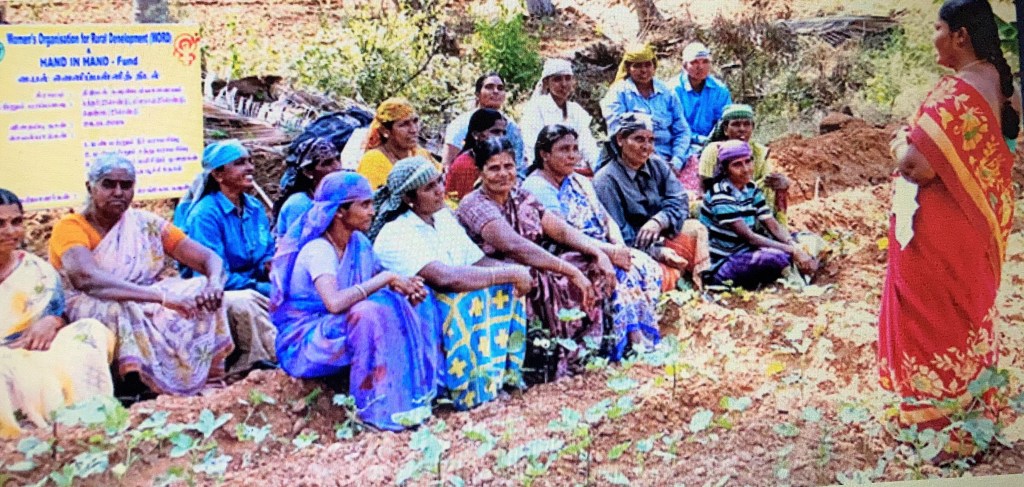
Then in 1998, after we applied for and got FCRA (Foreign Contribution Regulation Act) which enabled us to get funds from abroad, we were able to get a grant from Development Promotion Group for women Empowerment. We were able to form self-help groups with poor rural women, get them to put aside small amounts of money as savings, and give them micro loans to initiate small businesses. We were able to help many women to engage in supplementary livelihoods and earn extra income that helped with their children’s education or address health needs. This project gave me a lot of satisfaction.
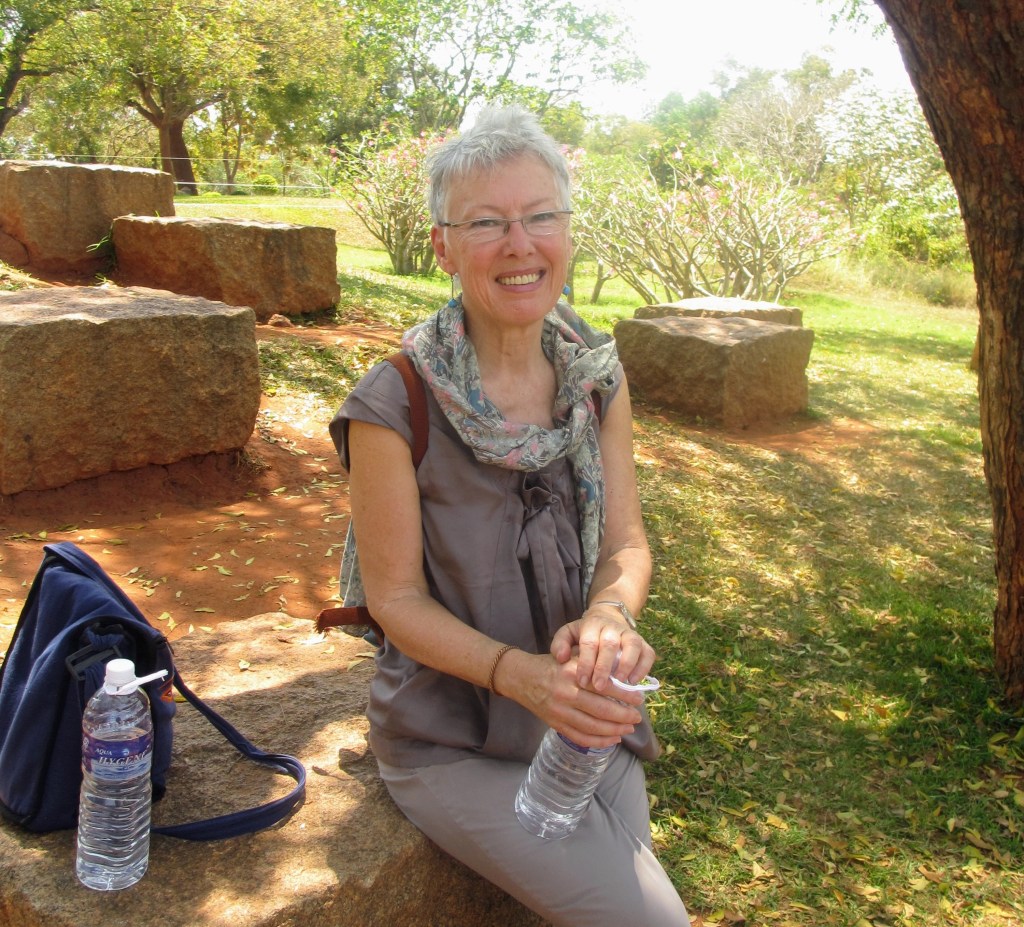
On the personal front, my older son was born in 1994 and my twin sons in 2001. We slowly began to get more support for our work in Namakkal District.

Please tell me about the non profit that you run and the work you do?

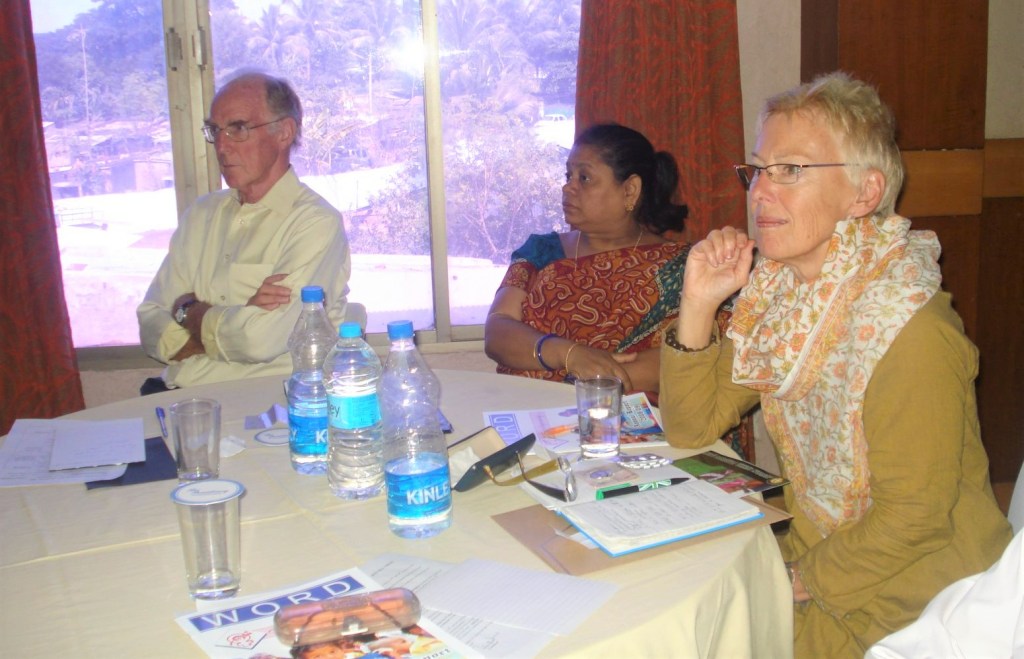
We started Women Organisation for Rural Development (WORD) in 1991. Its initial focus was to challenge the oppressive and discriminatory practices (such as female infanticide, dowry, sexual abuse, etc.) against women in Namakkal District. But subsequently, we began to focus on marginalized communities such as Dalits and tribals and looked at issues that impacted them such as lack of remunerative livelihoods, the degradation and depletion of the natural livelihood resources like soil and water and its impact on farming. We also focused on enhancing community health, especially the prevention and transmission of HIV/AIDS in surrounding areas. In recent years, programs have focused on the empowerment of women and adolescent girls through skill training, employment generation and addressing rights-based issues such as child labour and child marriage.

With support from FCRA funds, we have worked on various types of interesting projects. We got funding from HEKS, a Swiss Foundation and Jeevika Trust, a UK based group, to support famers adopt traditional farming practices and engage in organic farming. We also ensured that the farmers were able to sell their produce at fair prices. With support from Tamil Nadu AIDS Initiative, we were able to conduct a HIV/ AIDS awareness and prevention program for transgenders and sex workers. We also started a senior citizen home in 2002. We found a lot of abandoned senior citizens at bus stops and at the railway station. We initially started a Day care centre where families could drop off seniors for activities and mid-day meals but then were able to purchase some land and construct an old age home with private donations in cash and kind. We now have about thirty senior citizens staying at our premises and we are very lucky that we have benefactors who provide support for their daily meals and other basic requirements. We are also able to provide free health care through the Primary Health Care centre and the nearby Government Hospital.

We also ran an adoption centre earlier as many children were being abandoned. The Tamil Nadu Government had a Thotil Thittam (cradle scheme) were women and families who wished to give up their babies for adoption, could do so anonymously and without any stigma. But we eventually had to shut down the centre as there was very little awareness amongst rural communities regarding adoption. The adoption procedures also require a lot of paperwork and regular court appearances and this was taking us away from our other program activities.

Another very interesting and challenging program which was supported by Freedom Foundation, was focusing on child labour in textile mills in Namakkal District. We organised programs in villages that created awareness on the evils of child labour and how it impacted the rights of children to education, health and protection from abuse and exploitation.

You have also received several awards for your contributions in the field of social work

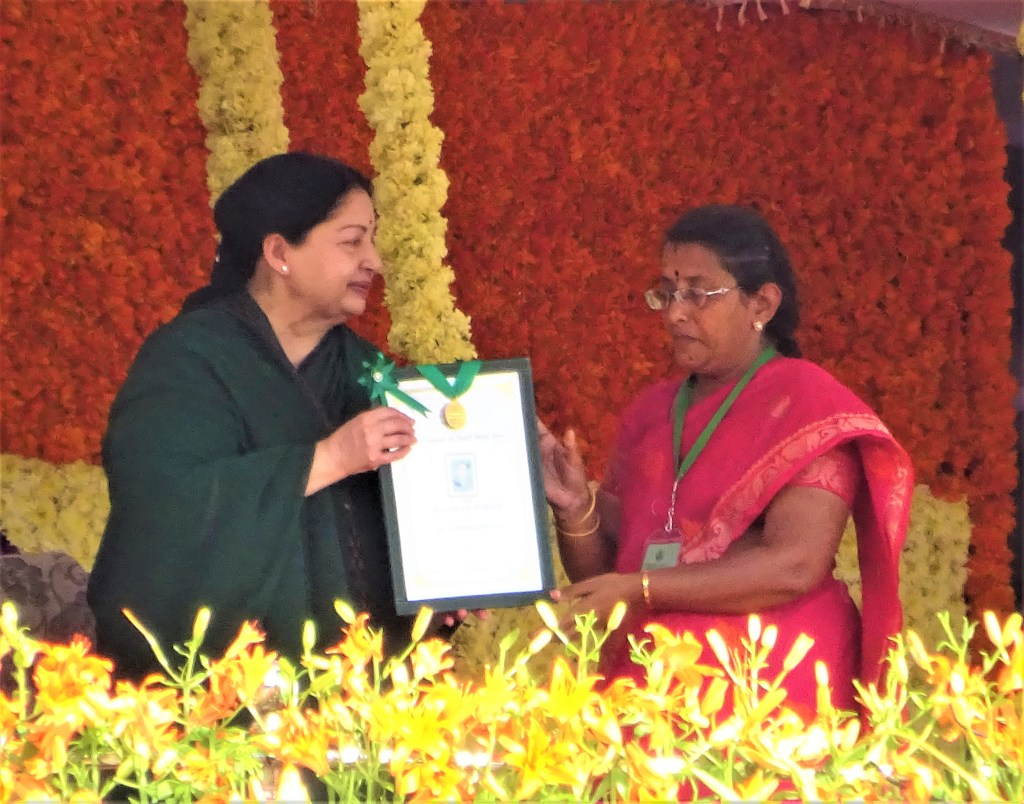
I got an award in 2015 from the then Chief Minister of Tamil Nadu Dr. J Jayalalitha. It was for the Best Social Worker from the State and was awarded to me as an individual. I honestly never expected the Award and it was an incredible honour to receive it. In 2004, WORD received an Appreciation Award for constructing 1000 toilets in the Kabilarmalai Block of Namakkal District as part of the Total Sanitation project. In 2006 we got an award for starting consumer clubs in schools, and educating children about the Consumer Act and its implications. I was also recognised as a Woman Leader by Cognizant Foundation on the occasion of International Woman’s Day 2022.

What kind of work gives you the most satisfaction?

I have always loved to work on women’s empowerment. Women and girls from adolescent communities have never been given the space or freedom to make decisions for themselves. Women play various roles as mothers, wives, daughters and care takers and also contribute to the family income, yet receive very little in return. In addition, they encounter several challenges such as dowry, female foeticide, marital violence, denial of inheritance etc. We have now been working for about thirty years in the field, and have been able to bring about a socio-economic change in the villages we work in. We have been able to make women more self-reliant, and economically independent by providing them loans for their financial needs or to finance their micro businesses. Women are able to contribute to the family income and have a say in decision making.
What work has been most challenging for you?

Working on child rights, especially in the sphere of child sexual abuse has been very difficult for me. There is no security for the girl child in this country. Sometimes they are abused by the very people who are supposed to protect them. It is unfair and horrifying that their basic rights to protection, love, respect and dignity is being violated. As a Child Welfare Committee member for Namakkal District, I found it extremely difficult to deal with the issue. There are so many laws to protect the child, but there is very little awareness among parents and community members regarding this problem.

Do you have expectations from your children like your father from you?

I have no expectations from my children and don’t expect them to take over after me. I will never force them to work in a non-profit or in any other field. I have always allowed them to lead their life the way they want. They are adults now and know what’s best for them. Personally, my work has kept me so busy and there have been many days when I couldn’t spend enough time with them. They all now are busy with college and work and live away from me. I just want them to be happy and content doing what they want to do.

From Diffidence to Confidence: A Conversation with Chandralekha Mahalingam

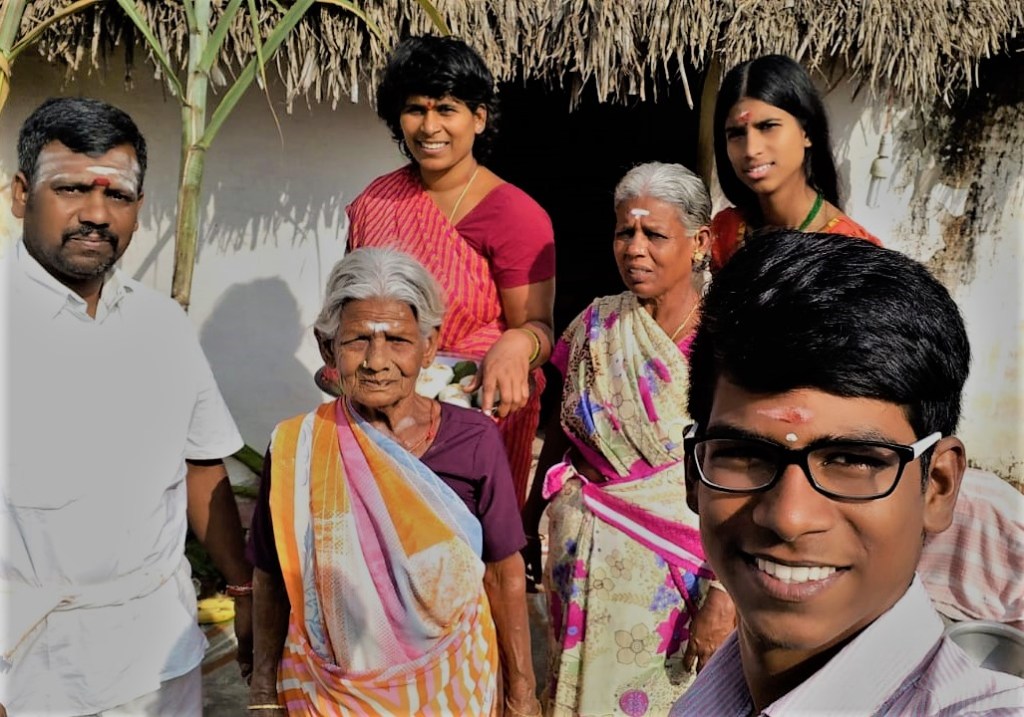
Chandralekha Mahalingam’s ring tone plays the song “Chinna Chinna Aasai, Siragadikum Aasai, Muthu Muthu Aasai, Mudinthuvaitha Aasai (small desires, desires with wings, pearl like desires, desires that have been carefully stored away)” which reflects what she most wants out of life. I remember reading a quote that said ‘Desires must be simple and definite. They defeat their own purpose should they be too many, too confusing, or beyond a man’s training to accomplish”. Chandralekha has understood this very early in her life and is seeking her goals, one small desire at a time. These are simple small desires of being surrounded by family, seeing her children do well, and having a good life with her husband.

 There is a quiet determination to her that has seen her through many challenges in life. Her family, both immediate and extended, is her strength, and they have enabled her to make empowered decisions for herself and her children. When mothers believe in their children, it is a powerful thing. It is especially touching and inspiring to witness Chandralekha’s belief in her children and their ability to empower themselves through education. Her vision for her children has also transformed her from a timid and under confident woman to a bold woman with conviction and sense of self-worth.

Chandralekha, your childhood to a large extent, shaped your thinking and way of life.  As a child, you had to shoulder several responsibilities. Tell us about them.
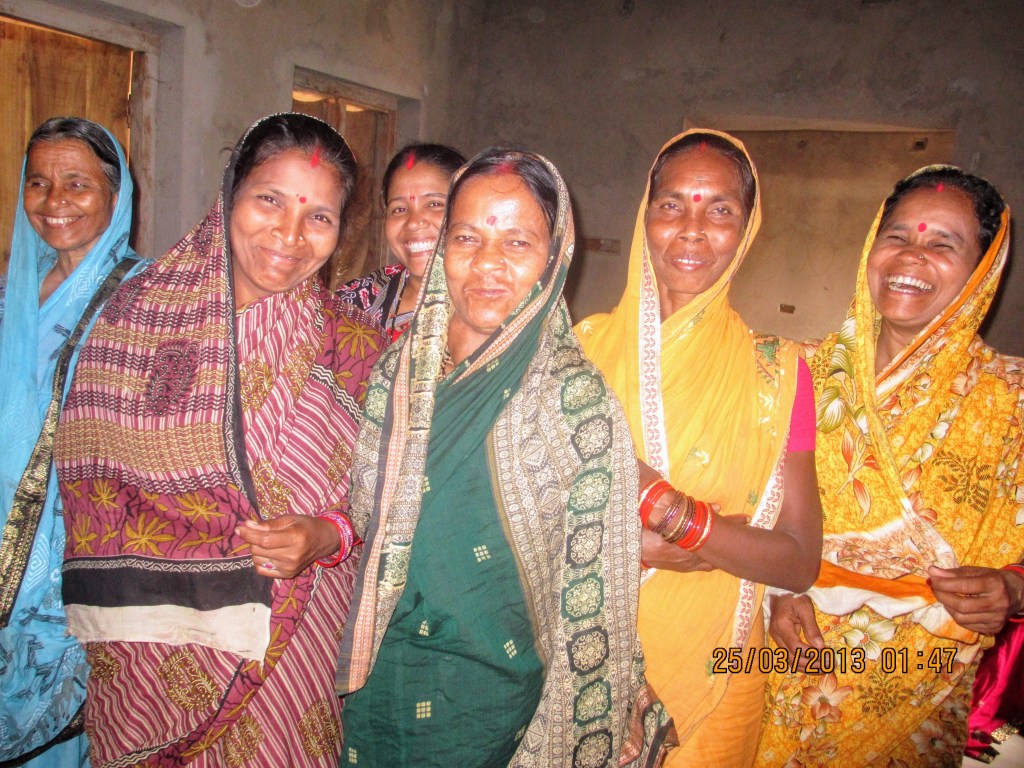
I was born in 1980 in a village in Vizhupuram District in Tamil Nadu, but later moved to Vizhuparam town, where my father built a home.  My father worked with the Electricity Board, where he started as a helper and retired as a foreman. As a young child of ten, I saw my mother mostly sick due to a tumour in her uterus. I had to, even at the age of ten, take responsibility for the cooking, pack lunch for my siblings and wash clothes. My mother passed away when I turned fifteen.  I had just written my Class X Board exams. I had to stop my studies then, as I was forced to take on the responsibility of looking after my home and be there for my younger sister who fell very sick after my mother died. I would have loved to continue my studies. Many of my classmates from school are degree holders. I still feel terrible about not being able to go to college.
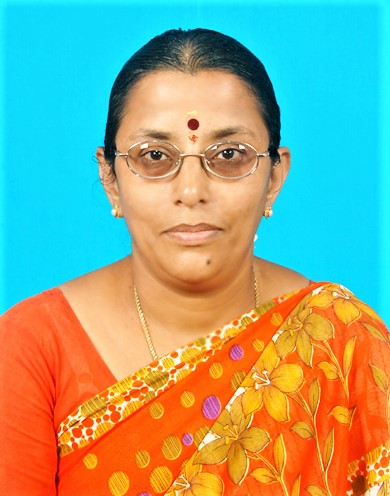
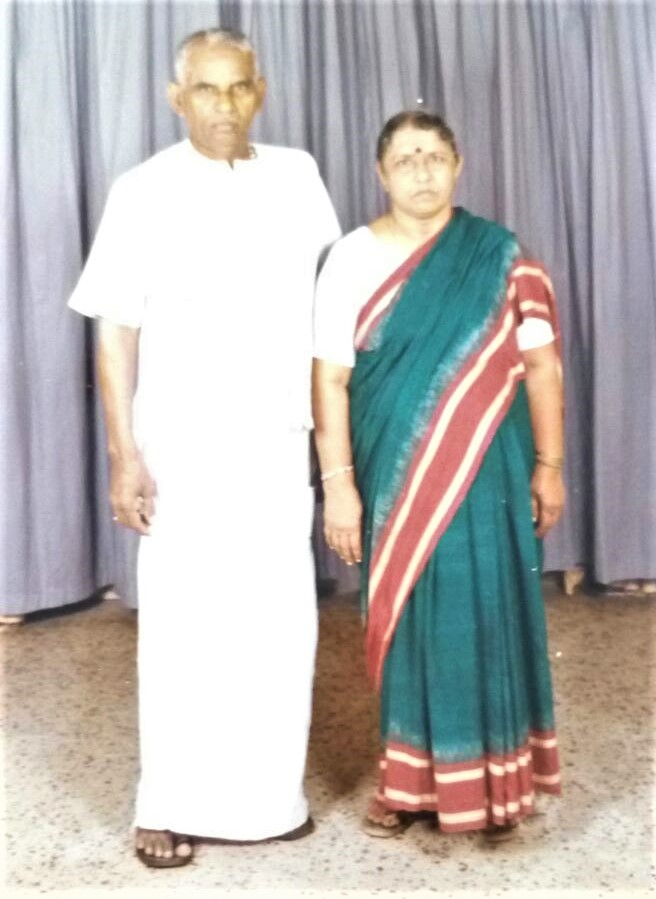
You mentioned that were able to do many things because of your husband whom you describe as wonderful and supportive.

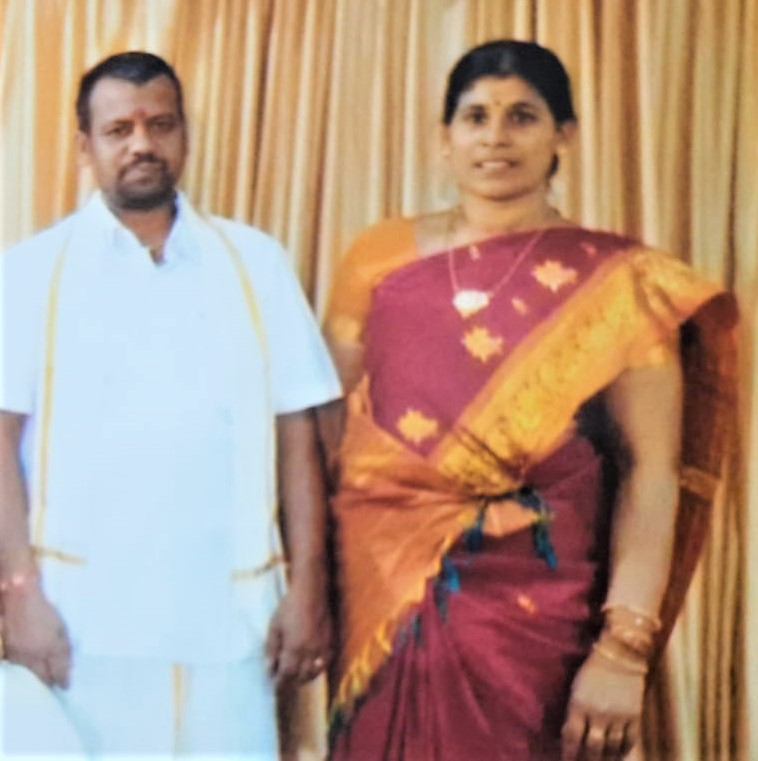
Ours was an arranged marriage. My husband, Mahalingam is distantly related to me. He came over to our home to invite us for his brother’s wedding. It was love at first sight for him and he wanted to marry me. He was 24 years old and I was seventeen. He was working as a truck driver. Both our families were comfortable with the match, as they knew each other well. More importantly, the horoscopes matched. We got married in July 98. But I spent the better part of the first year with my family as my siblings, especially my sisters needed me. It was my husband who encouraged me to do this.   He did not want to uproot me and take me away from a comfortable life in Vizhupuram. After a year or so, I moved to his family home near Tiruvannamalai.

 It was difficult for me initially as I had to move from a town to a village. The house I was living in had no electricity. I was used to cooking with gas, but now I had to cook meals for a large extended family on a wood stove with firewood for fuel. The food I prepared was also different and we would often have rice gruel and porridge, which I had never eaten in Vizhupuram. We were surrounded by fields and snakes; scorpions and centipedes were aplenty. At night I would light lamps around our bed, before I went to sleep. But the love I received from my husband’s family made it easy for me to adjust. My mother-in-law is a very supportive and wonderful person. My son was born in 2000 and my daughter in 2003. My husband wanted our children to be educated in a city and we moved to Bangalore, as he found employment there.

Bangalore must have been a big change for you. What were your initial experiences like?

It was a change for me as we were moving away from our joint family and the village, we were living in. From a fairly large village home surrounded by fields, we moved into a cramped one room home in Jay Bharat Nagar in Bangalore. I wasn’t awe struck by Bangalore, I had lived in Vizhupuram, which was a fairly modern town. Only Brigade Road and MG Road impressed me. Not knowing Kannada was a but difficult, but there were many people who spoke Tamil.

My husband started working in a grocery store. He had quit truck driving as it was a physically laborious and stressful occupation which required him to put in long hours of work. Besides it kept him away from us, as he was on the road most of the time. But his salary at the grocery store was very low. We were in a quandary as to how we would manage on such a low salary. We had put our son in a private English medium school and had to pay a fair amount of fees. Our rent was also fairly high. It was at that point that I decided that I would start working.

Your decision to work changed you as a person, didn’t it?

I was a shy and insecure person. My exposure to the world was very limited. I would cry at the drop of a hat and would get embarrassed easily. I was too afraid to voice my opinion on anything. But circumstances forced me to take up a job. We had moved to Bangalore against my father’s wishes and I was hesitant to ask him for a loan. I didn’t want him to criticize my husband or me. My husband’s aunt was a housekeeper in an apartment. I asked her to help me find a job. She found me a job with a lady from Kerala. My job was to help her in the kitchen and carry out a few other chores. My first salary was Rs 500 per month.

I initially did not let my husband know that I was looking for a job. When I finally mentioned it to him, he was hesitant at first and not too happy about my decision. He felt that as the man of the house, it was his responsibility to take care of me and the children. He was also concerned that I wouldn’t be able to handle a job in a city. But he understood my need to contribute to the family income and was supportive of my efforts.

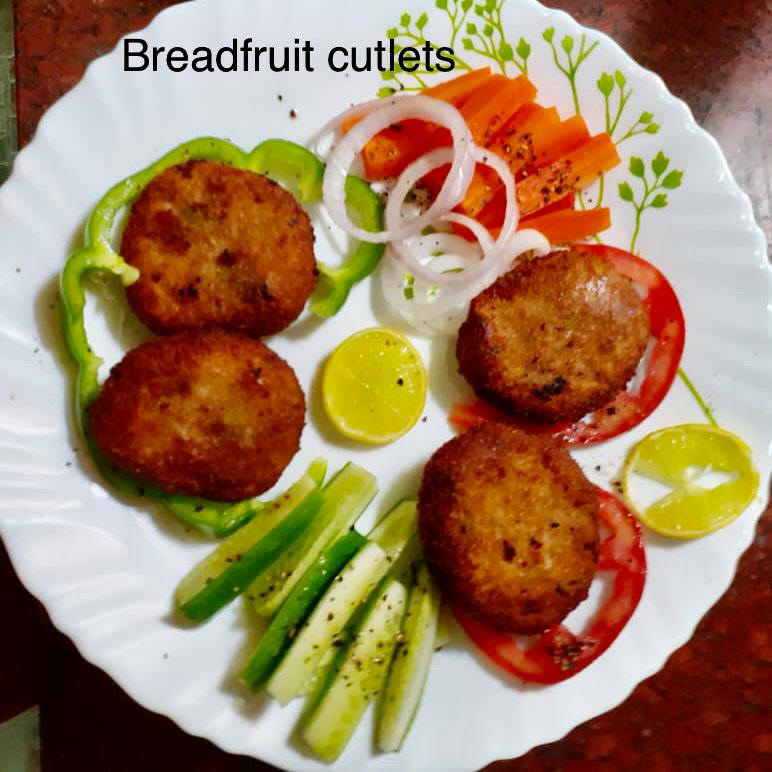
The Chechi (elder sister) who hired me was a wonderful woman. When I first met her, she sensed my nervousness and lack of experience and gave me a big hug and reassured me. I can’t tell you, how much that hug meant to me. It gave me a shot of confidence and self-worth.  I was so scared to venture out to the shops to buy items. I was afraid that I would get lost. She would stand by the window, and would call out reassuringly to me and would wait there till I got back. Her affection and support gave me so much of confidence and courage. She taught me to cook dishes that were very different from the home cooking that I knew. I learned to cook Kerala cuisine and learned dishes such as fish curry, cutlet, Biryani, Avial etc. She even taught me how to cut vegetables and grind various types of masalas. After about a year they moved abroad and I started working in other homes as a cook. My husband got a better paying job as a car driver. Our fortunes improved and we were able to move to a slightly larger home.

Besides working as a cook, Chandralekha, you also became an entrepreneur?

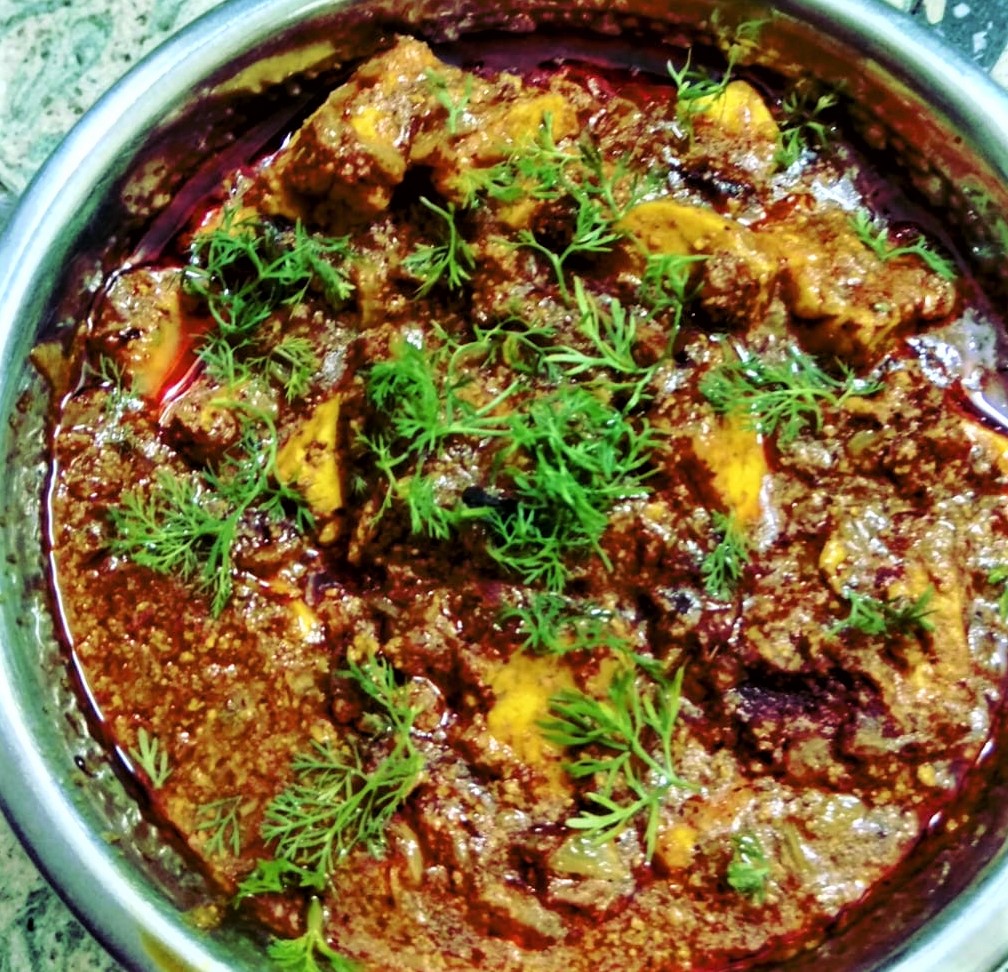
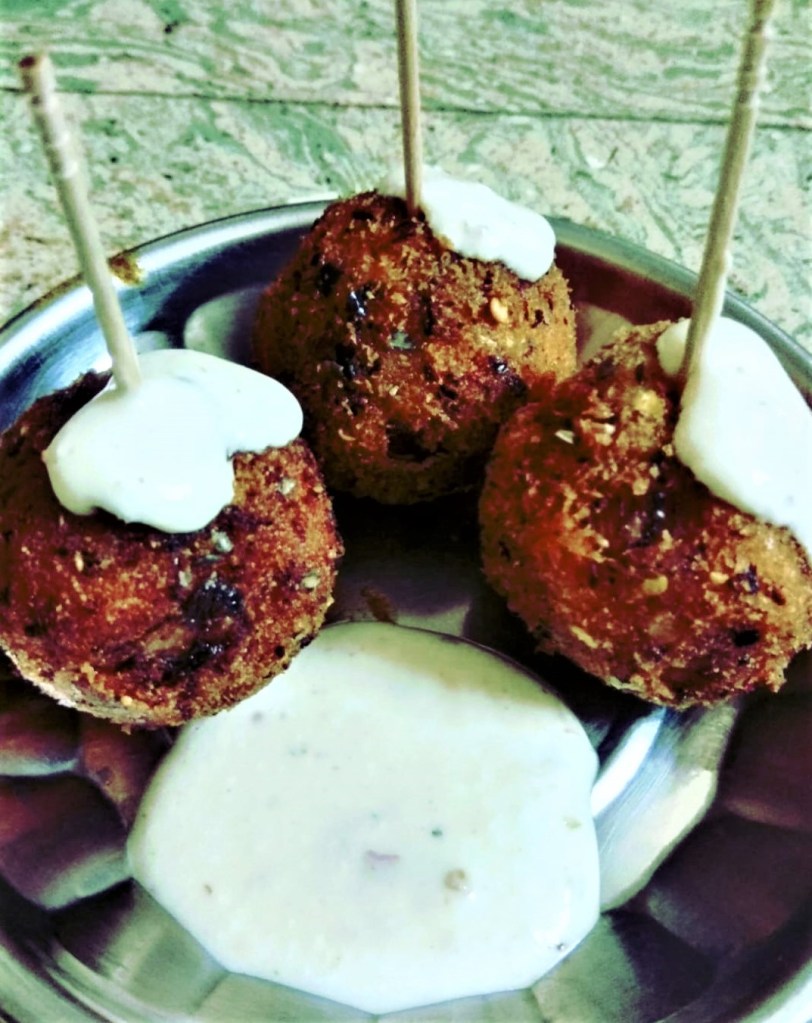
I started working in several homes as a cook. Each family taught me something new. I have a very good memory, once I’m told a recipe, I retain it in my mind. I learned a lot of new dishes from various cuisines.  I was taught about using the right measure of ingredients for a dish. I learned several western dishes including bakes and French toast. I learned how to operate equipment such as ovens, microwaves and dishwashers. One of my employers also gave me tips on financial literacy and saving. I began to be more careful with my money and put aside money for education for my children. I learned North Indian dishes Aloo and Methi paratha, Kadhi and various types of Dals from a Punjabi family. To date many of my clients who used to buy food from me love my roti, dal and subzi. I also learned to cook several meat dishes. By then, I had picked up a smattering of English and was able to find a job with an Australian family. Thy were wonderfully patient with me and taught me so much. They taught me how to make salads, bakes, meat dishes in the western style, pasta, spaghetti, white and red sauce, various types soups, salads and dressing. They also taught me various techniques like smoking, steaming, baking, basting, marinating etc.

Some of my employers encouraged me to start catering. One of them helped me advertise my services on Facebook and I got a lot of orders. Several people started ordering lunch and dinner from me on a regular basis. I had at least ten customers who were ordering on a regular basis. Some of my customers asked me if I would take party orders. We started small, but then I partnered with my sister and began to cater for large parties. I was able to cater for up to 40 to 50 guests.  We were able to prepare Chinese, Italian, North and South Indian dishes. I would surf the net with my children’s help to find various new recipes. We also participated in exhibitions and melas and served snacks such a Pav Bhaji, Vadapav, Bhajji, Kuzhipanniyaram, chaat, sandwich, samosa etc. We did very well and one of our clients introduced us.  My sister and her husband worked with me. I would get around 500 Rs per day and would make an additional Rs 10,000 from parties only. At one point I was able to earn Rs 40 to 50,000 as both a cook and an entrepreneur.

That’s amazing. Did this successful run continue?

I had an accident in 2017. I slipped and fell into a drain and hurt my knee very badly. I had to go through surgery and physiotherapy and for eight months I couldn’t walk. It took me almost a year to get back to work. But most of employers waited for me and some of them continued to pay me a salary. A few months later my husband fell ill. He had HIN1, and was suffering from chronic pain in his joints. He was diagnosed with appendicitis, operated upon and during this period was also diagnosed with Rheumatoid Arthritis.  We were very upset. These were new words for us. But my family and our employers were very supportive during this trying period. He is doing much better now and is back at his job. I was diagnosed as COVID positive last year and that also made it very difficult for both of us to be as active as we were before. I am continuing to work as a cook in a few homes but have not resumed catering. It is a very physically demanding and stressful job and neither my husband nor I have the energy to venture into this for now.

You have always been a positive person and attribute your success and efforts to the support you have received from others. Why do you say that?

I absolutely owe both my attitude and success in my efforts to others. Even as a child, I was fortunate that so many people came forward to help us when my mother was ill and then passed away. My aunt (father’s sister) practically moved into our house and was a caregiver for my mother and a friend of my father was very fond of me and would walk me to school every single day. Our families have provided immense support to both of us. They may not have lent us money but they have always been there when we needed them. Our home in Bangalore, has been an open home, our siblings and extended family have stayed with us while they looked for a job. We always welcomed them into our fold and shared with them what we had. They have reciprocated by showering us with love and affection and always being there for us. If I was busy and my children needed to be picked up from school, one of my brothers in law would be there to offer their services. Similarly, my sister and I ran a business together. The delivery of food items was taken care of by my husband or brother-in-law. They would do this additional work after they came home from their regular jobs. My neighbours have been wonderful and offered immense support especially, when we first moved into Bangalore. A neighbour of mine would accompany me to school and serve as an intermediary between me and the teacher since I spoke neither English nor Kannada in the early days.

My employers went out of the way to accommodate me and my needs. They provided tuition and academic support to my children and last year one of them paid the fees for my son, because we were in a difficult financial situation. More importantly there were always there to provide emotional support and guidance when we needed it.  I can never forget any of them and value their help immensely. I believe that if we see goodness in people, then they see the same and reciprocate with love and affection.

Your desires are simple and sweet. What is it that you now most desire from life?

We are working hard even now for the sake of our children. We want them to have a much better life than we have and not work physically hard like my husband and me. We moved to a city only for the sake of our children. My husband and I did not want the children to struggle like we did. They must be able to stand on their own legs and have a happy successful life with no financial worries or burdens. My son is 22 and has now finished his degree in Business Administration. My daughter has started her degree program in Commerce. We have struggled a lot to give them a good education. We have put them in good colleges and somehow have mustered up the funds to pay for their fees. My son wants to do his MBA, but we have asked him to take up a job for now and try and do his MBA in parallel, as we are in a financially difficult situation. Last year I was forced to ask a few of my employers for money and they very generously offered to support my children’s education. I didn’t want to but had no choice. It means a lot to us that my son is a graduate and my daughter is in college. We have no expectations from our children. We want them to be happy and financially comfortable and stand on their own feet.  

The Quiet Inspirers: A conversation with Vasantha Natarajan and Rajashree Vijay

Vasantha and Rajee

My second blog post features the mother and daughter duo of Vasantha Natarajan (87 years) and Rajashree (Rajee) Vijay (64 years). They are the epitome of simplicity and grace and use their innate qualities of persistence, concentration and empathy to do work that matters to them and benefits others. I have known them both since 1999 and count Rajee as one among my closest friends. Both Vasantha Aunty and Rajee, are examples of courageous women who have in their quiet way, overcome personal trauma and obstacles to discover themselves and their goals. Vasantha Natarajan credits her father for giving her support and guidance during the most difficult years of her life, but it is her immense resolve and focus and dedication that enabled her to walk on a path that most women would be reluctant to take. Rajee Vijay teaches us the importance of staying true to ourselves by following her passion to work with children with disabilities and using experiences in her life as a stepping stone to enrich herself and the world around her. Read on to be quietly inspired.

Vasantha Aunty and Rajee, 1965 was a difficult year but also a pivotal one for both of you?

Vasantha and her husband

Vasantha Aunty: In 1965, I lost my husband to an aggressive form of Leukemia. I was shattered. He was everything to me and my children. I married him when I was seventeen. I was twenty-nine when he passed away. I felt lost and unsure about my future.  My father who was a very progressive man, insisted that I move with my mother and him to Bangalore and resume my studies. Initially my in laws and my extended family were reluctant and not keen about the move. In those days it was rare that a young widow would move away from her family and go to college. But my husband’s cousin who had lost her husband and was a teacher was a great source of support. After 13 years of break in my academics, I did my PUC in Mount Carmel and then my BA(Hons) and MA in History in Central College, Bangalore. On the first day of college, some of my classmates thought I was the teacher. I was so much older than them. But I was determined to do my best. A new window of opportunities suddenly opened for me. I was completely focused on my studies and   was determined to give a good life to my children.

Rajee: I was seven and my sister was 10 when we lost our father. I idolized him and the cancer took him suddenly. Even before we could come to terms with his death, we were forced to shift from my father’s village to the city. My mother began to focus on her studies and our grandparents whom we barely knew, took care of us. It was very difficult for my sister and me. In those days, people didn’t quite understand trauma and change. The shift from an idyllic village to a big city, from Tamil to English medium and from a large home to a much smaller house in Bangalore was difficult for me. I even threatened to run away. One of my earliest memories in Bangalore was of me standing outside my mother’s room and crying for her attention.

Young Rajee in a play

My grandparents were very loving and caring, but they didn’t quite understand our trauma of losing a parent. Our mother always wanted the best for us. But she was very busy with her studies and could only give us limited time.  I still feel the loss and insecurity that I experienced in my childhood.  Time is a great healer and we slowly adjusted to life in Bangalore.

Vasantha Aunty and Rajee, there is a complete contrast in the journeys you both take after you finish your Masters degrees. Could you tell me a little about that?

Vasantha Aunty: After my MA, I wasn’t sure about what I wanted to do.  I responded to an advertisement for a lecturer from the Department for History at the Sarah Tucker College in Tirunelveli in Tamil Nadu. I got the job and stayed in the ladies’ hostel for two years. It wasn’t easy for a widowed Brahmin woman in her thirties to shift to a new town, take up a job and live in a hostel.  I had no teaching experience and had to learn to give history lectures about ancient Sangam Era History in formal Tamil. Living away from my parents and my daughters was particularly difficult. But my colleagues were very helpful and supportive.

Vasantha as a Graduate

Within four years, I became the Head of the Department of History, superseding some of my colleagues because I had the necessary qualifications and experience to do so. Its wasn’t easy as some of the other lecturers resented me. But I also got a lot of support from the Principal and the other Department heads. I was Head of the Department from 76 to 81. In 1980, at the age of 45, I went to Annamalai College to do my MPhil. This was a one-year programme and my thesis topic was Dr Annie Besant’s contribution to upliftment of Indian Women. I had a wonderful time visiting the various archives in Chennai to collect information.  I finally retired in 1981.

Rajee: I finished my school and shifted to Tirunelveli to do my graduation. The shift back to a small town was not easy for me. At home, we were part of a joint family and grew up in a fairly conservative environment.  My grandfather was progressive but also fairly authoritarian. We had to wear half sarees and (later) sarees and were discouraged from wearing anything, perceived as modern. To date, I feel uncomfortable if I wear anything other than a saree.

Rajee with her husband and daughters

I wanted to work as a teacher and do my B Ed, but my dreams were put on hold. I had an arranged marriage (like most other women in the 70s).  As with most Indian families, the elders wanted to be done with their duty of getting the daughters of the family “settled.” A suitable match was found, while I was doing my MA. I. I was particular that I would finish my studies before I got married. After marriage I moved to Mumbai from Tirunelveli and this shift was reminiscent of my childhood where I had to move from a town to a city and adjust to new people and a new environment. I wanted to take up a job in Mumbai but again, my in laws and husband were not that keen. My husband was a wonderful man, but a product of the 70s and very protective. He used to say “You don’t speak the language (Hindi). Using local transport and getting into a train will be difficult for you”. I started taking tuitions at home and also taught English in a tutorial. I wanted to volunteer in a special school but found that the school was located far away from my residence. Again, travel was an issue and I decided that it wasn’t for me.  We moved to Dubai in 89 and then back to Bangalore in 2000. I continued giving tuitions. But there was always this feeling of inadequacy and of not feeling complete. I felt that I was a mere extension of my husband.

This is a question for you, Vasantha Aunty. In the 70s, it was rare to see a working middle-aged woman from a middle-class upper caste family. How did you feel about that and how did your family feel about that?

Vasantha with her colleagues and students

I felt both apprehensive and happy. Apprehensive because I wasn’t sure about myself and my ability to cope with the job. It took time to build up my confidence and believe and see within myself all others saw in me. I was economically independent and this gave me a tremendous boost of self-worth and strength. My father and brother hinted at remarriage, but I was not willing to get married again. Besides I had tasted freedom, was an independent woman and not dependent on other members of my family. I could take care of my children financially and get them all that they desired. When my father passed away, I missed him terribly, but I took control of my life and began to manage my own finances. My in laws respected and appreciated my achievements and supported me, even though there was opposition initially.

After you retired, Vasantha Aunty, your life went through a transition. From a Professor and Head of the Department, you became a care giver? How did that transition make you feel?

My father died in 1984 and I had the responsibility of taking care of my mother, who was gradually losing her eye sight. But between 1996 and 98, I also had to be a care giver to my youngest sister who was suffering from breast cancer. It wasn’t easy dealing with both of them. But I am a patient person and adjust to a situation even when it is difficult. I am not reactive. Being adaptable is not always a good thing but it has helped me deal with many situations in my life.

Rajee, after a quiet life of a homemaker, you experienced a major upheaval in 2005. Please tell me a little bit about that.

My husband took up a job in Tanzania in 2004. The children and I decided to stay back in Bangalore. One day, I got a call that my husband, Vijay, was in a coma and in the hospital. I had never been to Africa and it was difficult for me to go there alone under such circumstances. It was a very traumatic period for me and the man who had always been there for me and promised to look after me was in a coma. Those days spent in the hospital seemed like a lifetime. My husband passed away and it was almost surreal coming back to Bangalore and seeing the shock and utter devastation on my mother’s and children’s faces. My mother was particularly upset because I now shared the same fate as her.

Rajee with her daughters

I didn’t know how my children and I were going to cope. I wasn’t sure about how I was going to pick up the pieces of my life and start again. Counselling helped me and my children to a great extent. It took me three to four months to start functioning again. Here, I must give a lot of credit to my mother who was extremely supportive. She was like a rock, supporting me and my children and standing by the decisions I took. I couldn’t have made it without her.

Every cloud has a silver lining, they say. And in your case, Rajee, out of something terrible, came something good.

Out of this very traumatic incident, came a turning point in my life. A few months after my husband’s death, my sister’s friend asked me to volunteer with the Spastic Society of Karnataka. SSK is a special school for children with disabilities. I needed to do something that would take my mind off the terrible tragedy that had taken place a few months ago. Many people discouraged me, they said that it would only make me more depressed.

Rajee with her students

I started as a volunteer at the Learners Center, a unit of SSK which works with children who have fallen through the cracks of the regular education system and gives them an opportunity to learn once again in a stress-free environment. The Principal of Learners Center, was a mentor and encouraged me to teach English to children. For the first time, I felt that I had found my calling. I was able to connect with these children who had various disabilities, many of whom came from underprivileged backgrounds. These children not only needed academic support but also love, affection and understanding. To become a staff member, I had to qualify myself as a special education teacher. At the age of fifty, like my mother at twenty-nine, after a long gap in my education, I went back to college in 2006 and did a one-year certificate course in Inclusive Education.

Its been seventeen years now and I don’t know how the time has flown. It was a challenge working with children and helping them channelize their life and goals in the right direction. Many of the children I started with have graduated high school and then college and are doing extremely well for themselves. Abdul came to the school at eight years of age, not knowing how to read or write. He didn’t know the difference between B and D and 3 and E.  He was dyslexic. He started late but I saw that he had immense potential for hard work and the capability to succeed in life. His home situation, like many of my other students was not very good. Parents were often abusive and ignorant and didn’t understand the importance of education.  With the encouragement he got from me and my colleagues, he went on to do his graduation in Communication and Journalism at Christ College, Bangalore Today, Abdul is working in a multi-national company called Nielsen and is earning a salary of about 40 to 45,000 Rs a month. Another former student of mine, Jyoti now works in McAfee as an Analyst. She always had a thirst for knowledge and wanted to be an achiever. She used to work for Starbucks in the morning and study in evening college.  Many of my other students are doing equally well in terms of their career. Their lives have changed and they have become confident and realized their self worth. They send me appreciative messages on Teachers Day and Women’s Day and visit me regularly. But I feel that I was only a catalyst that helped bring about their inert capabilities which were already existent in them. I continue to teach children with disabilities and hope to turn around the lives of many more children who need a push in the right direction.

 In 2016, yet another event turned your life upside down. Rajee, are you ok to talk about it?

I was diagnosed with ovarian cancer. When I heard the news from my doctor, the faces of my daughters and mother flashed before me. The first thought in my mind was “How am I going to break the news to them?” My mother was totally devastated. Instead of her consoling me, I had to console her. The Doctor said that I had caught it early and that it was treatable. My family and friends were very supportive through the surgery and chemo which lasted for six months. Besides the physical side effects of weakness, vertigo and nausea, I was overcome with anger and depression.  There was a lot of self-pity within me. Again, it was counselling that helped me. The counsellor told me “You are not a victim; you are a survivor.” I used to keep giving that auto suggestion to myself that I was a survivor. I also counselled others who had cancer.  It’s my fifth year of being cancer free and I consider myself blessed.

This is a question to both of you, Vasantha Aunty and Rajee. What would be your message to women who have gone through some form of trauma and want to start afresh?

Vasantha and Rajee

Vasantha Aunty: It’s important to believe in yourself and give it your all-in order to succeed. I was a young girl from the village who was unsure of myself. But my father and several other mentors believed that I had it in me to do well. My determination to educate myself and make a better life for myself and my children helped me achieve my goals. I also believe that my ability to be calm and adapt to a situation has helped me a great deal. That quality has also influenced the nature of interaction between me and others. My calm nature brought out the best in others.

Rajee: It is important to grieve. The time taken to grieve will vary from person to person. Take however long you want but then up pick up the pieces and move on. Every event is a chapter in your life and we need to experience it and then move forward. My husband Vijay was a chapter in my life. I miss him terribly; I wish he were here to see how well our children are doing and to witness the strong person that I have become. But after a point, beyond grief, there is acceptance and the need to take the next step. I have often seen that when mothers of children with disability, get to a point of acceptance about their child’s condition, then there is clarity and the ability to look at what comes next. So, I would say, remember, accept and continue your journey.

A Master of Many Trades: A conversation with Tara Gangadharan

I have known Tara Gangadharan all my life and yet every time I meet her, I learn something new about her. A woman with a dizzying range of interests and abilities, it makes me wonder how she is able to cram so many avatars in one life.  “What does she do?” you may ask and my answer is “What has she not done?”

At various points in her life, she has been an executive assistant, wo(man) Friday, librarian, baker, home chef, teacher, designer of bathrooms, craft specialist, actor and in her latest avatar, a curator of a multi course gastronomy cuisine and reinterpreting age-old cuisine for a fine dining restaurant. Let’s meet Tara, who at 78 years is not ready to hang up her boots.

Tara, what makes you the person you are?

A young Tara ready to take on the world

I always remember being a bold person.  Even as a child I was extremely independent and decisive. I grew up in a conservative household, my mother was very strict and there were do’s and don’ts that my sisters and I had to follow. But I would get around them by cajoling my father who was very fond of me. My Dad could never say no to me. I would weave my magic and he would let me go on overnight school trips which my mother objected to.  I remember when I was about 5 or 6 years old, I got into the wrong local train in Mumbai and got separated from my parents. I didn’t cry or panic but had the presence of mind to  ask a fellow passenger to take me home.  

Do you ever doubt yourself?

 I do suffer moments of doubt when things don’t go my way. But I never let this self-doubt come in the way of starting a new job or a venture.  I am always eager to try something new. When I moved to Bhopal in the late eighties (my husband’s job took us there), I was new to North India and did not know how to speak Hindi.  But I loved to interact with people and managed to make many friends very quickly despite the language barrier. I was offered a teaching job because I spoke English well. Despite having no qualifications or experience, I was sure I could do justice to the job and soon became a favourite of both the school management as well as the parents.  An activity that I initiated in school, which was a hit with children, was bilingual storytelling in English and Hindi. I also always gave extra attention and time to children with special needs and this made a huge difference to their confidence and performance.

You always wanted to be more than a wife and mother. Tell us a little bit about that and how you established an identity for yourself.

I got married very early in life. I had my two sons in quick succession and became a home maker. I couldn’t do much in the first ten years post marriage. My husband had a job that involved a lot of touring, and we were based in various remote locations across India. With no local support, it was difficult to leave my children and take up a job. I enjoyed being a mother but my heart yearned to be more than that. I don’t think I thought much of pursuing a career as such then, I just needed to go out and do something that involved more than me being just a wife and mother.

In the mid-seventies, I decided to move back in Chennai with my sons, as I wanted to offer them a stable school environment. I was not sure about what I wanted to do and decided to do a secretarial and telephone operator’s course at Davar’s college.   I also did a baking course at the Santhome Cultural Academy, as I loved cooking and baking. I was offered temporary jobs with various organisations but nothing permanent as I had no real experience.  My first real job was with the Institute for Financial Management in 1975. I had so much of fun organizing training sessions and planning the lunch menus for participants.  

A book from Browsers Nook

During this period, I also got my first opportunity to be an entrepreneur.  A lot of people in the neighbourhood were keen on reading and there were no libraries in the immediate vicinity. A couple of friends and I got together and started ‘Browsers Nook’ in my mom’s garage. A lot of people gave their old books. We were also able to source some shelves for free.  We would make a trip every month to Higginbotham’s to purchase new books. My son and my niece who were voracious readers would make a list of new releases and would accompany me to select the books for children.  During the summer, it was a haven for many children, who would hang out at the library and spend the entire day there. It was never a business for us. Unfortunately, after a couple of years, we had to shut it down as we were not able to find a person to manage it. But it was fun while it lasted. We were able to interact with so many people and have interesting conversations around books.

I remember spending many happy hours at your library.  You have been involved in a diverse range of professional and entrepreneurial pursuits. Tell us about them.

 In the mid-80s, it was time to move again. My sons were in college and had moved out. We were empty nesters. Hyderabad and Bhopal offered immense opportunities. A friend and I started a baking business in Hyderabad. It was just two women who loved baking cakes. We didn’t have a name for our business and there was no real investment. We put out the word we were accepting orders and we would get orders for birthdays, Christmas, New Year and other occasions.

Back in Chennai, I found a job managing an Arts and Crafts store. My husband and I always loved filling up our home with traditional crafts from the various States we lived in and this was a wonderful opportunity to indulge in something I loved and get paid for it too. I had a wonderful time travelling to various parts of India and interacting with artisans and identifying craft items that we could sell in the store. I was given a free hand to organize exhibitions and we would showcase an exquisite range of items. Most importantly I enjoyed interacting with clients and having delightful conversations with them on crafts, textiles etc.

I was also lucky to have a fairly long stint with another organization that specialized in designing bathrooms. This also required creative inputs from me. Building or renovating a bathroom  is not easy , one has to look at the space available and look at what tiles, fixtures, cabinets etc. need to be fitted in. It involves understanding the client’s needs and making suggestions. I interacted with architects, contractors and end users and would spend several hours with them. Again, I had no experience or knowledge in this area, but I learned a lot on the job. I never felt intimidated about meeting experts. I had some innate design skills and interests that allowed me to offer interesting choices to clients.

Both these jobs involved clients who could often be difficult and challenging, and kept me on my toes. But they were also extremely enjoyable and gave me the confidence and opportunity to meet, interact and collaborate with people from different walks of life.

Tell us about your latest venture and how you got into it?

Tara with her mother and grandmother

I have always enjoyed cooking and have collected recipes from various States. My mother and my mother in law were excellent cooks and many of the recipes that I use is from them. In those days, we were dependent on friends for recipes. We would go to a dinner party and if we liked a particular dish, we would ask the host to share the recipe. I would always be on the look out for new and innovative recipes. At the same time I loved to experiment and add my own twist. My family loved my dishes and encouraged me to get into the food business. I remember once going for a wedding and enjoying the Kadai vegetable dish there. I immediately requested the chef to give me the recipe and he did.  But there was plenty of demand for my cooking. My dinner parties at home were always a success. My family and friends loved my food and encouraged me to convert it into a business.

In the 2000’s, I was in my 60s and did not want to take up a full-time job. I became what is now called a home chef and would often accept orders from various people in the vicinity. But at that time, we did not have Dunzo, Swiggy and the like to home deliver food. I would deliver food to homes that were close by, but could only take on limited orders.

Captivating guests at Paati Veedu

In 2016, I got a call from Paati Veedu, an experiential fine dining restaurant in Chennai. Some of their partners had tasted my cooking and were keen that I curate the menu for them. It was an exciting opportunity for me and more importantly a recognition of my culinary skills. I helped develop various types of menus, recreated age-old recipes, trained the chefs and conceptualized the sweet kitchen. It took many hours of research and experimentation to develop a unique menu that would set Paati Veedu apart from other restaurants. Some of my signature dishes from Kerala and Andhra have been incorporated here.

You have even acted in a Tamil movie. Tell us about that experience.

Ha Ha! That was such fun. Director Bala and his crew came to Paati Veedu to sample the food and offered my son and me a very small role in his movie Varma. The film didn’t do very well but I had such a fun time facing the camera and then dubbing for the part. We had to shoot on location in Tiruvanamalai and I really enjoyed the whole process. This was a one time experience, but one thing (in this case, my collaboration with Patti Veedu) lead to another and I learn so much from every experience.

What advice would you give to people who want to do something but are afraid to take that first step?

No two people are alike and experiences vary. But it is important to be adventurous and not be afraid of failure. It is only your time and skills that you are investing at first, money comes later. I took on many roles which were completely new to me, but every job gave me a varied experience and a lot of learning.

People define success differently but, in my case, it is about following my passion and satisfying myself first and then others in the process. Working with Paati Veedu brought me so much of recognition, I was interviewed by many media outlets and several professional chefs appreciated my recipes and the menu. But for me it was never about making money or growing my business or gaining name and recognition. It’s always about loving what you do and having fun doing it.

Tara ‘s Signature Dish – Kadachakka (Breadfruit) cutlet

Ingredients:

1 medium raw Breadfruit

1/4 teaspoon of turmeric

2 potatoes medium sized boiled and mashed

1 to 2 finely chopped green chillies

1/2 teaspoon of grated ginger,

1/4 teaspoon powdered pepper,

Generous quantity of fresh coriander ( chopped)

2 tbsp of maida

3 to 4 slices of bread

Salt to taste

Instructions:

Remove the outer skin and inner core of the breadfruit. Cut into large cubes and boil with turmeric and a pinch of salt. Dry these cubes and then shred them. These cubes can also be stored in the refrigerator and used for other bread fruit dishes.

Mix shredded breadfruit, potatoes, green chillies, grated ginger, powdered pepper, fresh coriander and salt to taste.

Make a batter with maida, salt and water.

Grind 3 to 4 slices of bread to get the crumbs.

Make round or flat cutlets with the breadfruit and potato mixture.

Dip cutlets in maida batter and then coat it with bread crumbs.

Deep fry cutlets in oil. (Ready to fry cutlets can be stored in the fridge and used as and when required. Serve it with sauce or Pudhina chutney.

The cutlets taste crisp and delicious when eaten hot.