
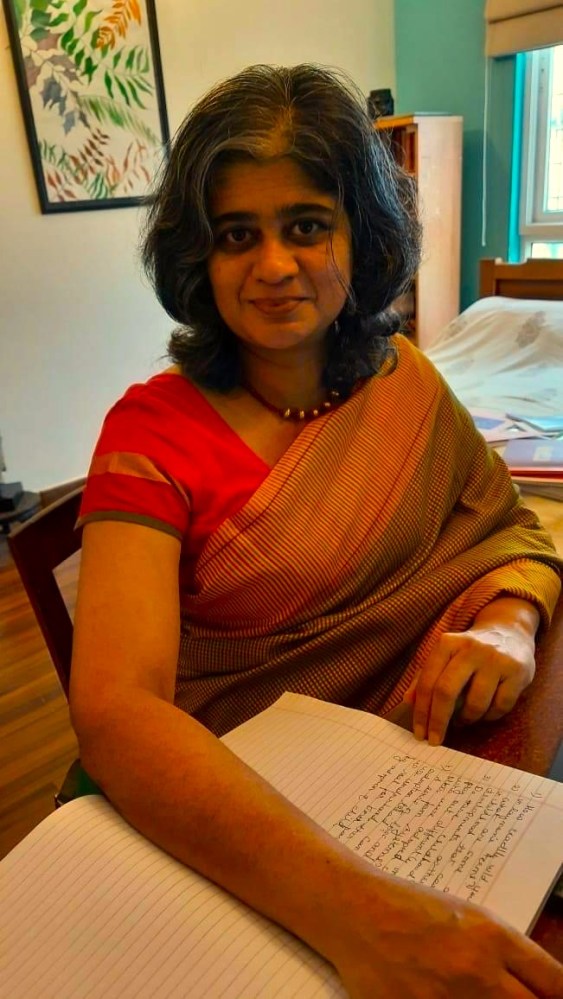
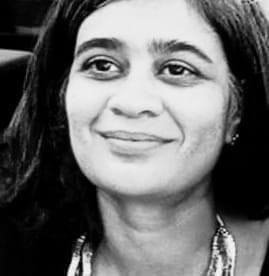
Priti Rao lives by the adage “Waste not want not.”. Shen believes that “waste” must become a resource — to be reworked, reused, and upcycled. Priti’s efforts in producing bio enzymes have now made her one of the foremost experts in the world. she believes that all of us as world citizens have a responsibility to make the world a safe and healthy place for ourselves and future generations. Read my conversation with her on womenuninterrupted.in

Priti, it is a privilege to feature you on this blog. Much of what you are now, your determination and grit have been shaped by your childhood. Tell us about yourself.
I feel very privileged and proud that I am from a defence background. As a child, we lived in so many different locations. I was exposed to various communities and their cultures and practices. I changed schools every three years. That was not easy but it made me very flexible and adaptable. We celebrated all festivals and were open to eating various cuisines. Our family would go through a transfer every few years and it was a monumental task to pack and move to another city. With each transfer, I had to go to a new school and make friends yet again. But it made me very resilient and accepting of change. It also allowed me to see places as a child – Rajasthan, Jammu, Meghalaya, etc and experience the wonder and beauty of new environments. We also learned the art of co-dependence and connecting with people in the services. Our neighbours and friends were always available for us as were we. There was also a certain sense of discipline and structure that was inculcated, which has been of great help to me later in life.
As a young adult, you lived your life to the fullest. Besides the conventional path of academics and then a career, you engaged in several other activities.
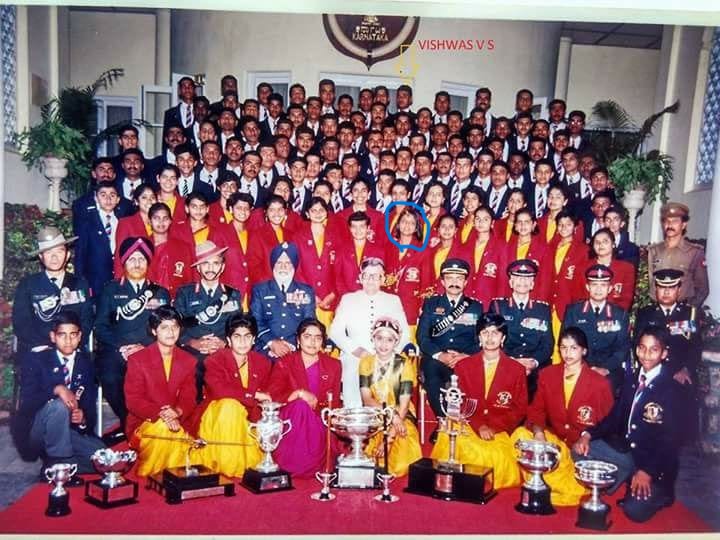
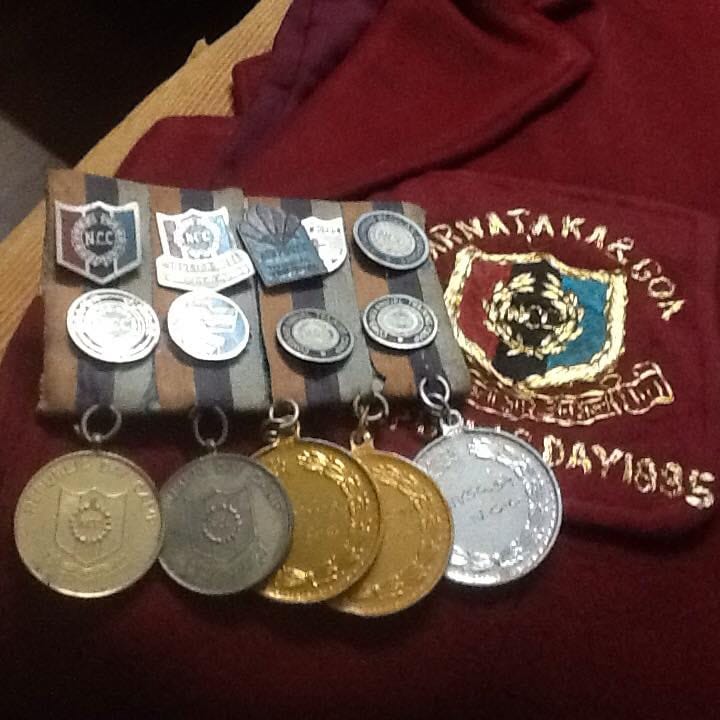
I engaged in several activities during my years in college in Bangalore . I enrolled myself in the NCC (National Cadet Corps) Air Wing. They usually don’t enroll girls in the Airwing. Only 10 percent of those enrolled were girls. In Bangalore, we were about 20 girls and 200 boys. They trained us in paragliding, parasailing, marching in parades, aircraft flying sorties, etc. It developed character, discipline, leadership, and a spirit of adventure in me. I also think it planted the seeds of engaging in social service. My cadet friends and I used to go to the airfield at Jakkur almost every day. We had to be there very early and I don’t remember ever getting irritated about that. I loved spending my time with my NCC friends, it was like a second home to me. Though we got attendance, I also had to juggle my studies. I went to the Republic Day Parade in 1995 and got a gold medal from the then Prime Minister, Narasimha Rao.
When I started a new job, my friend and I would pack up and travel over the weekend. I was able to explore Karnataka in detail. I connected with local people and my native state. I would also just take a bus or a train and get off at a station or a bus stop at random and explore the area. I joined a horse-riding club close to my office. I would leave early in the morning at around 5 am. for the practice ( cantering, galloping, etc.) and then go to work. It was a wonderful experience. It kept me very active and made me use muscles I had never used before.
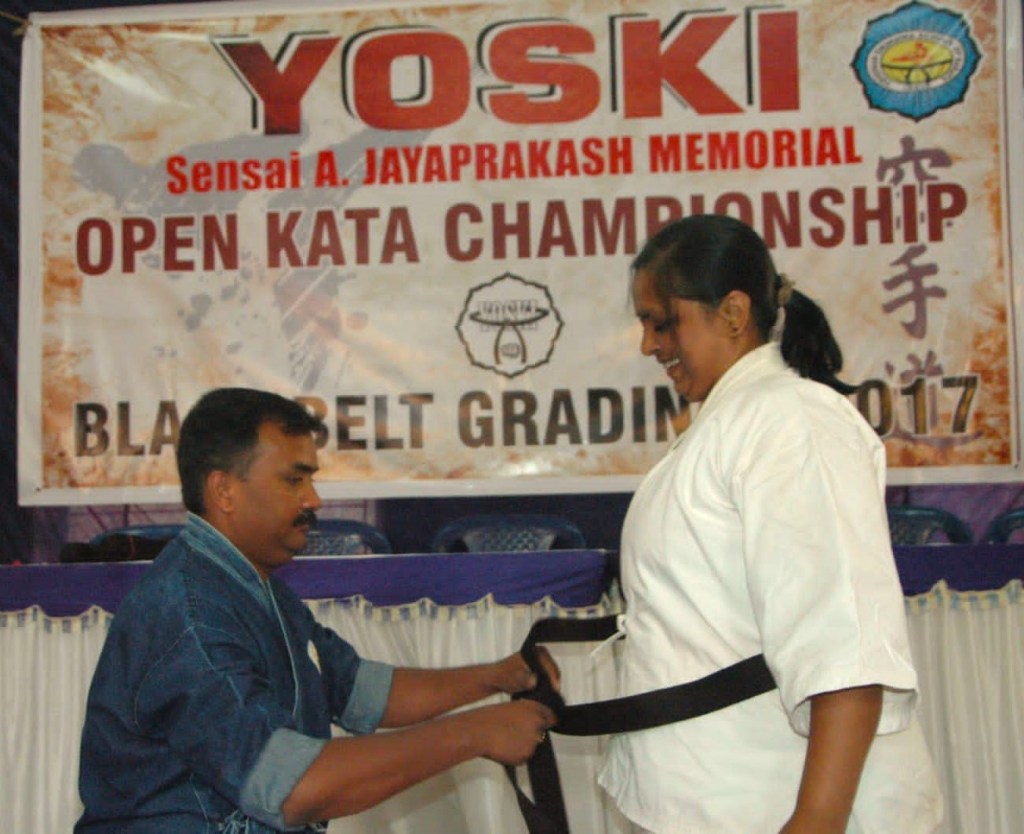
This continued even after I got married and had a job. I lived in the UK for a brief period. I would along with my infant son, board a bus or train and visit various places in the UK. I did not wait around for my husband to accompany me. Even later, when I took my son to karate classes, I decided to do something different. Instead of sitting with the other mothers who accompanied their children, I decided that I would also take up Karate. My son and I were classmates. I continued for eight years and got my black belt. I also began to do yoga and did yoga teacher training at the Bihar school of yoga.
How did your journey as an earth warrior start?
When I came back from the UK, I wasn’t sure that I could get back into a 9-to-5 job. I did not want to work in a corporate. I had worked in one for over a decade, but it gave me no satisfaction. The mindless consumption and the pressure and tension and the need to adhere to impossible deadlines did not appeal to me, but I did not want to stay at home. It took me five years to figure out what I wanted to do with my life. During this period, I observed many things. I found that we as humans are wasteful and consume so many things. We blame the poor for the garbage and unsanitary conditions, but the rich and the educated are equally responsible for the mindless generation of waste. I wanted to save the environment, but did not know what I wanted to focus on and the form it would take.
It all started with the garbage bin. Like everybody else, I would place the bin outside my door. A lady pushing a heavy cart would come every day to pick up the wet waste. Every day the lady would get annoyed and complain about the waste not being segregated properly and about the amount that was generated. I couldn’t blame her because she had the unenviable task of pushing a heavy cart. I decided that I couldn’t be a part of this and needed to understand what was happening.
I studied the entire process- how garbage was generated and by whom, what were the types of garbage and where did it go. I got into composting to reduce and recycle the waste I was generating.
But you wanted to invest in more than just composting and recycling your wet waste. What were your next steps?
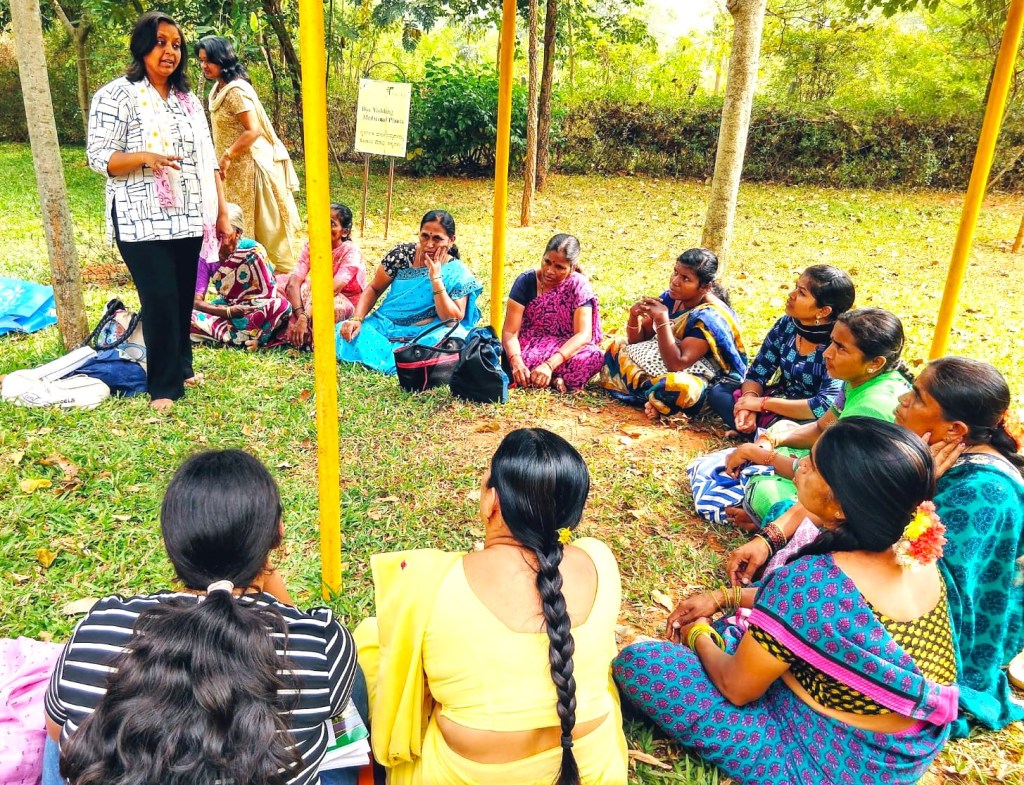
I began to explore the concept of Sustainable living. (Sustainable living describes a lifestyle that attempts to reduce the use of Earth’s natural resources by an individual or society). As a society, we are wasteful and consume so much. We go to the supermarket every day and buy packaged and processed food products. And the wastage is huge. That was a trigger point for me. I researched the dangers of processed food readily available off the shelves and discovered that they had high salt and sugar content, which could affect our health. So not only do we consume chemicals and harmful substances, but we also play a key role in poisoning the surrounding ecosystem. I stopped buying store-made products such as biscuits, chocolates, etc. In addition, I decided that I would also start growing my own food. There was a time when I was growing forty varieties of vegetables and 25 varieties of herbs on my terrace. When you are growing your food, you are in control of every step of the growing process — from seed selection and soil and pest management to responsible consumption, harvesting, low wastage, and composting. I installed a bio-gas plant that converted wet waste into cooking gas and installed Solar panels to generate electricity. I began to harvest rainwater. With these simple practices, I not only reduced my consumption and overall carbon footprint.
I analysed my dry waste and found that most of it was plastic from the packaging of processed foods, and bottles used in shampoos and liquid soaps. If we take a look at our shopping bag, most of it is packaged foods and personal care items. I wanted to reverse this ratio. How do we change this? I tried my best to eliminate packaging and non-biodegradable waste by choosing food with no plastic packaging, always carrying a reusable bag, buying local products, and refilling containers to reduce plastic waste. I then discovered the use of bio-enzymes & stopped using chemical-based cleaners at home. I began experimenting with bio enzymes and that was a turning point in my life.
Bio enzymes is a term that has gained a lot of popularity in recent years. But you have been working and producing bio enzymes for more than a decade now. Tell us a little about bio enzymes and what they mean to you.
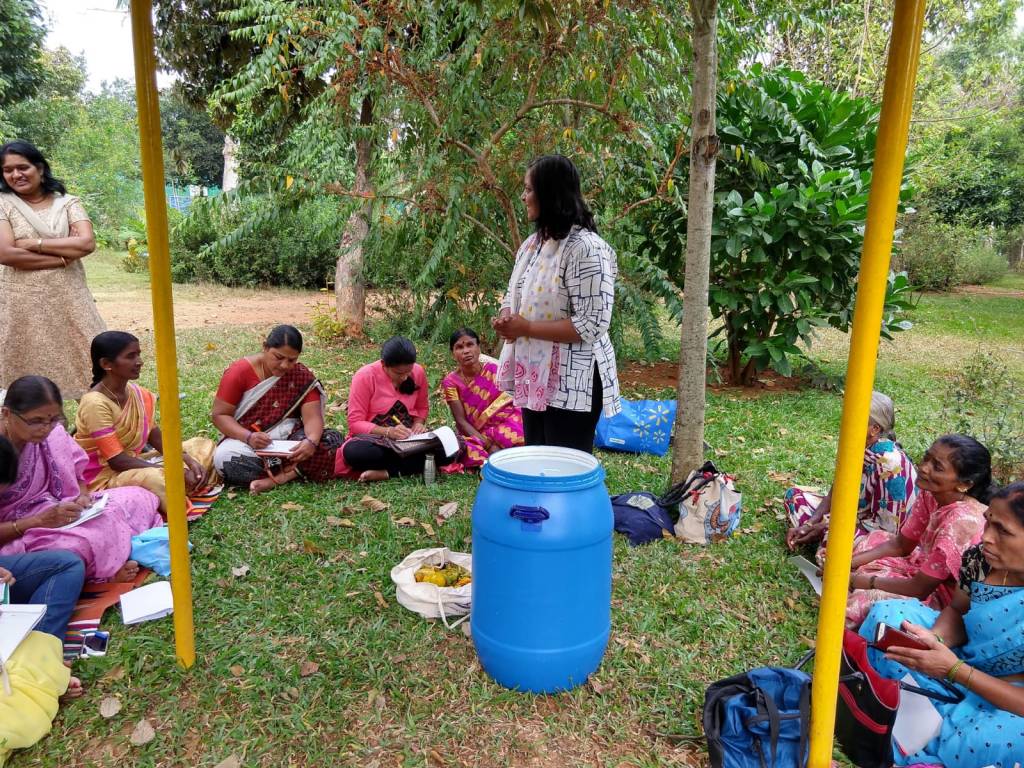
Bio-enzymes are organic solutions produced through fermentation of organic waste including various fruits, vegetable peels, and flowers, by mixing in sugar, jaggery/molasses, and water. So essentially, bio enzymes come from our kitchen waste. It takes 60-100 days to ferment organic waste. To fasten the fermentation, yeast can be used as a culture to prepare it in 45-50 days. . It is so simple to make that everyone can make their own in their homes. It is best made with citrus peels, but many people make use of peels of carrot, cucumber, and lettuce too which criminally end up in the trash. The idea was first introduced by Dr. Rosukon Poompanvong, the founder of the Organic Agriculture Association of Thailand. from Thailand.
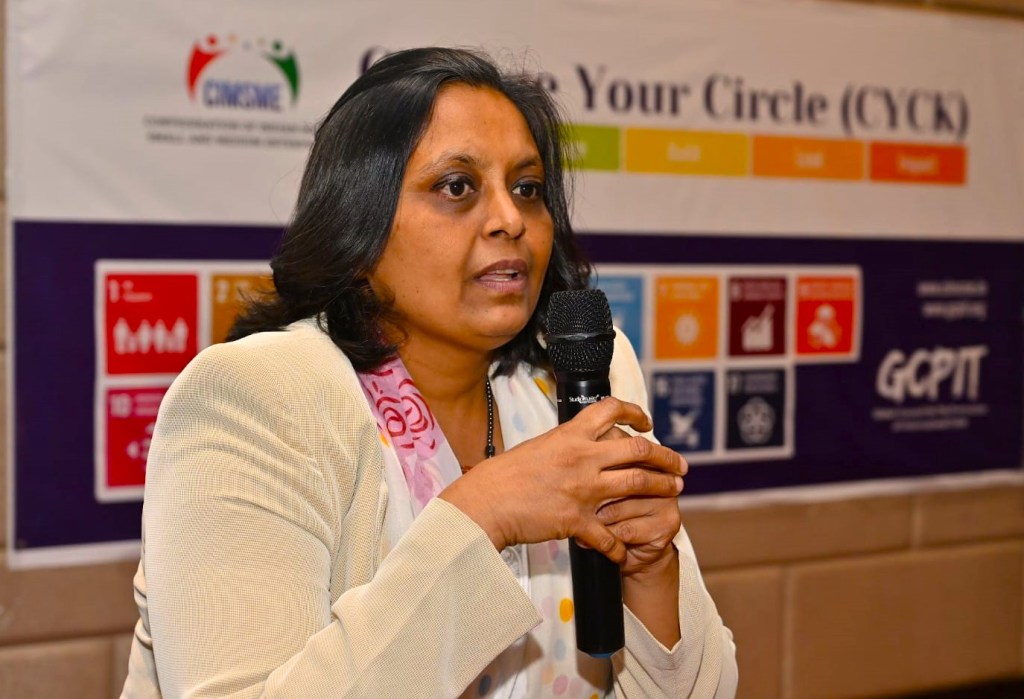
I saw a video of Dr. Joean Oon, an environmentalist from Malaysia on bio enzymes and was inspired to try making it. I found that it was a simple process. I made it in the kitchen. Initially, there was some scepticism from the family. They were afraid that there would be some odour. But I proved them wrong. I started making bio enzyme in larger quantities and sharing it with my friends. I also taught them to make it. We started doing it from lemon peels as the smell of lemons connoted freshness and appealed to lots of people. I was amazed at the versatility of this product and was amazed at its many uses.
It can clean and disinfect all surfaces in the house., it is very effective in removing limescale on taps and other steel appliances, breaks down grease and grime effectively from utensils, and de-clogs drains very effectively. It is also a natural pesticide and herbicide and naturally purifies groundwater. It is also very effective in cleaning polluted lakes.
So eventually you decide that your interest needs to move from a personal sphere to a public domain. You decided to start your foundation.
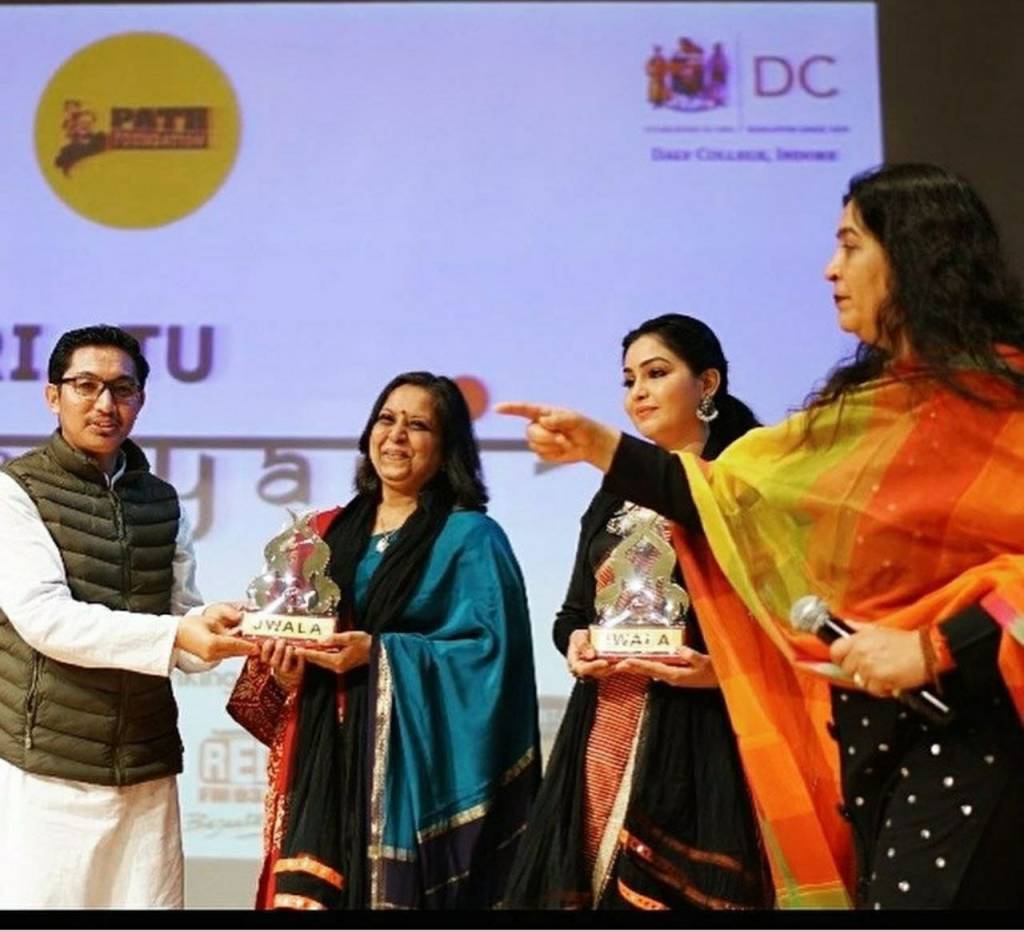
Producing bio enzymes became a priority for me and I wanted to share this information with others. Soil and Soul Foundation was conceived around this time. . We started with basic workshops for children and adults. The focus was on sustainable living and the need to preserve the environment. We also talked about bio enzymes and the benefits it provides. We curated an experiential learning program for a leading school in Bangalore. The idea was to create awareness and ownership among students, staff, management, parents & local administration about managing the waste generated in the school and at home. We developed a holistic curriculum with an emphasis on fun-filled, hands-on learning to bring about behavioural changes.
We also provided training internationally. The Frankfurt University of Applied Science invited Soil and Soul to deliver a workshop on Sustainable Alternatives at their campus in Frankfurt, Germany. Mechanical Engineering students attended the session to understand the issues concerning Waste and Sustainable choices. Knowledge Transfer sessions were conducted on how to prepare bio enzymes and their application.
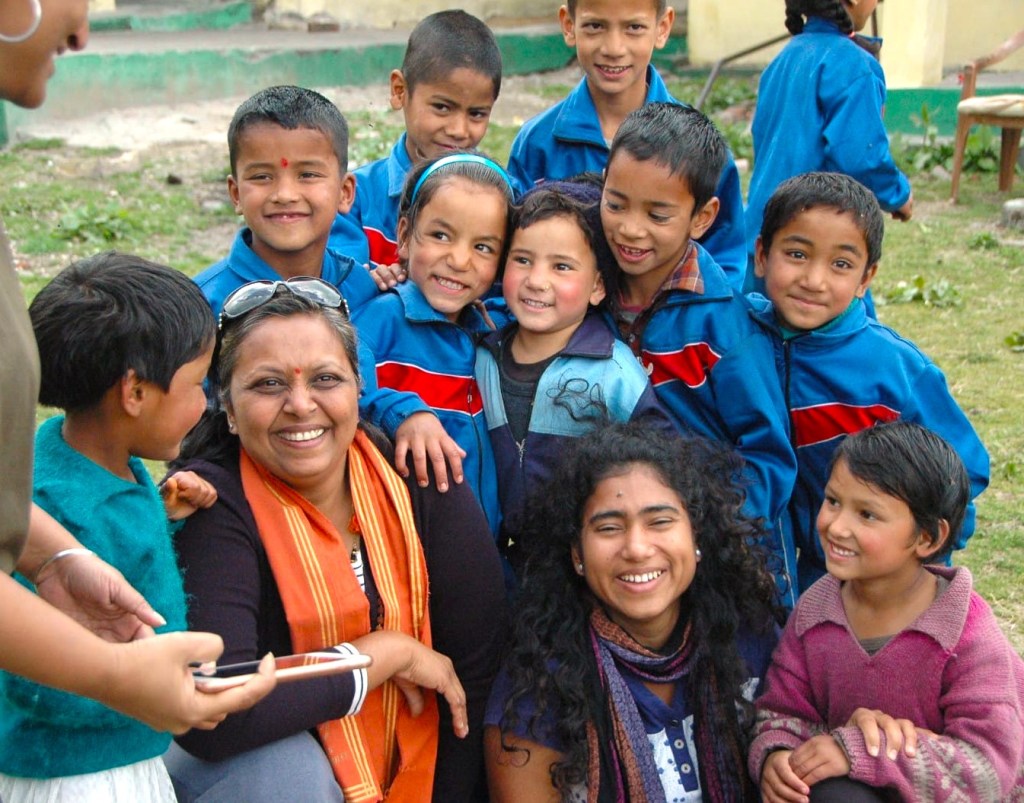
I intended to educate people and train them to make bio enzymes. But the conversion rate was low. So, we also decided to produce bio enzyme in large quantities and market it. This required me to get a certification for the product.
Tell us about your latest venture, the Bio enzyme Entrepreneur Academy
The Bio-Enzyme Entrepreneurs Academy provides a space for producers and researchers to promote research and promote bio enzymes and educate and train entrepreneurs who are interested in working in this area. We hope to encourage communities and civic bodies to accept and adopt practices such as Bio-Enzymes, Bio-Compost, and Bio-Gas to enable a cleaner environment and sustainable living. We work at the grass root level – focused on waste management, and regenerating soil and water ecosystems. At the Bio enzyme entrepreneur academy, we have researchers and scholars who engage in studying bio enzymes and their benefits. At present, we are collaborating with researchers from Holkar College in Indore. We also have bio enzyme banks in different parts of the country to clean up lakes and rivers. We are also conducting field trials to determine the effectiveness of the application of bio-enzymes on various crops. Data concerning the health of the soil, plant growth & immunity are being collected and analysed.
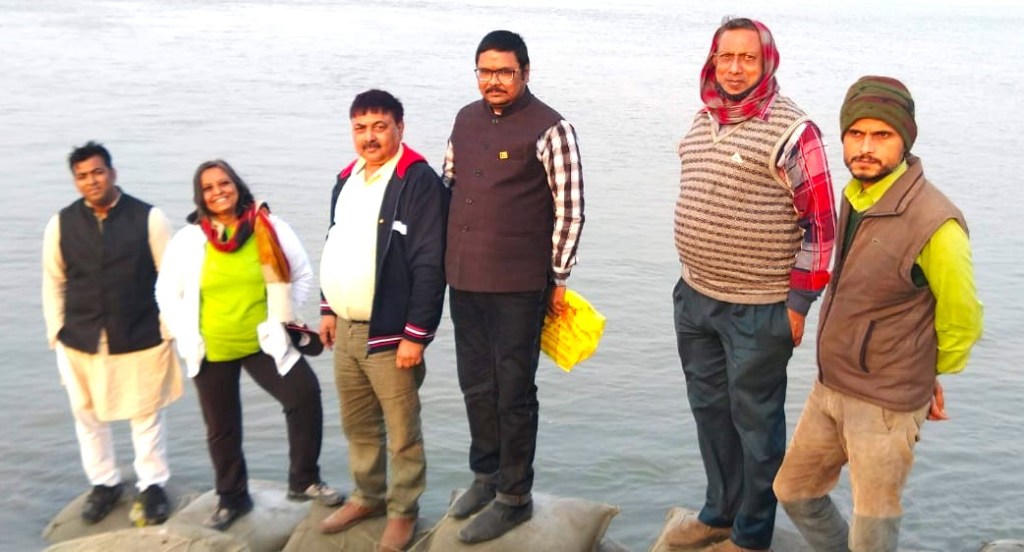
As a part of your work, you also focus on River bank Stabilization. You have a project on the banks of the River Ganga, don’t you?
As a part of our Mission 10 Lac Project, we are now engaged in an ongoing effort to stabilize riverbanks in Munger, Bihar since Dec 2020. The objective is to limit the damages caused during floods, mainly – water contamination & soil erosion. The project is completely crowdfunded.
So far, we have planted one lakh tree saplings of native varieties along the river Ganga. In addition, five lakh Vetiver grass slips have also been planted. Vetiver grass plantation is a natural and economically viable alternative to brick-and-mortar engineering solutions for soil retention. It reduces erosion and carbon sequestration four times more than the tree. This is an immediate remedy as the top soil is not eroded. It also filters the water and takes away the heavy metals.
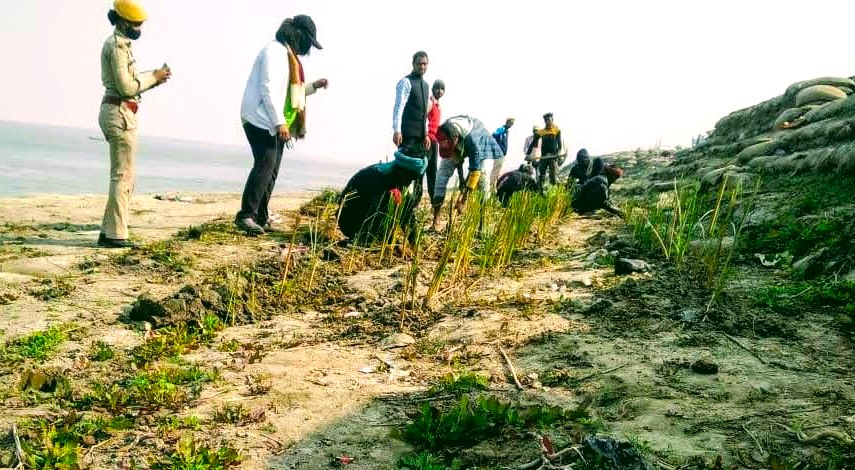
The project has a direct impact on the livelihood of the local communities. Our inclusive approach encourages the active participation of local communities, women, children, welfare groups & administration. We propose to do a similar project on the banks of the river Brahmaputra. We have also used Vetiver in Bangalore on seven lakes including the one in Lalbagh.

And my last question to you would be, what would you say to a woman who wants to follow her dreams?
I would say go for it. We have one life and we should never be afraid of taking chances. I have been very lucky in that I got a lot of support from my husband and my family. My mother-in-law took care of the family and I got the opportunity to go out and do what I wanted to. The most important thing is not to wait, but to make a beginning and the rest will follow.
If you want to be a conscious earth warrior and give bio enzymes a try, check out the YouTube given below
 women uninterrupted