
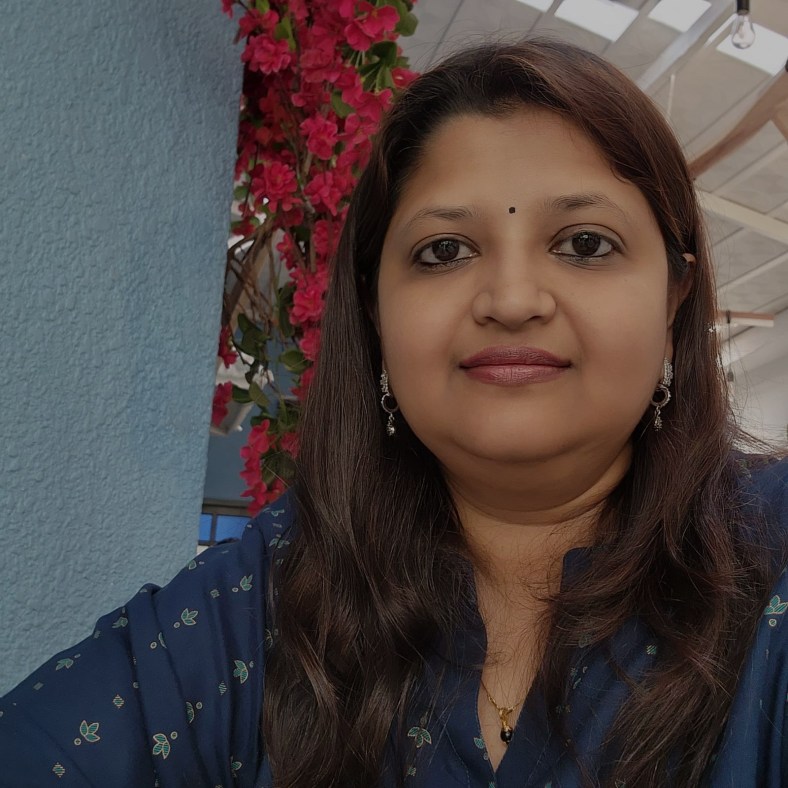
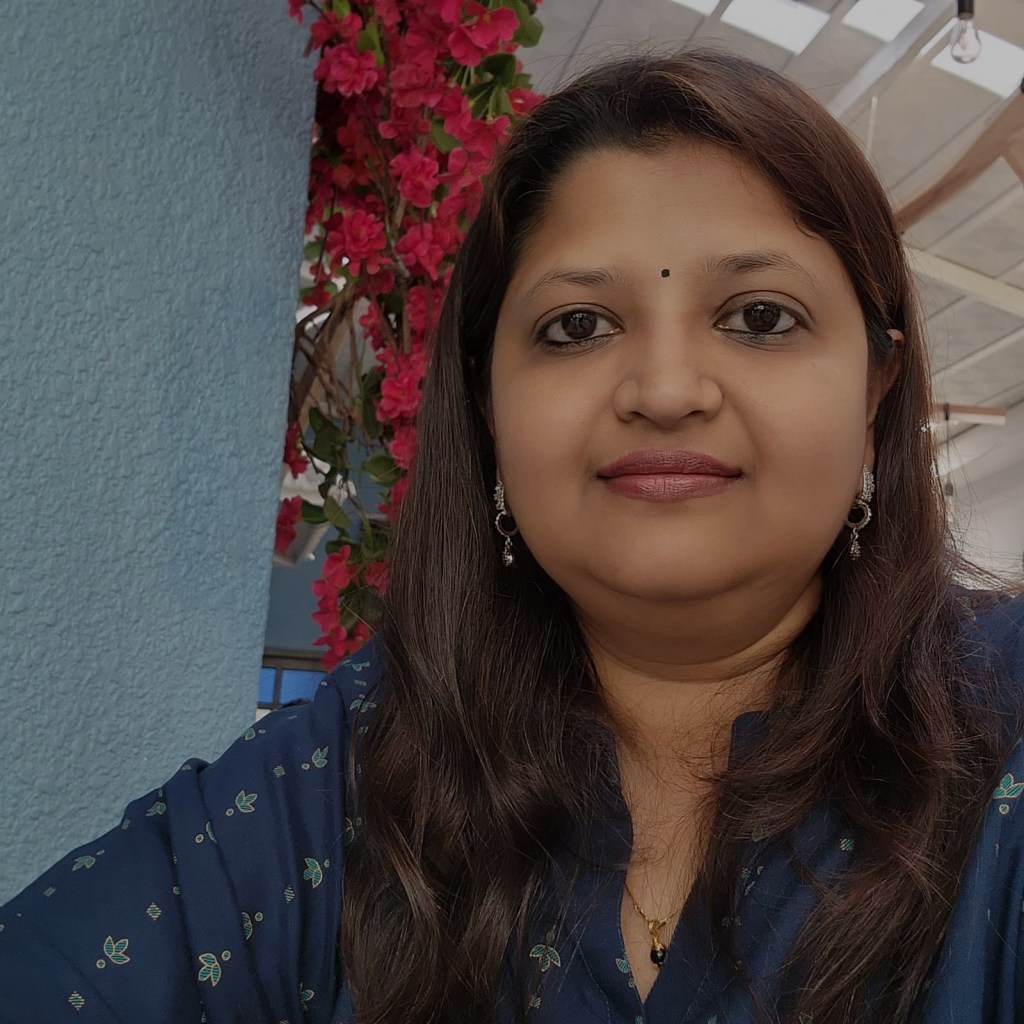
Nature reminds us that the simplest things are often the most beautiful. When Prakruthi Subramanya, a finance professional succumbed to the pull of nature and forests, she went through a gradual shift that enable her to slow down, and repurpose her life. In the process, she engaged in extraordinary experiences that empowered her and helped her become a happier and more accepting person. Do join me in this delightful conversation with Prakruthi where she talks about how she engages with nature on a daily basis to protect her surroundings and the beings that coexist with us.
Thank you, Prakruthi, for talking to us. Let’s start as I always do, by asking about your childhood and its impact on your choices in life.
My childhood was quite the opposite of what I now am as a person. I was very shy, I was a frontbencher, studious, and very reserved. I mostly kept to myself. We lived in different parts of Bangalore as my dad was a veterinarian who got transferred to various veterinary hospitals. What I remember most is our stay in Hesarghata, where he was working with the State Government Animal Farm. My father loved animals and was the outdoorsy type. My mom on the other hand was a homebody. I was happiest indoors spending time with my mom.
I lived on a cattle farm but was scared of the buffaloes and bulls that roamed around freely. Though we lived amidst nature, I had absolutely no interest in wildlife. I was scared of all animals and would either run away or shoo them when I saw them. We had a dog at home for twelve years, but I never petted him.
That is a very contrary image to how I see you now. The assumption is that children who live amidst nature love to experience the sights, scents, sounds, and textures of the outdoors and become better people because of it.
I would say that we were never taught to either love nature or fear it. My indifference to nature could be linked to my hatred of science and biology and the way we were taught those subjects in school. It was shoved down our throats and we were forced to rote learn it without actual exposure to nature and critical questioning and analysis. I never looked at my dog for example as a member of the family. It was there to ensure our security and that was it.
But there came a time when you began to see life around you differently. When did that happen?
I did my BCom in Bangalore and got into a conventional career like many other professionals. I joined a multinational and worked on data analysis and taxation. I became a workaholic who worked long hours. I loved my job, as I was into numbers. I met my husband Vinay at work and we got married.
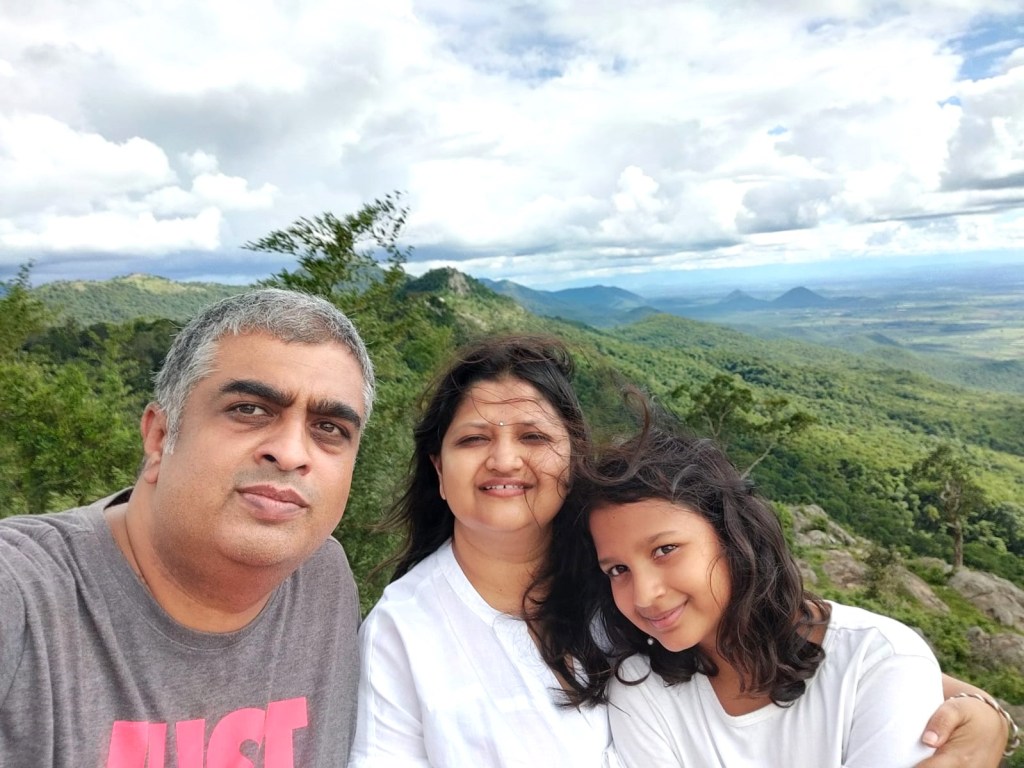
But a few years later, things changed. We were planning to relocate to the US. A few days before we left, my husband had a fall and fractured his leg. We had to shelve our plans to move to the US. He needed surgery and a mandatory six weeks of bed rest and another six weeks of physiotherapy. Three months of immobility was very difficult for Vinay. I wasn’t driving at that point and he would beg our friends to take him out for a drive. I think it was at that point that we began to see things differently.
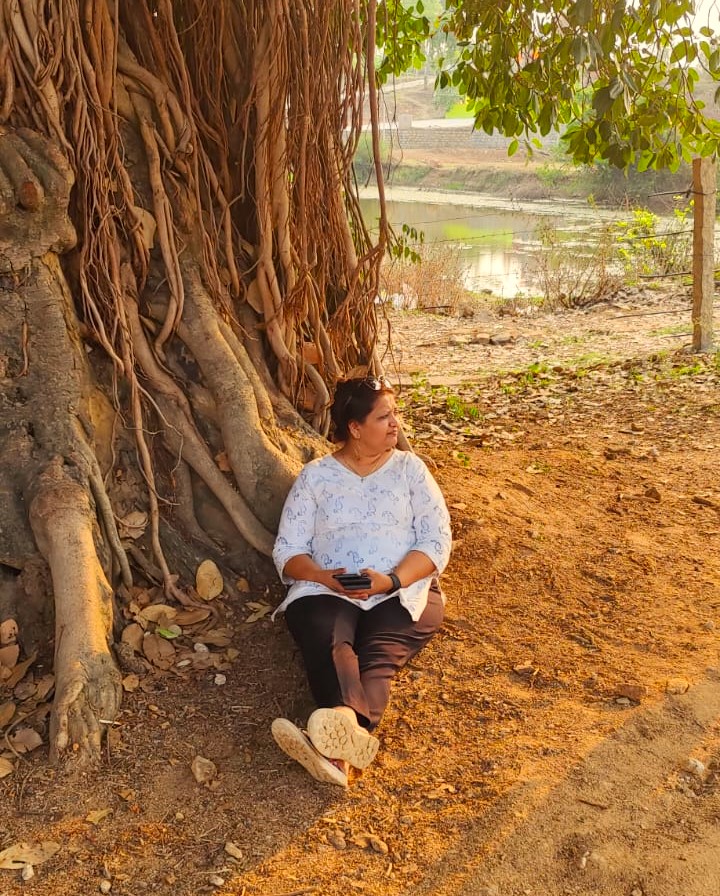
After that, we started travelling and went to places where we could enjoy nature. It became a regular weekend activity. We went to Ooty. Vinay bought a camera and got into photography. At that point, for me, it was just a need to go out and experience the outdoors. It didn’t matter where I went. After our daughter was born, we moved to a community on the outskirts of Bangalore. We wanted to live amidst nature and greenery and not within the city. Vinay got interested in birding and I would tag along with him on his outings. We were members of a Bangalore birding group and went birding twice a month with a group. We also did the Jungle Lodges and Resorts, Naturalist training Program (JLR – NTP) training. It was an eye-opener for both of us. We were able to get a lot of practical knowledge about forests and wildlife and a broad understanding of ecosystems and how they are connected.
out travel plans were spontaneous and we did several short trips in Karnataka, our home State. With a young child, it was difficult to plan ahead. We did regular trips to Bandipur, Kabini, Dandeli, Sakleshpur, Coorg, Chikmagalur, etc. Not just forests, we also visited Hampi, Badami, and Pattadakal to visit ancient temples and monuments.
It was at this stage that you developed a new, rather unique interest. Tell us about it.
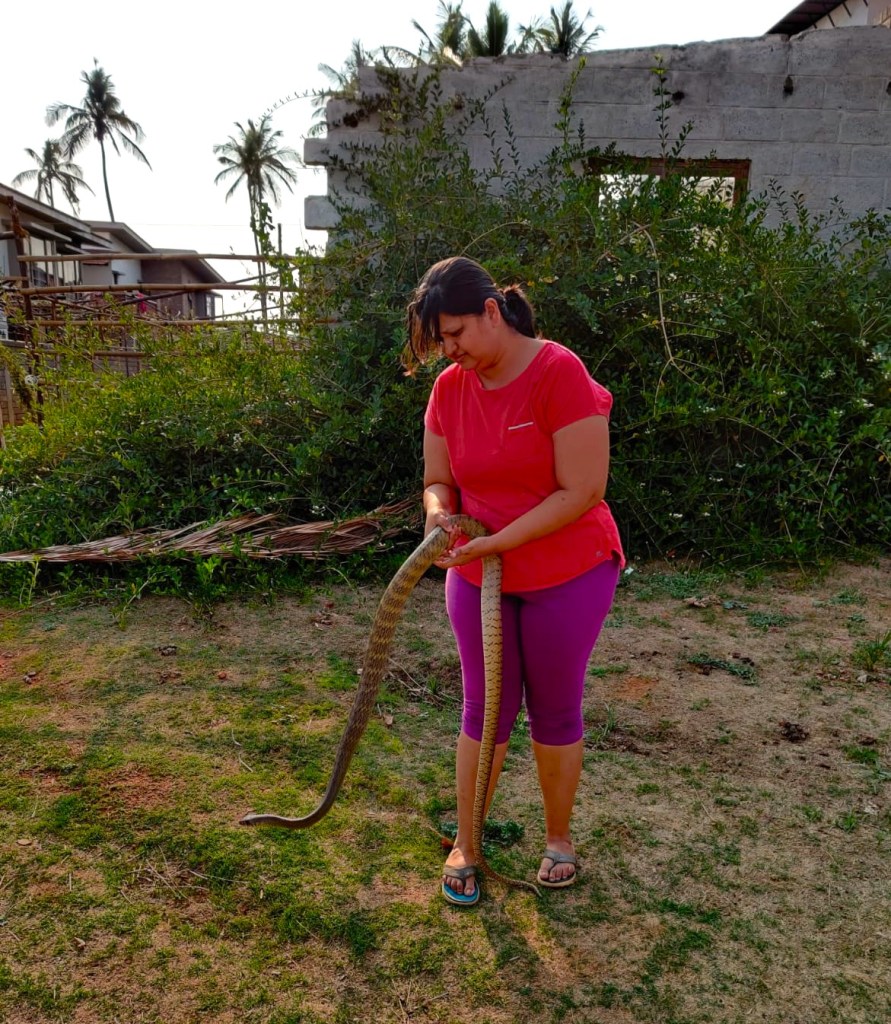
As I mentioned earlier, we moved to a community called Good Earth Malhar, on the outskirts of the city. This was in 2015. The community was still in its infancy. My neighbour, a wildlife enthusiast, called out to me one morning. He was holding something small. It was a baby snake. I was quite nervous. He did something extraordinary. He put the baby snake in my hand. I don’t know how I held it. Surprisingly I wasn’t scared. He told me it was a non-venomous snake. A few weeks later we had an awareness program on snakes and I learned so many new facts about them and the myths and misnomers related to them. It opened my eyes. It was also decided that a snake group will be formed and training will be provided on how to handle a snake. I was quite fascinated and volunteered to be part of the group and expressed an interest in wanting to get trained to handle snakes.
If you ask me, why I made that decision, I can’t give you an answer. I later discovered that it was a baby keelback, that was put in my hand. I am the type of person who can’t remember a botanical name easily. I kept asking my neighbour the name of the snake and luckily for me, he was a very patient man, who put up with my questions. This changed me as a person and made me feel good about myself. My daughter’s friends were in awe of me. To them, I was a woman who could catch snakes. A superhero with superpowers! (laughs…). It made me feel very good about myself.
I did a one-day course with People for Animals (PFA) on catching snakes. They teach you how to handle snakes and feel comfortable around them. I got a chance to handle a big rat snake. We have so many misconceptions about snakes. You see snakes and think slimy. But when you hold a snake, it is firm and all muscle. It is like touching a human hand. But the real experience was on the ground with other members of the community.
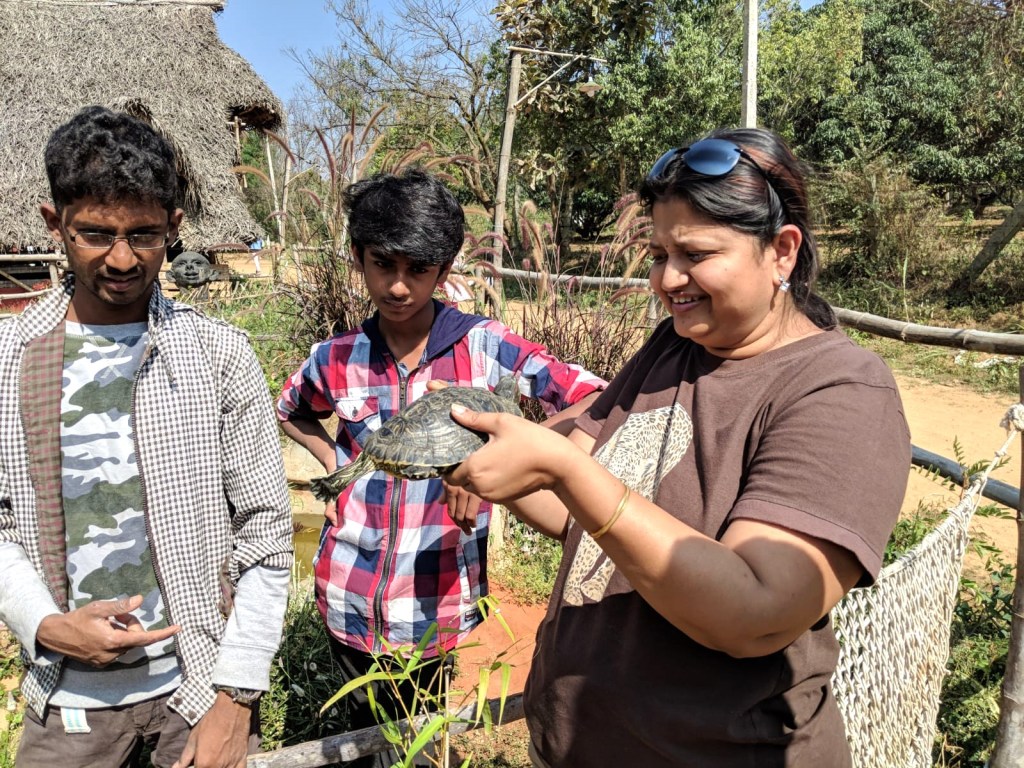
I was the only woman in the group, but I never felt or was made to feel that I couldn’t handle snakes because I was a woman. We would get a call from time to time from residents who had seen snakes in the vicinity of their houses and I would accompany my neighbour who was an experienced snake handler. Our motto was to catch the snake only if it was a venomous one and then release it in the undergrowth which surrounded the community. If it was a non-venomous snake we left it alone unless it was inside someone’s house. Injuring or killing snakes was an absolute no-no. Within a few months, I was able to catch most snakes on my own. I have caught about ten snakes on my own and about 30 to 40 snakes with support from other snake catchers in the community. I am now able to identify most snakes. I would love to go to Agumbe to visit the King Cobra Research Centre and go herping. (Herping is the act of searching for amphibians or reptiles). I am much more comfortable around animals now and love wildlife.
Have you ever questioned yourself or had regrets about taking on this risky activity?
I don’t think I have ever had regrets about getting into this. I have felt nervous several times especially when I handle venomous snakes. I remember this incident which happened during my initial days of handling snakes. There was a snake outside my house. I handled it and then bagged the snake very confidently. I thought it was a rat snake but it turned out to be a cobra. That made me feel a bit jittery as many things could have gone wrong.
It is very important that one not feel overconfident around a snake. It is a wild animal and it is important to handle it with respect and care. One needs to be careful and ensure that there is support when one is handling a venomous snake. I have been bitten a couple of times by non-venomous snakes and the bites can range from bad to something very minor.
Very often, people panic or have a phobia when it comes to snakes. I often spend more time calming the person down than catching the snake. We conduct snake awareness sessions on the various types of snakes commonly seen in the community and in Bangalore, how to identify them, and what steps to take if one sees a snake. We take care to educate children especially as they often encounter snakes when they are out playing.
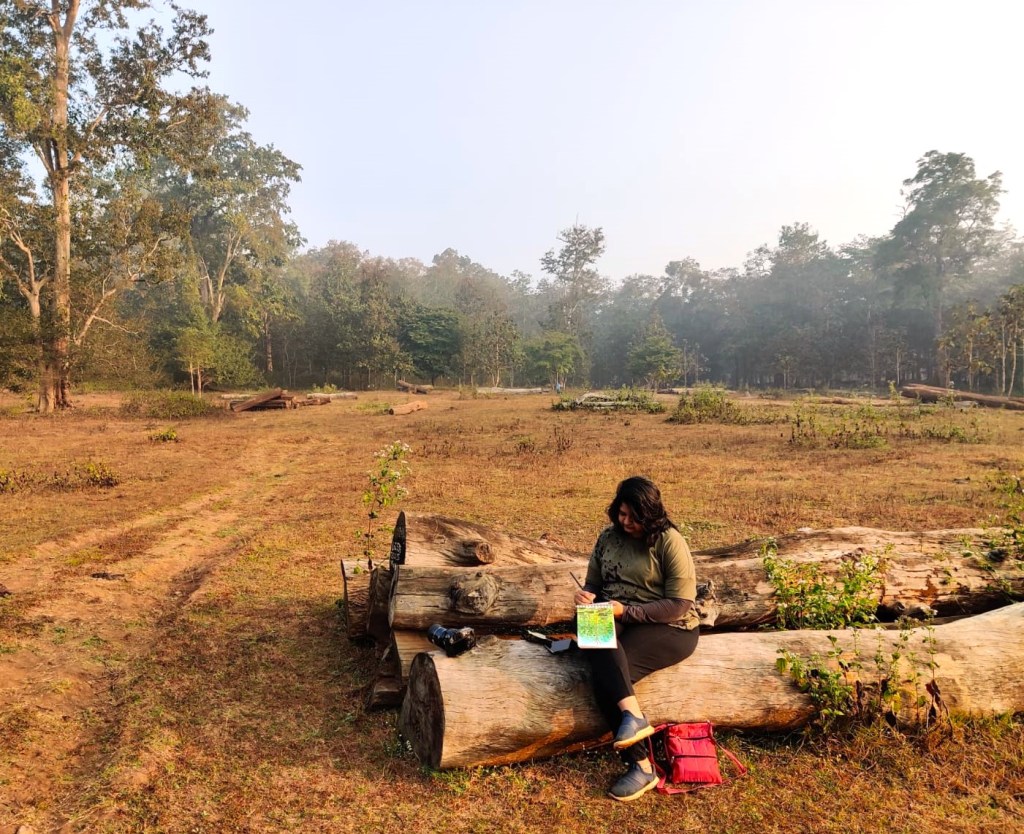
You also have recently gotten into nature journaling. What does it involve?
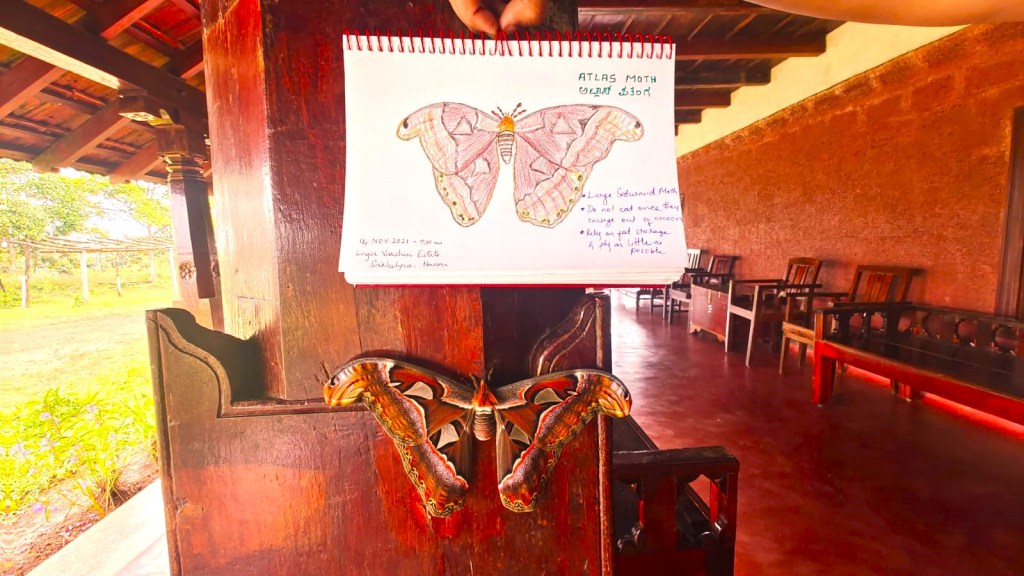
I follow a lot of nature enthusiasts and wildlife experts on social media. I recently took a nature journaling workshop with a well-known wildlife artist and enjoyed the process. I love to scribble and doodle, and her classes were an eye-opener. It was about documenting nature and wildlife.
As a part of international journalling week, I posted my work online and received a lot of appreciation. The neat aspect of journalling is that you don’t need to be an expert at drawing. The focus is on documentation. I got a lot of appreciation for my journalling work. It felt very good.
Your exposure to forests and wildlife made you a different person.
As a child, I was told that one needed to be perfect at the art one practised. If you wanted to sing, you had to be a good singer. But with time, I realized that one doesn’t have to be perfect at everything one does. It’s the passion and interest that matters. When I got into handling snakes, it was on a whim, but soon it changed into a passion. I felt so good about myself and what I was doing. And most importantly I was never judged or told that I couldn’t handle snakes because I was a woman. There were no expectations or pressure.
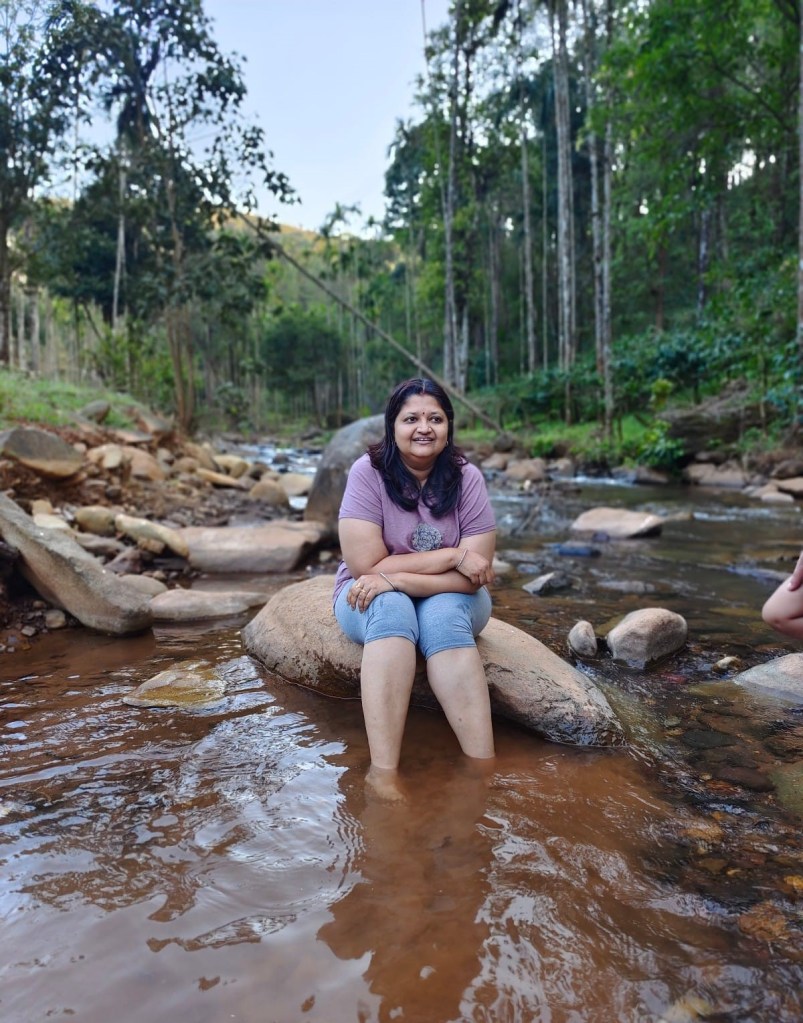
I work part-time for an independent contractor but spend the rest of my time volunteering with a small non-profit that is engaged in training local communities as naturalists. I help them with their financing and accounts.
Don’t worry, close your eyes and jump in. (laughs…) For a long time, I was caught in this loop of what would others say. I was worried that people would stare and comment if I sang or danced. But once you find what you’re looking for and someone gives you that small glimmer of hope, then there is no stopping you.
What would you say to someone who wants to be cool and alternative like you?
Four little-known facts when it comes to snakes
- Snakes are NOT aggressive. Snakes do not bite out of malice and they certainly do not go looking for enemies. They will defend their lives if/when needed. Snakes DO like to be left alone.
- Intense fear of snakes is called ophidiophobia, but perhaps ophidiophobes have it all wrong
- Reptiles sometimes get labelled ‘cold-blooded’ but this is incorrect as their blood isn’t cold. Unlike mammals and birds that can internally regulate their body temperature, reptiles are “solar-powered” and rely fully on external heat or light sources like the sun, to warm up.
- Snakes don’t have eyelids! This means they don’t blink and have to sleep with their eyes wide open. Instead, they have a thin membrane attached to each eye to protect them. The membrane is called the ‘brille,’ which in German means glasses.
 women uninterrupted